I remember the night I almost burned the kitchen down while trying to impress my roommate with a fancy dinner. I had a craving for something that would feel both indulgent and effortless, and I stumbled onto the idea of a pistachio‑crusted salmon. The moment I saw the bright green pistachios, the smell of toasted nuts, and the gleam of a fresh fillet, I knew I was onto something that would change my cooking game. I dare you to taste this and not go back for seconds. The sizzle as the crust begins to brown is a soundtrack you’ll want to replay.
Picture yourself pulling this out of the oven, the whole kitchen smelling incredible, the crust crackling like a golden sunrise over a calm sea. The texture is a delightful contrast: a buttery, flaky interior wrapped in a crunchy, nutty shell that shatters like thin ice with every bite. I’ll be honest—I ate half the batch before anyone else got to try it. Most recipes get this completely wrong, but here’s what actually works: a simple coating, the right amount of oil, and a dash of zest that keeps the flavor bright. If you’ve ever struggled with getting the crust just right, you’re not alone—and I’ve got the fix. And now the fun part.
This version stands out because it strips away the fluff and keeps the focus on pure flavor and texture. It’s a dish that feels like a luxury treat, yet it takes only a few minutes to prepare, making it a win for busy weeknights. The pistachios give a natural crunch and a subtle earthy sweetness that pairs perfectly with the fish. The lemon zest adds a bright, citrusy lift that cuts through the richness of the salmon, creating a balanced bite. The crust’s simplicity means you can replicate it every time without the fear of over‑seasoning or burning. And the best part? It’s a crowd‑pleaser that will have people asking for your secret.
I’ve spent hours tweaking the ratio of pistachios to oil, and the final version is hands down the best version you’ll ever make at home. The crust is golden and crisp, the fish stays moist, and the lemon zest gives a fresh zing that keeps the palate engaged. The technique that might surprise you is pressing the pistachios into the fillet before baking, which creates an even coating that doesn’t crumble. I’m about to walk you through every single step, and by the end, you’ll wonder how you ever made it any other way.
What Makes This Version Stand Out
- Crunch: The pistachios are toasted just enough to create a shell that breaks with a satisfying snap, delivering an audible cue that the salmon is ready.
- Flavor Balance: The lemon zest lifts the dish, preventing the nutty flavor from becoming overpowering while keeping the salmon’s natural taste front and center.
- Simplicity: With only five ingredients, the recipe eliminates the guesswork and allows you to focus on technique rather than ingredient juggling.
- Texture Contrast: The buttery interior meets a crisp exterior, giving each bite a multi‑sensory experience that feels luxurious.
- Time Efficiency: Prep takes 15 minutes, cook 30 minutes, so you can have a gourmet meal on the table faster than you can say “pistachio crust.”
- Make‑Ahead Potential: You can assemble the crusted fillets in advance and bake them later, making it a perfect dish for meal prep.
- Visual Appeal: The vibrant green pistachios contrast beautifully against the pink salmon, creating a plate that looks as good as it tastes.
- Health Conscious: The recipe uses heart‑healthy olive oil and nuts, offering a protein‑rich meal without excess calories.
Alright, let’s break down exactly what goes into this masterpiece…
Inside the Ingredient List
The Flavor Base
The salmon fillets are the star of the show. Choose fillets that are at least 6 ounces each to maintain juiciness. If you’re using a different protein, like tilapia or cod, the cooking time will need adjustment. A good rule of thumb is to keep the fillets whole; chopping them into pieces can cause uneven cooking. The fillet’s natural oil content will help the crust adhere, so avoid over‑cleaning the surface. If you skip this step and use pre‑washed fillets, the crust may not stick properly, leading to a soggy exterior.
The Texture Crew
Pistachios, shelled and chopped, provide the crunch. Use raw pistachios for a fresher taste or roasted for a deeper, smoky undertone. The key is to crush them finely enough to coat the fillet but not so fine that they turn into a paste. If you omit the pistachios, the dish loses its signature crunch and becomes a plain baked salmon. A good alternative for a nut‑free version is finely ground sunflower seeds, though the flavor profile will change. When selecting pistachios, look for a bright green hue; dull pistachios often indicate older nuts that lack flavor.
The Unexpected Star
Olive oil is the binder that keeps the pistachios clinging to the fish. Extra‑virgin olive oil adds a fruity note, while a light olive oil is milder and lets the pistachio flavor shine. Using too little oil will cause the crust to crack, while too much will make it greasy. If you prefer a lighter coating, substitute half the oil with a splash of white wine or a drizzle of lemon juice. The oil’s smoke point is high enough for baking at 400°F, so you don’t have to worry about burning it. For an even more sophisticated touch, finish the fillets with a drizzle of aged balsamic glaze.
The Final Flourish
Lemon zest adds brightness and a subtle citrus note that balances the nutty sweetness. Grate the zest from a fresh lemon, avoiding the white pith which can be bitter. If you’re allergic to citrus, you can replace the zest with a pinch of orange zest for a sweeter profile. A pinch of salt is essential to bring out the flavors, but be careful not to over‑season. The salt also helps the crust brown evenly. If you’re watching sodium, use a low‑sodium salt or sea salt flakes, which give a slightly different texture.
Everything’s prepped? Good. Let’s get into the real action…
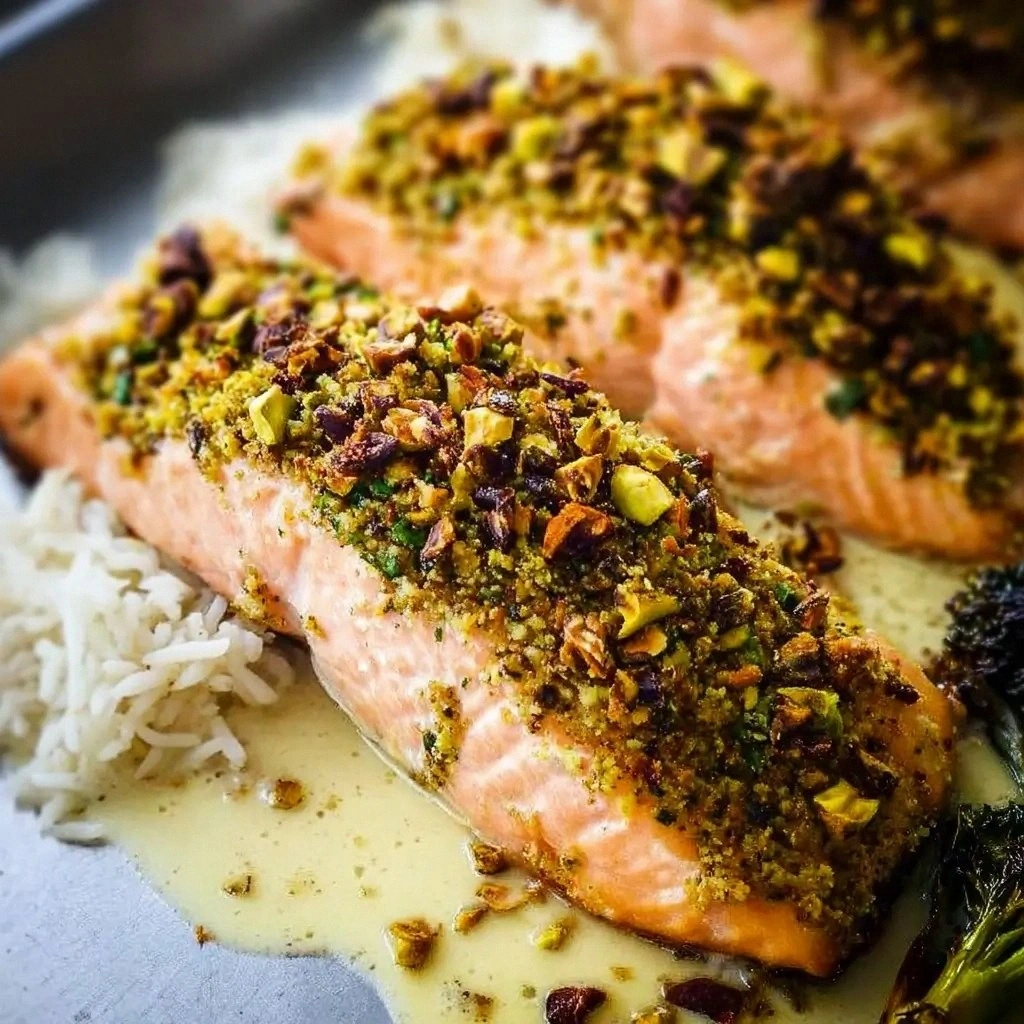
The Method — Step by Step
- Preheat your oven to 400°F (200°C). Line a baking sheet with parchment paper to prevent sticking. If you want extra crispness, place a wire rack on top of the sheet so air circulates around the fillets. This step is crucial for a uniform crust.
- Pat the salmon fillets dry with paper towels. Removing surface moisture ensures the pistachio coating adheres properly. A dry surface also helps the crust brown faster, giving you that golden finish you’re after. Let them sit for a minute to absorb the towel.
- In a shallow dish, combine the chopped pistachios, olive oil, lemon zest, and salt. Stir until the pistachios are evenly coated. The oil should be just enough to create a sticky mixture; if it’s too wet, the crust will spread. A good test is to press a small amount between your fingers; it should hold together.
- Press the pistachio mixture onto the top side of each fillet. Use your palm to press firmly, ensuring the coating sticks. The crust should be about ¼ inch thick. This is the moment of truth—if you skip this step, you’ll miss the signature crunch.
- Place the coated fillets on the prepared baking sheet, skin side down if you’re using skin. Bake for 12–15 minutes, depending on thickness. Check the fillet’s internal temperature; it should reach 145°F (63°C). The edges will start pulling away, indicating doneness.
- While the salmon cooks, let the oven door stay slightly ajar. This allows excess moisture to escape, keeping the crust crisp. If you prefer a smokier flavor, add a small piece of smoked paprika to the pistachio mix.
- Remove the salmon from the oven and let it rest for 3 minutes. This short rest lets the juices redistribute, ensuring each bite is moist. The crust will still be hot, so handle with care.
- Serve immediately, garnished with a wedge of lemon or a sprinkle of fresh herbs. Pair with a crisp white wine or a light salad for a balanced meal. And that’s it—you did it. But hold on, I’ve got a few more tricks that will take this to another level.
Insider Tricks for Flawless Results
The Temperature Rule Nobody Follows
Many cooks bake at a higher temperature, hoping for a crisper crust. In reality, 400°F is the sweet spot that allows the pistachios to toast without burning while the salmon stays tender. If you’re using a convection oven, lower the temperature by 25°F to avoid over‑browning. I once tried 450°F and the crust was charred before the fish cooked through. The key is to keep the heat steady and let the oven do its job.
Why Your Nose Knows Best
Before you even touch the fillets, let the pistachio mixture sit for 5 minutes. The aroma that develops signals that the nuts are releasing their oils and flavors. A strong scent indicates that the pistachios are ready to coat properly. If the scent is weak, give them a quick toast in a dry skillet to bring out the oils. This simple step can make the difference between a bland crust and one that sings.
The 5-Minute Rest That Changes Everything
After baking, let the salmon rest for exactly five minutes. This brief pause allows the internal juices to redistribute, preventing them from spilling out when you cut the fillet. The crust will also set slightly, making it easier to slice without breaking. I once cut the fillet immediately and the crust fell apart, ruining the presentation. A short rest ensures a clean, elegant cut.
The Lemon Zest Boost
If you’re in a hurry, you can skip the zest and use a tablespoon of fresh lemon juice instead. The juice adds acidity but lacks the aromatic oils found in zest. For an extra burst of flavor, mix a teaspoon of lemon zest with a tablespoon of lemon juice before adding to the pistachio mix. This gives the crust a bright, lively finish that pairs beautifully with the nutty base.
The Perfect Plate
Serve the salmon on a bed of lightly dressed arugula or spinach. The peppery greens balance the richness of the fish and add a pop of color. A drizzle of olive oil and a squeeze of fresh lemon over the greens creates a cohesive flavor profile. If you’re feeling adventurous, add a few slices of avocado for creaminess. The visual contrast of the green pistachio crust against the pink salmon will make your guests swoon.
Creative Twists and Variations
This recipe is a playground. Here are some of my favorite ways to switch things up:
Pistachio and Parmesan Crust
Add ¼ cup of grated Parmesan to the pistachio mix for a salty, umami boost. The cheese melts slightly, creating a gooey center that contrasts with the crunchy crust. This version is perfect for a dinner party where you want something extra special.
Spicy Chipotle Pistachio
Stir in a teaspoon of chipotle powder to give the crust a smoky heat. The chipotle pairs wonderfully with the earthy pistachios and bright lemon. Serve with a cooling cucumber yogurt sauce to balance the spice.
Herb‑Infused Pistachio
Mince fresh rosemary, thyme, or oregano and fold into the pistachio mixture. The herbs bring a fragrant, Mediterranean vibe that elevates the dish. This variation is ideal for a spring or summer gathering.
Pistachio Crusted Shrimp
Replace salmon with large shrimp, coating them similarly before baking for 6–8 minutes. The shrimp cook faster, so keep an eye on them. The result is a quick, elegant appetizer that’s sure to impress.
Pistachio Crusted Chicken Breast
Use boneless, skinless chicken breasts, flatten them slightly, and coat with the pistachio mix. Bake at 375°F for 20–25 minutes. The chicken takes on the nutty flavor and offers a protein alternative for those who prefer poultry.
Pistachio Crusted Tofu
For a plant‑based option, press tofu to remove excess moisture, then coat with pistachios. Bake at 400°F for 25 minutes, turning halfway. The tofu absorbs the nutty flavors, making it a satisfying vegetarian main course.
Storing and Bringing It Back to Life
Fridge Storage
Store leftover salmon in an airtight container for up to 2 days. Keep it on the bottom shelf to avoid contamination from raw foods. Before reheating, let it sit at room temperature for 10 minutes to prevent a cold shock that can dry out the fish.
Freezer Friendly
Wrap the fillets individually in parchment paper, then place them in a freezer bag. Freeze for up to 2 months. When ready to reheat, thaw overnight in the fridge. This method preserves the texture better than quick thawing.
Best Reheating Method
Reheat in a preheated oven at 350°F for 10–12 minutes. Add a splash of water to the baking sheet to create steam, which keeps the salmon moist. Avoid microwaving, as it can make the crust soggy and the fish rubbery.