
Love this? Pin it for later! 📌
Why This Recipe Works
- One-Pot Wonder: Everything cooks in a single heavy-bottomed pot, meaning fewer dishes and more time to curl up under a blanket
- Budget-Stretching Magic: One pound of ham feeds eight people when combined with hearty potatoes and vegetables
- Pantry Staples: No exotic ingredients here—just humble items you probably have on hand right now
- Freezer-Friendly: Make a double batch and freeze half for those nights when cooking feels impossible
- Customizable: Clean out your vegetable drawer—almost anything works in this forgiving soup
- Restaurant-Quality Creaminess: The secret technique creates a luxurious texture without using heavy cream
- Leftover Champion: Tastes even better the next day when flavors have married overnight
Ingredients You'll Need
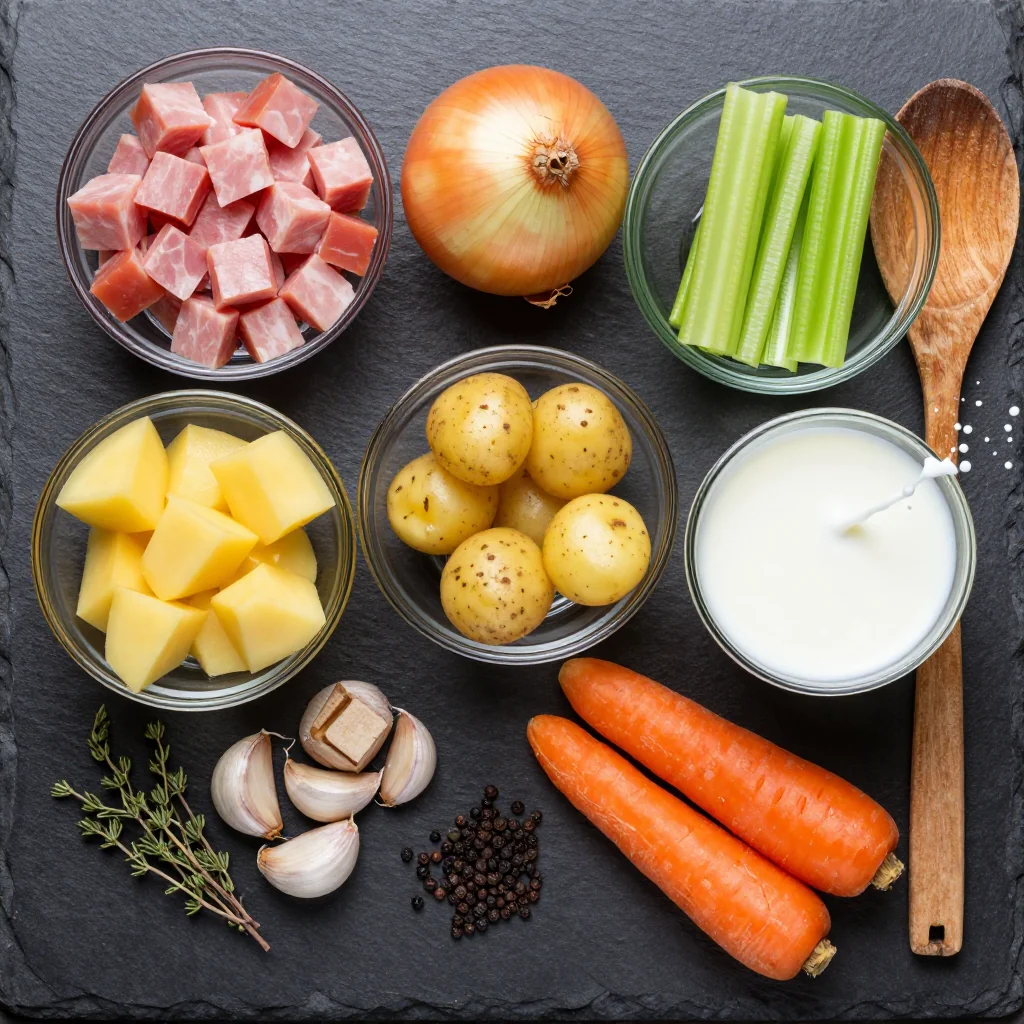
The beauty of this soup lies in its humble ingredients, but don't let their simplicity fool you—each component plays a crucial role in building layers of flavor that taste far more expensive than they actually are.
The Star Players
Ham: I buy a 1-pound ham steak when they're on sale and dice it into perfect little cubes. Don't you dare toss that ham bone if you have one—simmer it in the broth first for an extra layer of smoky depth. If you're starting with leftover holiday ham, even better. The saltier, the better for this soup, as it seasons the potatoes beautifully.
Potatoes: Russets are my go-to because they break down slightly and naturally thicken the soup, but Yukon Golds hold their shape better if you prefer distinct chunks. I use 3 pounds because we're making enough to feed a small army (or have leftovers for days). Pro tip: don't peel them—those skins add nutrients and a rustic charm that screams farmhouse comfort.
Vegetable Trinity: Onion, celery, and carrots form the aromatic base. I dice them small so they disappear into the soup, adding flavor without competing for attention. If your celery is looking sad and limp, don't worry—it'll perk right up in the hot broth.
The Supporting Cast
Chicken Broth: I make my own when I have time (save those rotisserie chicken bones!), but a good quality store-bought version works perfectly. You'll need 6 cups, but keep an extra carton on hand in case your soup gets too thick during simmering.
Milk: Here's where the magic happens. Instead of heavy cream that breaks and curdles, whole milk creates that velvety texture we're after. Let it come to room temperature before adding to prevent curdling. For dairy-free folks, I've had success with full-fat coconut milk—it adds a subtle sweetness that complements the ham beautifully.
Butter & Flour: This dynamic duo creates our roux, the thickening agent that transforms thin broth into silky, spoon-coating luxury. Don't rush this step—let the butter foam and the flour cook for a full two minutes to eliminate any raw taste.
Flavor Boosters
Bay Leaves: Just two leaves add an earthy, herbal note that makes people ask "what's that amazing flavor?" Remove them before serving—nobody wants to crunch down on a dried leaf.
Dried Thyme: My secret weapon for soups. It blooms beautifully in hot fat and adds that indefinable "something special" that elevates humble ingredients to memorable status.
Sharp Cheddar: A modest handful transforms the entire soup, adding tangy depth and helping to thicken the broth. I buy the block and shred it myself—pre-shredded contains anti-caking agents that can make your soup grainy.
How to Make Budget-Friendly Potato and Ham Soup for Winter
Prep Your Vegetables
Start by washing your potatoes thoroughly—remember, we're keeping those skins on for extra nutrients and texture. Dice them into ¾-inch cubes; this size ensures they cook evenly without turning to mush. Dice your onion finely, mince the garlic, and slice the celery and carrots into ¼-inch pieces. Having everything prepped before you start cooking makes the process smooth and stress-free. I like to keep my potato cubes in a bowl of cold water to prevent browning while I prep everything else.
Sauté the Aromatics
In your largest heavy-bottomed pot or Dutch oven, melt 4 tablespoons of butter over medium heat. When it foams and stops sizzling, add the diced onion, celery, and carrots. Season with ½ teaspoon salt and ¼ teaspoon pepper. Cook, stirring occasionally, until the vegetables soften and the onions turn translucent—about 8-10 minutes. Don't rush this step; properly softened aromatics create the flavor foundation that makes this soup special.
Build the Roux
Sprinkle ¼ cup of all-purpose flour over the softened vegetables. Stir constantly for 2 minutes to coat everything in flour and cook out the raw taste. The mixture will look like pasty vegetables—this is exactly right. Keep stirring to prevent burning; if it starts browning too quickly, reduce the heat. This roux will thicken our soup beautifully and create that restaurant-quality texture we're after.
Deglaze and Add Broth
Slowly pour in 2 cups of chicken broth while whisking constantly to prevent lumps. Once smooth, add the remaining 4 cups of broth, the bay leaves, dried thyme, and your diced potatoes. Bring to a boil over high heat, then reduce to medium-low and simmer until the potatoes are tender—about 15-20 minutes. Test doneness by piercing a potato cube with a fork; it should slide off easily but not fall apart.
Add the Ham
Once the potatoes are tender, add your diced ham. If you're using a ham bone, fish it out now and let it cool slightly, then shred any meat off and return it to the pot. Simmer for 5 minutes to heat the ham through and let its smoky flavor permeate the broth. The ham will add just enough salt, so taste before adding more seasoning.
Create the Creamy Base
Here's where the magic happens. In a small bowl, whisk together 2 cups of room-temperature whole milk with 2 tablespoons of flour until smooth. Slowly pour this mixture into the soup while stirring constantly. Increase heat to medium and cook, stirring frequently, until the soup thickens enough to coat the back of a spoon—about 5-7 minutes. Never let it boil vigorously, or the milk will curdle and create an unpleasant texture.
Add the Cheese
Remove the pot from heat and stir in 1 cup of shredded sharp cheddar, one handful at a time, stirring until melted before adding the next. The residual heat will melt the cheese perfectly without risking separation. Taste and adjust seasoning—you might need salt, depending on your ham's saltiness. Remove the bay leaves and discard them.
Serve and Garnish
Ladle the soup into warm bowls and garnish with chopped fresh parsley, extra shredded cheese, and a grinding of black pepper. Serve immediately with crusty bread for dipping. The soup will continue to thicken as it sits; thin with additional milk or broth when reheating. Store leftovers in an airtight container in the refrigerator for up to 4 days, or freeze for up to 3 months.
Expert Tips
Prevent Curdling
Always bring dairy to room temperature before adding to hot soup. Adding cold milk to hot liquid almost guarantees curdling and a grainy texture.
Double the Batch
This soup freezes beautifully, so make a double batch. Freeze in portion-sized containers for easy weeknight dinners when cooking feels impossible.
Control Thickness
The soup will thicken considerably as it sits. Keep extra broth or milk on hand when reheating to achieve your desired consistency.
Ham Bone Magic
If you have a ham bone, simmer it in the broth for 30 minutes before adding vegetables. It adds incredible depth and richness to the soup.
Make-Ahead Friendly
This soup actually tastes better the next day. Make it on Sunday and let it rest in the refrigerator overnight for maximum flavor development.
Vegetarian Adaptation
Substitute smoked paprika and liquid smoke for the ham, and use vegetable broth. Add white beans for protein and that satisfying hearty texture.
Variations to Try
Loaded Baked Potato Style
Top each bowl with crispy bacon bits, sour cream, sliced green onions, and extra shredded cheese for that loaded baked potato experience.
+5 minutes
Southwestern Twist
Add a can of diced green chiles, swap cheddar for pepper jack, and finish with fresh cilantro and a squeeze of lime for a Tex-Mex version.
Medium spice
Seafood Chowder
Replace ham with smoked salmon or shrimp, add corn kernels, and finish with fresh dill for an elegant coastal variation.
Premium version
Garden Vegetable
Add diced zucchini, corn, and spinach during the last 5 minutes of cooking for a vegetable-packed, lighter version perfect for spring.
Vegetarian option
Storage Tips
Refrigeration
Let the soup cool completely before transferring to airtight containers. It will keep for up to 4 days in the refrigerator, though it's best within the first 48 hours. The soup will thicken considerably as it chills; thin with milk or broth when reheating.
Freezing
This soup freezes beautifully for up to 3 months. I recommend freezing in portion-sized containers for easy thawing. Leave about an inch of space at the top of containers as liquids expand when frozen. Thaw overnight in the refrigerator or use the defrost setting on your microwave.
Reheating
Reheat gently over medium-low heat, stirring frequently to prevent scorching. Add milk or broth to achieve desired consistency—the soup will be much thicker after refrigeration. Never boil vigorously after adding dairy, as this can cause curdling.
Frequently Asked Questions
Absolutely! Sauté the vegetables and make the roux on the stovetop first, then transfer everything to your slow cooker. Cook on low for 6-7 hours or high for 3-4 hours. Add the milk and cheese during the last 30 minutes of cooking to prevent curdling.
Mix 2 tablespoons of flour with ¼ cup of cold milk until smooth, then whisk into the hot soup. Simmer for 5 minutes to thicken. Alternatively, mash some of the potatoes against the side of the pot with a potato masher for a naturally thicker texture.
Yes! Substitute 2 cups of leftover mashed potatoes for some of the diced potatoes. Add them during the last 10 minutes of cooking so they don't break down completely. They'll add incredible creaminess and help thicken the soup naturally.
Use bacon, Canadian bacon, or even smoked sausage. For a vegetarian version, add smoked paprika and liquid smoke for that smoky flavor, plus white beans for protein. You can also use leftover roasted chicken or turkey for a different but equally delicious soup.
Milk curdles when added to very hot liquid or when boiled vigorously. Prevent this by bringing milk to room temperature first, adding it slowly while stirring, and never letting the soup boil after adding dairy. If it does curdle, the soup is still safe to eat—it just won't look as pretty.
Certainly! Russets break down and naturally thicken the soup, while Yukon Golds hold their shape better. Red potatoes work well too. Avoid waxy potatoes like fingerlings—they don't break down enough to create that creamy texture we're after. You can even mix varieties for the best of both worlds.

Budget-Friendly Potato and Ham Soup for Winter
Ingredients
Instructions
- Prep vegetables: Dice onions, celery, carrots, and potatoes. Keep potato cubes in cold water to prevent browning.
- Sauté aromatics: In a large pot, melt butter over medium heat. Add onion, celery, and carrots. Season with salt and pepper. Cook until softened, 8-10 minutes.
- Make roux: Sprinkle flour over vegetables. Stir constantly for 2 minutes to cook out raw flour taste.
- Add broth and potatoes: Slowly whisk in 2 cups broth until smooth, then add remaining broth, potatoes, bay leaves, and thyme. Bring to boil, then simmer until potatoes are tender, 15-20 minutes.
- Add ham: Stir in diced ham and simmer 5 minutes to heat through.
- Create creamy base: Whisk milk with 2 tablespoons flour. Slowly pour into soup while stirring. Cook until thickened, 5-7 minutes, without boiling.
- Finish with cheese: Remove from heat, stir in cheddar cheese until melted. Remove bay leaves.
- Serve: Ladle into bowls and garnish with parsley and extra cheese. Serve hot with crusty bread.
Recipe Notes
For best results, bring milk to room temperature before adding to prevent curdling. Soup will thicken as it sits; thin with additional milk or broth when reheating. Freeze in portion-sized containers for up to 3 months.