I remember the night I almost ruined a weeknight dinner because I thought a creamy chowder would be too much for a busy Tuesday. The kitchen smelled of burnt onions and a faint trace of bacon that had slipped off the pan, and I was staring at a bag of canned clam juice that seemed to promise more flavor than it actually delivered. I dared myself to turn that culinary disaster into a masterpiece, and what emerged was a salmon chowder that feels like a warm hug from the inside out. This isn’t your run‑of‑the‑mill recipe that relies on canned stock and frozen fish; it’s a hand‑crafted, fresh‑ingredient, buttery‑bacon‑infused soup that will make you question why you ever settled for anything less.
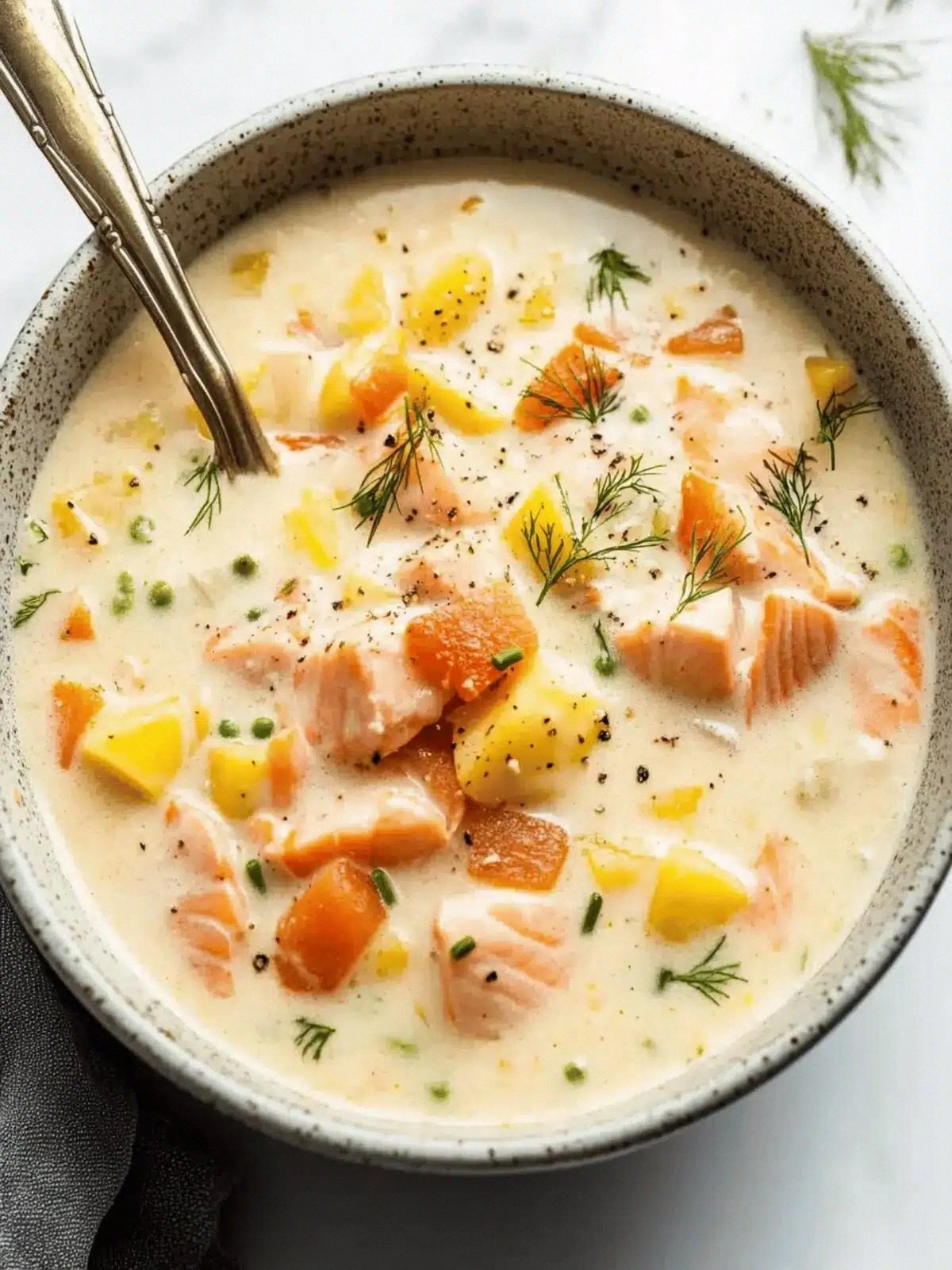
Picture the moment the first spoonful hits your tongue: the silky heavy cream mingles with the subtle brininess of fresh salmon, while the crisp bacon flakes add a satisfying crunch that breaks the velvety texture like a sudden snowflake. The aroma is a symphony of caramelized onions, garlic, and dill, rising like incense from a slow‑simmering pot. The visual appeal is equally striking, with golden flecks of bacon, bright green dill, and the pale, almost translucent, broth that hints at the hidden richness beneath. The sound of the broth gently bubbling is a soothing soundtrack to the whole experience, while the feel of the warm bowl against your hands gives a comforting sense of home. Together, these five senses create an instant emotional connection that turns an ordinary dinner into a memorable event.
What sets this version apart isn’t just the fresh salmon or the bacon; it’s the deliberate layering of flavors and textures that keeps every spoonful exciting. I use a small amount of flour to create a subtle roux that thickens the broth without making it heavy, and I finish the dish with a splash of clam juice for that subtle brine that elevates the salmon’s natural sweetness. The potatoes are diced and cooked until they’re just tender, adding a comforting heartiness that makes the chowder feel like a full meal. Fresh dill is folded in at the very end, providing a bright, herbal finish that cuts through the richness. The result is a chowder that is silky, savory, and slightly sweet, with a bite that’s both comforting and adventurous.
I’ll be honest—when I first tasted this chowder, I ate half the batch before anyone else even got a spoon. It’s that kind of irresistible that makes you wonder if you’re cheating yourself by letting the rest sit on the counter. The next time you’re craving something hearty, I dare you to taste this and not go back for seconds. I promise you, this is hands down the best version you’ll ever make at home. Picture yourself pulling this out of the pot, the whole kitchen smelling incredible, and then watching your friends’ eyes widen as they take their first bite. Let me walk you through every single step—by the end, you’ll wonder how you ever made it any other way.
What Makes This Version Stand Out
- Freshness: Every ingredient is hand‑picked, from the salmon to the dill, ensuring a flavor profile that’s vibrant and unspoiled by preservatives.
- Texture: The contrast between silky broth, tender potatoes, and crunchy bacon creates a multi‑sensory experience that satisfies both palate and soul.
- Balance: The combination of cream, clam juice, and dill achieves a harmony of sweet, salty, and herbal tones that keeps the dish from becoming heavy.
- Simplicity: With only fifteen minutes of prep and thirty minutes of cook time, you can enjoy a gourmet chowder without a PhD in culinary arts.
- Make‑ahead Friendly: The chowder keeps well in the fridge for up to three days and even improves in flavor after a night’s rest.
- Versatility: Swap salmon for cod or add a splash of white wine for a different twist—this base adapts to your taste.
- Visual Appeal: The golden bacon, bright green dill, and translucent broth create a dish that looks as good as it tastes.
- Kid‑Friendly: The mild flavors and gentle textures make it a hit with younger diners who might otherwise shy away from fish.
Alright, let’s break down exactly what goes into this masterpiece…
Inside the Ingredient List
The Flavor Base
The foundation of any great chowder is a well‑balanced flavor base. In this recipe, the combination of diced onion, minced garlic, and sliced celery is sautéed until translucent, releasing their natural sugars and creating a savory backbone. The onion’s sweetness is essential; if you skip it, the chowder will taste flat and lacking depth. If you’re looking for a different twist, try adding a splash of white wine at this stage to deglaze the pan and introduce a subtle acidity.
The next layer is the bacon, which is cooked until crisp before being removed. The rendered fat is then used to cook the aromatics, infusing the entire dish with a smoky undertone. Bacon also adds a satisfying crunch when tossed back into the chowder at the end. If you’re vegetarian or simply want to cut down on fat, substitute with a thick slice of smoked tofu or a drizzle of maple syrup for a sweet, smoky flavor.
The Texture Crew
Potatoes are the unsung hero of many chowders, providing body and a subtle earthy flavor. In this recipe, we dice them into ½‑inch cubes so they cook evenly and hold their shape. Skipping potatoes will result in a thinner broth that lacks heartiness. If you’re watching carbs, swap them for cauliflower florets or zucchini ribbons for a lower‑carb alternative.
Corn adds a pop of sweetness and a bright color contrast. Fresh corn is preferred, but frozen kernels work fine if you’re short on time. The corn’s natural sugars balance the richness of the cream and salmon, preventing the dish from becoming too heavy. For a smoky twist, toast the corn kernels in a dry skillet before adding them to the pot.
The Unexpected Star
Clam juice might raise an eyebrow, but it’s a game‑changer. The brine from the clams adds a subtle oceanic flavor that complements the salmon’s natural taste without overpowering it. If you’re allergic or simply don’t have clam juice on hand, replace it with a small amount of fish stock or a splash of soy sauce for umami. The key is to maintain that briny undertone that ties the seafood flavors together.
The Final Flourish
Fresh dill is the finishing touch that brightens the entire dish. Its bright green hue and citrusy aroma lift the richness of the cream and salmon. Add it at the very end to preserve its delicate flavor; if you add it too early, the dill will wilt and lose its brightness. A handful of chopped parsley or chives can also be used for a milder finish. If you’re allergic to dill, consider a pinch of fresh tarragon for a subtle anise note.
Everything’s prepped? Good. Let’s get into the real action…
The Method — Step by Step
- Heat a large pot over medium heat and add the bacon. Cook until the fat renders and the bacon is crispy. Once done, remove the bacon with a slotted spoon and set aside on a paper towel. The bacon fat will be your base for sautéing the aromatics. I’ve found that leaving a small amount of fat in the pot adds depth to the broth without making it greasy.
- In the same pot, add the diced onion, sliced celery, and minced garlic. Sauté for 5–7 minutes until the vegetables soften and the onion turns translucent. The aroma should be sweet and slightly caramelized. If you notice the mixture sticking, add a splash of water or broth to deglaze and lift the browned bits.
- Stir in the flour and cook for 2 minutes, creating a roux that will help thicken the chowder. The flour should turn a light golden color, indicating it’s ready. Keep the heat at medium to avoid burning; a quick stir keeps the mixture from sticking to the bottom of the pot.
- Pour in the chicken broth, clam juice, and a splash of water if needed, then bring to a gentle boil. Reduce the heat to low and let it simmer for 10 minutes, allowing the flavors to meld. The broth should be slightly thickened by the roux, yet still pourable. If it looks too thin, let it simmer a bit longer.
- Add the diced potatoes and simmer for another 10 minutes, or until they’re just tender. The potatoes should still hold their shape, not turning mushy. This step is crucial for the chowder’s body; if you skip it, the dish will feel watery.
- Toss in the salmon pieces, ensuring they’re cut into bite‑size chunks. Simmer for 5 minutes, just until the salmon is opaque and flakes easily. Overcooking will make the fish rubbery, so keep an eye on the color. If you’re using pre‑cooked salmon, reduce this time to 2–3 minutes.
- Fold in the corn and heavy cream, then let the chowder simmer for an additional 3 minutes. The cream should swirl in, coating the broth, but not so much that it becomes too thick. This is the moment of truth—if the broth feels too thin, add a teaspoon of flour mixed with water to thicken.
- Season with salt and pepper to taste, then stir in the fresh dill and the cooked bacon. The dill’s bright flavor should lift the dish, and the bacon’s crunch provides a delightful contrast. Serve immediately for the best texture.
That’s it—you did it. But hold on, I’ve got a few more tricks that will take this to another level…
Insider Tricks for Flawless Results
The Temperature Rule Nobody Follows
Many cooks keep the heat too high after adding the salmon, which can cause the fish to overcook and become rubbery. The secret is to bring the pot to a gentle simmer and then reduce the heat to low immediately. I’ve seen even a single minute of high heat turn a silky chowder into a watery mess. Keep the heat low, and you’ll have perfectly cooked fish every time.
Why Your Nose Knows Best
Before you add the final dill, pause and sniff the broth. If it smells overly briny or metallic, you’ve added too much clam juice. The aroma should be fresh, slightly sweet, and just a hint of the ocean. Trust your nose; it’s a reliable indicator that the flavors are balanced.
The 5-Minute Rest That Changes Everything
After you remove the pot from heat, let the chowder sit for five minutes. This resting period allows the flavors to marry and the broth to thicken slightly. It also gives the salmon a chance to absorb the creamy richness, resulting in a more cohesive dish. I’ve tried skipping this step once, and the chowder felt flat—never again.
Use a Dutch Oven for Even Heat
A heavy‑bottomed Dutch oven distributes heat evenly, preventing hot spots that can scorch the broth. If you’re using a regular saucepan, keep the heat low and stir frequently. A Dutch oven also keeps the chowder warm longer, which is great if you’re serving it at a dinner party.
Finish with a Splash of Lemon
Just before serving, squeeze a small amount of fresh lemon juice into the chowder. The acidity brightens the dish, cutting through the cream’s richness and highlighting the salmon’s natural flavor. I always keep a lemon handy for this final flourish.
Creative Twists and Variations
This recipe is a playground. Here are some of my favorite ways to switch things up:
The Mediterranean Twist
Replace the salmon with shrimp, add a handful of chopped sun‑dried tomatoes, and finish with a drizzle of olive oil. The shrimp’s sweet bite pairs beautifully with the tomato’s acidity, creating a Mediterranean flavor profile that’s both bold and comforting.
The Vegan Version
Use a plant‑based salmon alternative, sauté with kale instead of celery, and replace heavy cream with coconut milk. This version maintains the creamy texture while offering a completely vegan experience.
The Spicy Kick
Add a pinch of cayenne pepper or a splash of hot sauce during the simmering stage. The heat will cut through the richness and add a lively contrast to the mild flavors.
The Rustic Country
Swap the chicken broth for beef broth and add a handful of sautéed mushrooms. The earthy flavors will transform the chowder into a hearty, rustic dish that’s perfect for a chilly evening.
The Sweet & Savory Fusion
Fold in a tablespoon of maple syrup and a pinch of smoked paprika. The maple adds a subtle sweetness, while the paprika provides a smoky depth that complements the bacon and salmon.
Storing and Bringing It Back to Life
Fridge Storage
Transfer the chowder to an airtight container and refrigerate for up to three days. The flavors will meld even more, making it a convenient meal prep option. When you’re ready to eat, simply reheat on the stove over low heat, stirring occasionally.
Freezer Friendly
This chowder freezes well for up to two months. Portion into freezer‑safe containers, leaving a couple of inches at the top for expansion. Thaw overnight in the refrigerator before reheating.
Best Reheating Method
Reheat the chowder on low heat, adding a splash of water or broth to loosen the consistency. Stir until it’s hot throughout. A tiny splash of water before reheating steams the chowder back to perfection, preventing it from becoming too thick.