Love this? Pin it for later! 📌
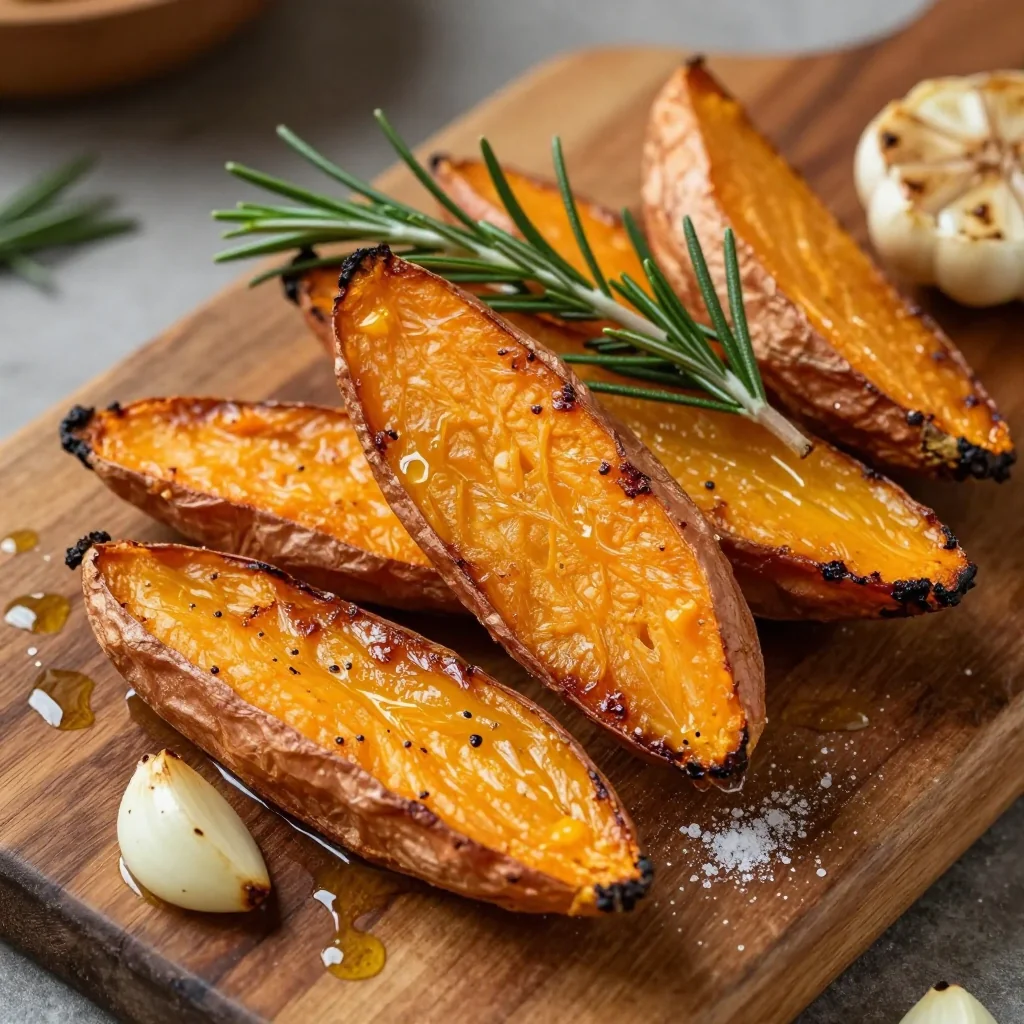
Every Sunday, my kitchen fills with the earthy perfume of fresh rosemary and sizzling garlic as I slide a sheet-pan of sunset-orange sweet-potato wedges into the oven. It started five years ago when I promised myself I’d master a side dish that felt restaurant-worthy yet week-night-easy—something that could sit proudly beside a holiday roast or a simple grilled-chicken salad. After dozens of tests (and more than a few soggy casualties), I finally landed on this formula: high heat, a two-stage seasoning method, and a light dusting of cornstarch for shatter-crisp edges. The wedges emerge with caramelized ridges that crackle under your teeth, revealing creamy, almost custard-like centers. My kids call them “sweet-potato fries without the fryer,” and my friends routinely ask if I secretly double-fry. Nope—just a hot oven, good olive oil, and the magic trio of garlic, rosemary, and smoked paprika. Whether you’re meal-prepping for the week or hunting for the perfect pot-luck contribution, these wedges hit that sweet spot of healthy, hearty, and irresistibly snack-able.
Why This Recipe Works
- Ultra-crispy edges: A light cornstarch coating draws out surface moisture so the oven can concentrate on browning.
- Two-stage seasoning: Tossing with salt before roasting concentrates flavor; garlic and rosemary go on after so they don’t burn.
- Single-pan ease: Parchment paper equals zero scrubbing and lets you slide the wedges right onto the platter.
- Healthy comfort food: Oven-baked, fiber-rich, and naturally sweet—no deep-fryer required.
- Make-ahead friendly: Par-roast, cool, and freeze; finish at 425 °F for 10 minutes anytime.
- Endlessly adaptable: Swap rosemary for thyme, add chili flakes, or finish with maple syrup for a sweet-savory twist.
Ingredients You'll Need
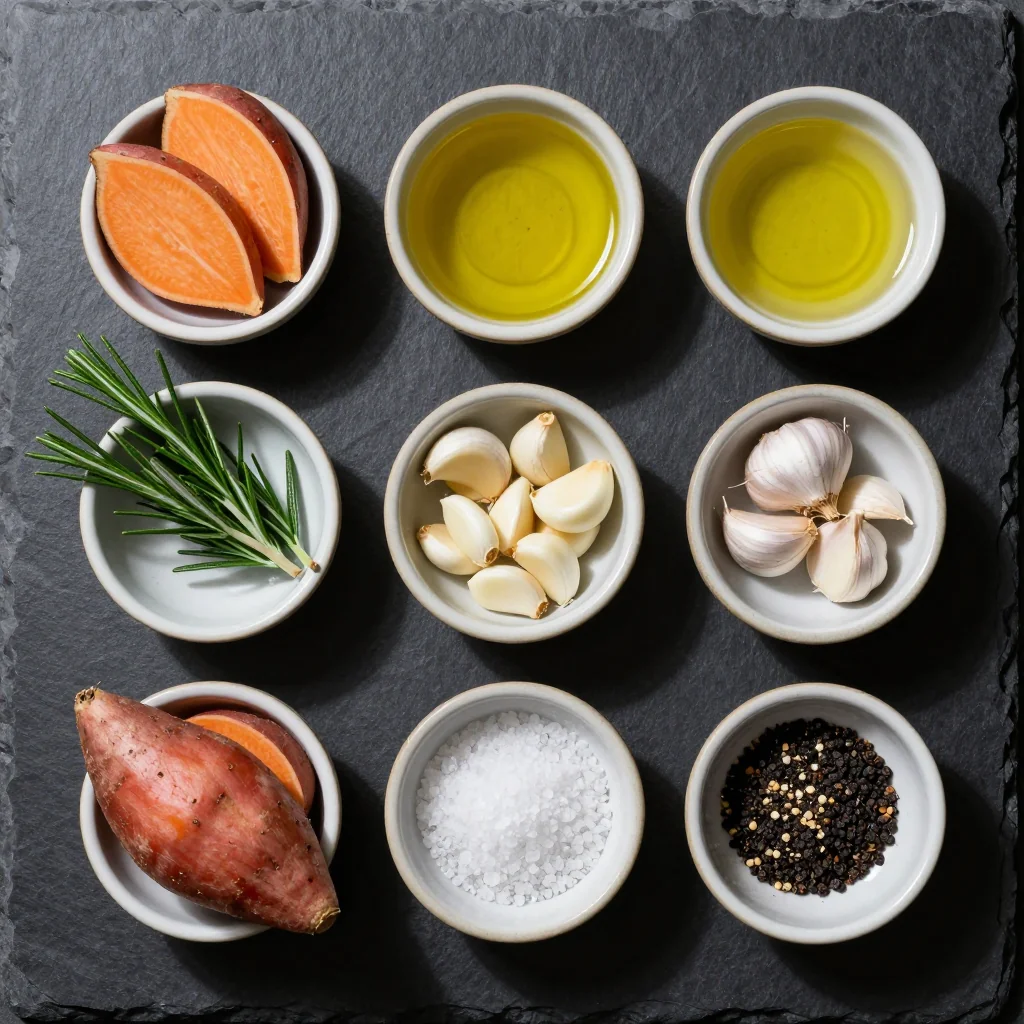
Great results start at the produce bin. Look for medium sweet potatoes—about 6–7 inches long and roughly the same thickness from end to end—so the wedges cook evenly. I prefer the copper-skinned, orange-flesh varieties (often labeled “garnet” or “jewel”) for their moisture balance and deep sweetness. Avoid the super-tapered ones; those skinny tips scorch before the centers soften.
Sweet potatoes: Three medium spuds yield roughly 1 ½ lb once peeled. Leave the skin on if you like; just scrub well—the skin adds fiber and turns delightfully chewy.
Olive oil: A full tablespoon per potato may feel generous, but fat transfers heat, encourages browning, and carries fat-soluble flavors. Use a solid everyday extra-virgin; save the grassy finishing oils for salads.
Cornstarch: The secret weapon. Just a teaspoon per potato absorbs surface moisture without tasting starchy. Arrowroot or potato starch work in a pinch.
Garlic: Fresh only, please. Pre-minced jars contain citric acid that turns bitter under high heat. Micro-planed or finely minced, garlic mingles with the hot wedges in the final five minutes so it perfumes without scorching.
Fresh rosemary: Woody stems strip easily—run two fingers backward along the sprig. If you must sub dried, use one-third the amount and add it with the cornstarch so the heat rehydrates the leaves.
Smoked paprika: Adds subtle campfire depth. Sweet or hot paprika both work; smoked just makes people ask, “What’s that extra something?”
Sea salt & black pepper: I use coarse kosher for the first toss; fine sea salt finishes at the table so every bite pops.
How to Make Crispy Baked Sweet Potato Wedges with Garlic and Rosemary for a Healthy Side Dish
Heat the oven & prep the pan
Place a rimmed sheet-pan on the middle rack and preheat to 425 °F (220 °C). A screaming-hot pan jump-starts caramelization the moment the wedges hit the metal. Line with parchment only after preheating; otherwise the paper may scorch.
Cut uniform wedges
Halve each sweet potato lengthwise, then slice each half into 4–5 long spears, ¾-inch thick at the widest edge. Consistency equals even cooking. Transfer to a large bowl of cold water and soak 15 minutes to pull out excess starch (another crispiness booster). Drain and blot bone-dry with a lint-free towel.
First seasoning stage
Sprinkle wedges with 1 tsp coarse kosher salt and 1 tsp cornstarch. Toss vigorously until every surface looks lightly dusty, not chalky. Drizzle with 3 Tbsp olive oil and toss again; each wedge should glisten. The salt draws moisture to the surface, the cornstarch locks it away, and the oil delivers heat.
Arrange for airflow
Carefully remove the hot pan, line with parchment, and fan the wedges in a single layer, skin-side down where possible. Overlapping = steaming. Leave ¼-inch gaps; use two pans rather than crowding one.
Roast undisturbed
Slide the pan back onto the center rack and roast 20 minutes. Resist the urge to flip early; the bottoms need uninterrupted contact to form a golden crust.
Flip & continue
Using thin tongs, turn each wedge onto the opposite cut side. Rotate the pan 180 °F for even browning. Roast another 12–15 minutes until deeply bronzed at the edges and the centers yield to gentle pressure.
Garlic-rosemary finish
While the wedges roast, combine 2 Tbsp olive oil, 2 minced garlic cloves, 1 Tbsp chopped rosemary, ½ tsp smoked paprika, and ¼ tsp black pepper in a small bowl. During the final 3 minutes of roasting, brush this mixture over the wedges; the hot surface blooms the aromatics without incinerating the garlic.
Final crisp & serve
Switch the oven to broil for 1–2 minutes, watching closely, until edges blister. Transfer wedges to a platter, sprinkle with flaky sea salt, and serve immediately—preferably with a cooling yogurt-herb dip or a quick aioli.
Expert Tips
Hot pan = crispy bottoms
Let the sheet heat at least 10 min so the wedges sizzle on contact.
Dry thoroughly
Water is the enemy of crunch; use a hair-dryer on cool if you’re impatient.
Don’t crowd
Airflow equals caramelization. Two half-sheet pans trump one crowded pan.
Season post-roast
Fresh garlic burns above 350 °F; add it in the final minutes only.
Freeze par-roasts
Color equals flavor
Taste a wedge—if the center is dull orange, give it 3 more minutes; sugars deepen as it darkens.
Variations to Try
- Smoky chipotle: Replace smoked paprika with ½ tsp chipotle powder and finish with lime zest.
- Sweet maple-pecan: Skip garlic, brush with 2 Tbsp maple syrup in the last 3 minutes and sprinkle ¼ cup chopped pecans.
- Mediterranean: Swap rosemary for oregano, add ¼ cup crumbled feta and a handful of halved cherry tomatoes right before serving.
- Asian twist: Use sesame oil instead of olive, add 1 tsp grated ginger to the garlic finish, and sprinkle with sesame seeds and scallions.
- Buffalo: After broiling, toss hot wedges with 2 Tbsp melted butter + 2 Tbsp buffalo sauce; serve with ranch dip.
Storage Tips
Refrigerate: Cool completely, then store in an airtight container up to 4 days. Reheat on a sheet-pan at 400 °F for 8 minutes; microwaves make them limp.
Freeze: Flash-freeze the cooled wedges on a parchment-lined tray until solid, about 2 hours. Transfer to a zip-top bag; keep 3 months. Roast from frozen at 425 °F for 12–15 minutes, flipping halfway.
Make-ahead for parties: Roast until just shy of golden (about 5 minutes less), cool, cover loosely, and hold at room temperature up to 2 hours. Return to a 425 °F oven for 5–7 minutes right before serving.
Frequently Asked Questions
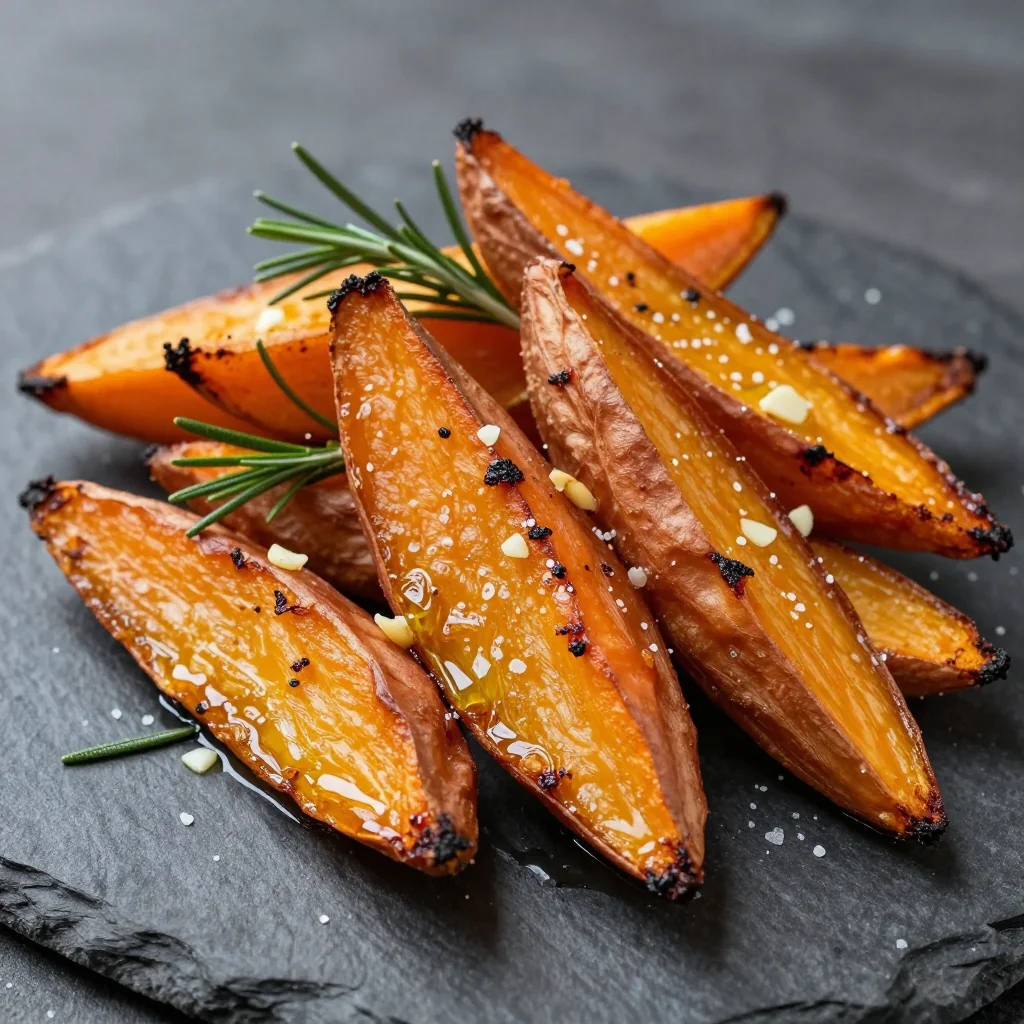
Crispy Baked Sweet Potato Wedges with Garlic and Rosemary for a Healthy Side Dish
Ingredients
Instructions
- Preheat & heat pan: Place a rimmed sheet-pan on the middle rack and preheat oven to 425 °F (220 °C).
- Cut & soak: Halve sweet potatoes lengthwise, then cut each half into 4–5 wedges. Soak in cold water 15 minutes; drain and dry thoroughly.
- Season: Toss wedges with kosher salt and cornstarch. Drizzle with 2 Tbsp olive oil, toss again.
- Arrange: Line hot pan with parchment. Lay wedges in a single layer, skin-side down.
- Roast: Bake 20 minutes, flip, rotate pan, bake 12–15 minutes more until browned.
- Garlic finish: Mix remaining 1 Tbsp oil, garlic, rosemary, and paprika; brush onto wedges. Broil 1–2 minutes until edges blister.
- Serve: Sprinkle with flaky sea salt and serve hot.
Recipe Notes
For extra crunch, dust wedges with 1 additional tsp cornstarch. Store leftovers refrigerated up to 4 days; reheat in a 400 °F oven for best texture.