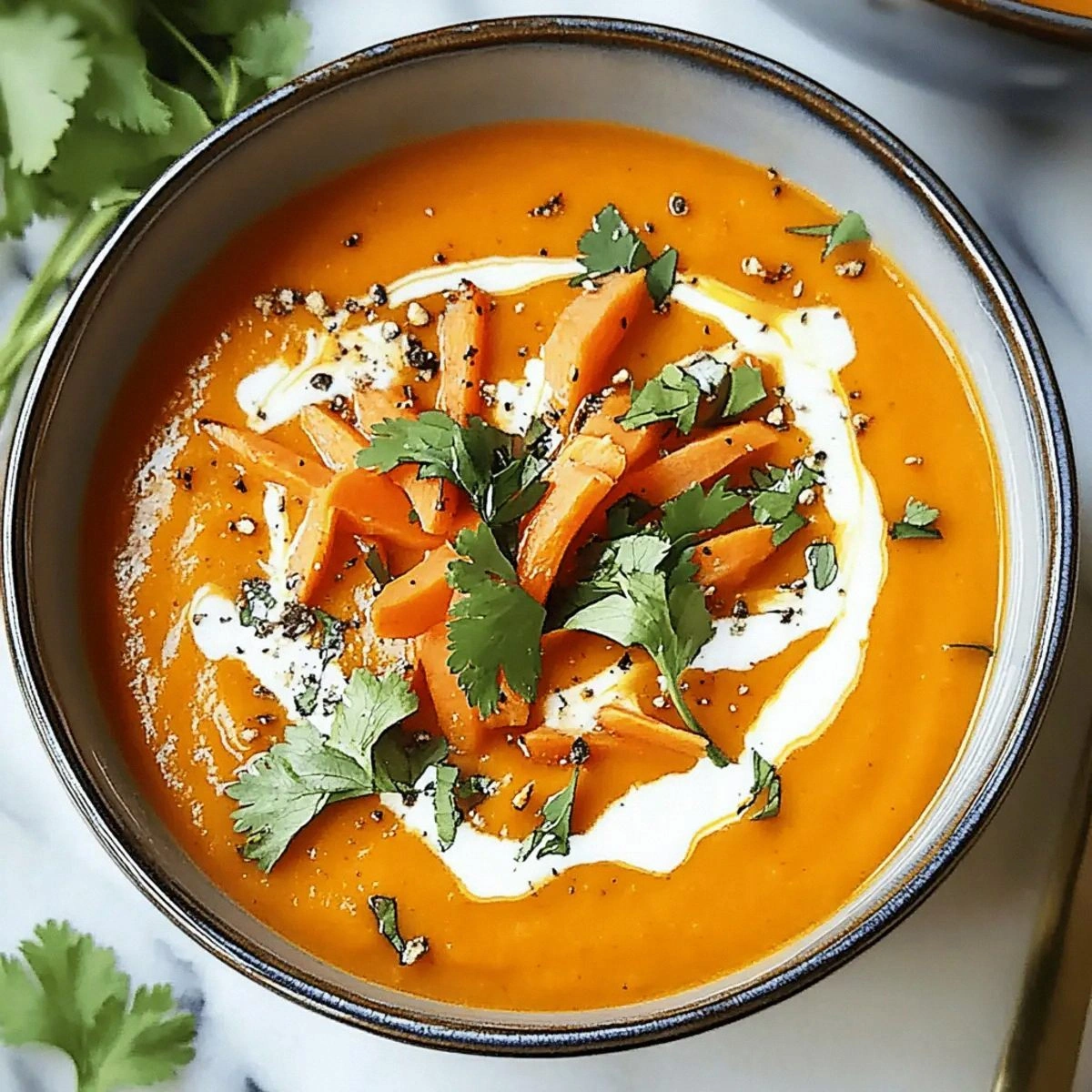
I still remember the night I ruined three pots of soup in a row. It was pouring outside, my apartment felt like an icebox, and all I wanted was something warm and comforting that didn’t come from a can. The first batch tasted like lawn clippings, the second curdled into an orange horror show, and by the third attempt I was ready to order takeout and admit defeat. Then I discovered the secret that changes everything: treat carrots like royalty, not afterthoughts. Fast forward to today, and this spicy carrot ginger soup has become my signature flex—friends text me at midnight begging for the recipe, coworkers bribe me with coffee to bring leftovers, and I’ve even caught my neighbor hovering by my door hoping for a ladle of the good stuff.
Picture this: golden carrots swimming in silky coconut broth, sharp ginger cutting through the sweetness like a lightning bolt, and just enough heat to make your cheeks glow without setting your mouth on fire. The aroma alone is a hug for your face—earthy carrots, zingy ginger, and creamy coconut melding into something that smells like comfort distilled into liquid form. I’ve served this to picky toddlers, spice-averse grandparents, and one self-proclaimed soup hater who asked for thirds. The texture? Imagine velvet melted into sunshine. The flavor? It starts sweet, blooms into warmth, then finishes with a gentle kick that lingers like a secret.
Most recipes treat carrot soup like baby food for adults—bland, boring, and beige. They boil everything to death, toss in a sad bay leaf, then wonder why the result tastes like hospital food. Here’s what actually works: roast those carrots until they caramelize and develop those gorgeous browned edges that taste like candy. Bloom the ginger and garlic in oil until your kitchen smells like a Thai street market. Use the whole can of coconut milk—none of this “light” nonsense that leaves you with watery disappointment. And the game-changer? A whisper of heat that sneaks up on you, making each spoonful addictive rather than painful.
Let me walk you through every single step—by the end, you’ll wonder how you ever made it any other way.
What Makes This Version Stand Out
Flavor Depth: We’re not just boiling carrots here. We’re roasting them until they develop those dark, sticky edges that taste like vegetable candy, then layering in fresh ginger at two different stages for maximum punch. The result is a soup that tastes like it’s been simmering for hours, even though it’s ready in 45 minutes flat.
Texture Perfection: Most carrot soups are either grainy baby food or thin and watery. This one hits that sweet spot between silk and cream, coating your spoon like liquid velvet. The secret? Blending while hot and passing through a fine-mesh sieve for restaurant-level smoothness.
Heat That Builds: Instead of assaulting your taste buds with raw chili, we infuse the oil with just enough red pepper flakes to create a gentle warmth that blooms slowly. It’s like a cozy fireplace rather than a house fire—comforting, not painful.
Coconut Milk Magic: Full-fat coconut milk isn’t just creamy—it adds this subtle tropical note that makes the whole thing feel exotic and luxurious. Skimp here and you’ll get thin, sad soup that tastes like diet food. Use the good stuff and suddenly you’re on a beach in Thailand, even if you’re actually in your tiny kitchen in February.
Make-Ahead Champion: This soup actually tastes better the next day, when all the flavors have had time to mingle and party together. Make a double batch on Sunday, and you’ve got lunch sorted for the week. It freezes like a dream, too—portion it into muffin tins for single-serve portions that thaw in minutes.
Zero Waste Wonder: The whole carrot gets used here—no peeling, no trimming, just a good scrub. The ginger skin stays on too, because that’s where all the essential oils live. Less prep, more flavor, and you’re not tossing half your produce in the compost.
Alright, let's break down exactly what goes into this masterpiece...
Inside the Ingredient List
The Flavor Base
Carrots are the star here, but not just any carrots. Skip those bagged baby carrots that taste like orange cardboard. You want the big, ugly ones from the farmers market—the ones with dirt still clinging to them and tops that look like they’ve been through a windstorm. These babies are sweet, earthy, and packed with beta-carotene that turns into liquid sunshine. Cut them into thick coins so they roast instead of steam, developing those caramelized edges that taste like vegetable candy.
Fresh ginger is non-negotiable. That powdered stuff in your spice rack? Leave it for gingerbread cookies. You want the knobbly fresh stuff that looks like it was just dug up. The younger, the better—look for smooth skin and plump knobs rather than wrinkled, woody pieces. We’re using it two ways here: minced into the base for deep, earthy warmth, and grated fresh at the end for that bright, spicy kick that makes your tongue tingle.
The Texture Crew
Onion and garlic form the savory backbone that keeps this soup from tasting like dessert. Use a yellow onion for its subtle sweetness—it melts into the background, adding body without stealing the show. Two cloves of garlic might seem like overkill, but trust me here. We’re not making vampire repellent; we’re building layers of flavor. The key is cooking them low and slow until they’re translucent, not brown. Brown means bitter, and bitter means your soup tastes like regret.
Vegetable broth is where most recipes go wrong. They use water and wonder why the soup tastes flat. You want the good stuff—either homemade (gold star for you) or the kind that comes in cartons, not cans. The canned stuff tastes like aluminum and sadness. Warm it up before adding to keep everything cooking evenly, because cold broth shocks the vegetables and makes them seize up like a deer in headlights.
The Unexpected Star
Full-fat coconut milk is what transforms this from healthy soup to liquid luxury. Don’t you dare reach for the light version—that’s just coconut-flavored water. You want the thick, gloopy stuff that separates into cream on top. Shake the can before opening, or better yet, scoop off the thick cream for garnish and use the thinner milk in the soup. It’s like getting two ingredients for the price of one.
Red pepper flakes are your heat control knob. Start conservative—you can always add more, but you can’t take it out. Toast them in the oil for 30 seconds until they smell like pizza, then add your vegetables. This blooms the spice, distributing heat evenly rather than creating hot pockets that ambush your taste buds.
The Final Flourish
Salt and pepper seem basic, but they’re what separate amateur soup from restaurant quality. Season at every stage—not just at the end. Salt the carrots before roasting to draw out moisture and intensify sweetness. Salt the onions to help them sweat properly. Salt the final soup, but taste first because the broth might be salty enough. Fresh-ground black pepper adds floral notes that pre-ground can’t touch.
Herbs for garnish aren’t just pretty—they’re functional. Carrot tops, cilantro, or Thai basil each take the soup in a different direction. Carrot tops keep it earthy, cilantro adds brightness, Thai basil brings anise notes that play beautifully with ginger. Pick one and commit—this isn’t a salad bar.
Everything's prepped? Good. Let's get into the real action...
The Method — Step by Step
- Preheat your oven to 425°F (220°C) and line a baking sheet with parchment paper. This isn’t just for easy cleanup—it prevents the carrots from sticking and tearing when you flip them. Cut your carrots into 1-inch chunks, keeping them roughly the same size so they cook evenly. Toss them with just enough oil to coat (about 2 tablespoons) and a generous pinch of salt. Spread them out in a single layer—crowding leads to steaming, and steaming leads to sad, pale carrots that taste like disappointment.
- Roast those beauties for 25-30 minutes, flipping once halfway through. You’re looking for deep caramelization on the edges—dark brown, not black. The smell should fill your kitchen with this incredible sweetness that makes you question whether vegetables can actually be candy. When they’re done, a knife should slide in with zero resistance, and the bottoms should have those gorgeous brown bits that taste like concentrated sunshine. Let them cool slightly while you start the base.
- Heat 2 tablespoons of oil in a heavy-bottomed pot over medium heat. Add your red pepper flakes and let them sizzle for 30 seconds. This is when your kitchen starts smelling like a pizzeria had a baby with a Thai restaurant. The oil should turn slightly orange and smell warm and inviting. Don’t let them burn—burnt pepper flakes taste like angry charcoal and will ruin everything.
- Add your diced onion and cook for 5-6 minutes until translucent and soft. Stir occasionally, but don’t obsess over it. You want them to sweat, not brown. If they start sticking, add a splash of water instead of more oil—you’re not deep-frying here. When they’re ready, they should look like they’re crying tiny onion tears and smell sweet rather than sharp.
- Stir in your minced ginger and garlic. Cook for just 1 minute until fragrant. This is when your neighbors start knocking on your door asking what you’re making. The ginger should smell bright and spicy, the garlic should smell nutty rather than raw. If either starts browning, your heat is too high. You want them to release their essential oils into the fat, creating a flavor base that’ll make your whole building jealous.
- Add your roasted carrots and vegetable broth. The liquid should just barely cover the vegetables—too much and you’ll have thin soup, too little and your blender will struggle. Bring to a gentle simmer, then reduce heat to low. Cover and cook for 15 minutes to let all the flavors meld together. Your kitchen should smell like warmth and comfort by now.
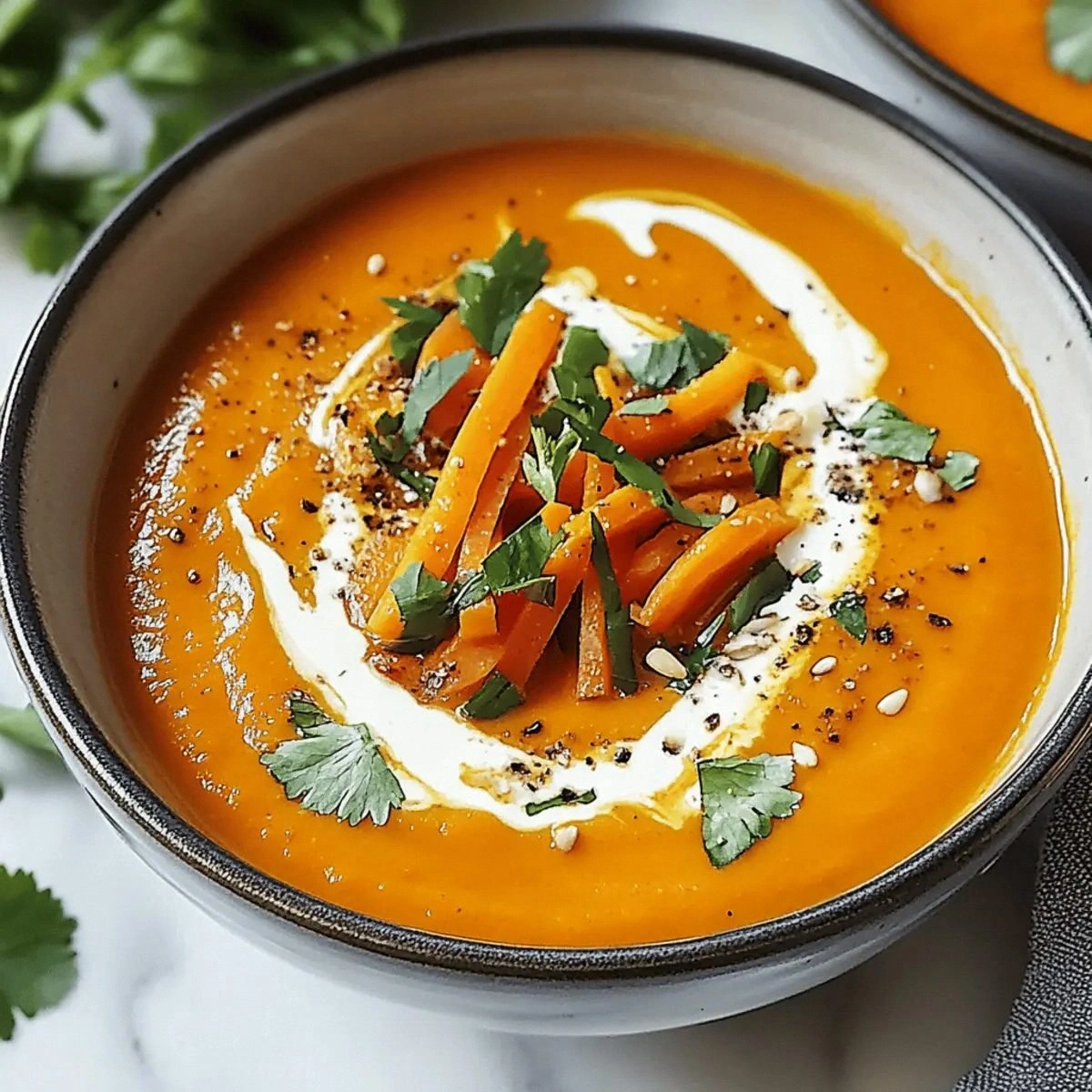
- Remove from heat and let cool slightly. Here’s where most people mess up—they try to blend boiling hot liquid and end up with soup on the ceiling and burns on their arms. Let it cool for 10 minutes, then blend in batches. Fill your blender no more than halfway, remove the center cap from the lid, and cover with a towel. Start on low, then increase to high until completely smooth. It should look like liquid velvet and be bright orange like a sunset.
- Return to the pot and stir in the coconut milk. This is the moment of truth—watch as the orange soup turns creamy and luscious. Taste and adjust seasoning. It might need more salt, a squeeze of lime for brightness, or more pepper flakes for heat. The soup should coat the back of a spoon and taste like comfort in liquid form. If it’s too thick, thin with more broth. Too thin? Simmer uncovered for 5 minutes to reduce.
- For the ultimate silky texture, pass it through a fine-mesh sieve. Yes, it’s an extra step. Yes, it’s worth it. The sieve catches any fibrous bits that didn’t blend completely, leaving you with soup smooth enough to make a French chef weep. Use the back of a ladle to push it through—don’t press too hard or you’ll force the fibers through. What comes out should be liquid sunshine that pours like cream.
- Ladle into warm bowls and garnish with a swirl of coconut cream, fresh herbs, and a crack of black pepper. Serve immediately with crusty bread for dipping. The contrast between the hot soup and cool coconut cream is pure magic. Watch as people take their first spoonful and their eyes go wide with surprise and delight.
That's it—you did it. But hold on, I've got a few more tricks that'll take this to another level...
Insider Tricks for Flawless Results
The Temperature Rule Nobody Follows
Most people serve soup at nuclear-hot temperatures that destroy their taste buds and make them sweat. Don’t be most people. Let the soup cool to about 140°F before serving—warm enough to comfort, cool enough to actually taste the flavors. Think of it like wine service—you wouldn’t serve red wine ice-cold or white wine steaming. Same principle applies here. The ginger will taste brighter, the coconut creamier, and you won’t burn your tongue on the first spoonful. I learned this the hard way after serving soup so hot it could melt steel, then watching guests blow on each spoonful for five minutes before daring to taste.
Why Your Nose Knows Best
Before adding any seasoning, take a big whiff of your soup. Seriously, stick your nose right over the pot and inhale. Your sense of smell is actually more reliable than your taste buds for detecting balance. If it smells flat, it needs acid. If it smells too sweet, it needs salt. If it smells boring, it needs more ginger. I once saved a batch that tasted fine but smelled like wallpaper paste by adding a squeeze of lime and a pinch more salt. The transformation was instant—suddenly it smelled like something you’d pay $12 for in a restaurant.
The 5-Minute Rest That Changes Everything
After blending, let the soup rest for 5 minutes before serving. This isn’t just about cooling—it’s about texture. The fibers need time to fully hydrate and the coconut milk to incorporate completely. During this rest, the soup actually thickens slightly and becomes even silkier. Cover the pot to keep it warm, but don’t stir. Just let it be. When you come back, give it one gentle stir and prepare to be amazed by how the texture improved. I discovered this by accident when my doorbell rang mid-cooking, and I came back to find the smoothest soup I’d ever made.
Creative Twists and Variations
This recipe is a playground. Here are some of my favorite ways to switch things up:
The Thai Vacation Version
Swap the red pepper flakes for Thai red curry paste and add a stalk of lemongrass while simmering. Finish with lime juice, fish sauce, and cilantro. Suddenly you’re not in your kitchen—you’re on a beach in Koh Samui, wearing linen and making questionable decisions with bucket cocktails. The curry paste adds complexity that plain pepper flakes can’t touch, and the lemongrass gives it this incredible citrusy perfume that makes your whole house smell like vacation.
The Fall Comfort Edition
Add a diced apple to roast with the carrots, swap the ginger for fresh turmeric, and finish with a swirl of maple cream. It tastes like autumn in a bowl—sweet, earthy, and somehow nostalgic even if you’ve never had it before. The apple adds this subtle sweetness that plays beautifully with the carrots, while turmeric gives it a gorgeous golden color and anti-inflammatory properties that make you feel virtuous while eating cream.
The Protein Power Bowl
Stir in a can of drained chickpeas after blending, then top with crispy tofu cubes and toasted pumpkin seeds. Suddenly this delicate soup becomes a meal that’ll keep you full until breakfast. The chickpeas add texture and protein, while the crispy tofu gives you something to chew on. It’s like the soup equivalent of wearing sweatpants that somehow look chic—comfortable but put-together.
The Luxe Dinner Party Upgrade
Replace half the coconut milk with heavy cream, add a splash of white wine to the onions, and garnish with butter-poached shrimp. Serve in small cups as an elegant starter that’ll make your guests think you went to culinary school. The wine adds acidity that brightens everything, while the shrimp turn it into something worthy of a white tablecloth. Just don’t tell anyone it took you 30 minutes start to finish.
The Detox Green Version
Add a handful of spinach during the last 5 minutes of simmering, then blend as usual. The spinach disappears completely but adds nutrients and turns the soup this gorgeous vibrant green-orange color that looks like health in a bowl. It tastes exactly the same but makes you feel like you’re doing something good for your body. Plus, it’s a great way to use up spinach that’s starting to look sad in your crisper drawer.
The Fire-Breather Special
Keep everything the same but add a whole Thai chili (stems removed) to the oil at the beginning. Let it sizzle until the kitchen smells like you’re being attacked by pepper spray, then remove and discard the chili. The oil becomes infused with heat that builds slowly rather than punching you in the face. It’s like the difference between a gentle warming and being slapped by a spice demon. Proceed with caution—and keep milk handy.
Storing and Bringing It Back to Life
Fridge Storage
Let the soup cool completely before transferring to airtight containers. It’ll keep for up to 5 days in the refrigerator, though the flavors are best within 3 days. Store the coconut cream garnish separately—whipped cream doesn’t age gracefully. When reheating, add a splash of water or broth because the soup thickens as it sits. Microwave works fine, but do it in 30-second bursts, stirring between each. Better yet, reheat gently on the stove over low heat, stirring frequently. Never let it boil again—it’ll break the coconut milk and turn grainy.
Freezer Friendly
This soup freezes beautifully for up to 3 months. Portion it into muffin tins for single servings that thaw in minutes, or freeze in quart bags laid flat for space-saving storage. Thaw overnight in the fridge or use the defrost setting on your microwave. The texture might separate slightly—just whisk vigorously or give it another quick blend after reheating. Pro tip: freeze the coconut cream in ice cube trays, then pop a cube onto each bowl when serving. It melts into this gorgeous white swirl that looks intentional rather than leftover.
Best Reheating Method
Low and slow is the key. Pour into a pot with a splash of water or broth, then heat over medium-low, stirring frequently. Don’t rush it—high heat will break the coconut milk and turn your silky soup into a grainy mess. If it’s too thick, thin with more liquid. Too thin? Simmer uncovered for 5-10 minutes to reduce. Taste and adjust seasoning before serving, because cold dulls flavors and you might need a pinch more salt to wake everything up. The soup should steam gently and coat your spoon like it did on day one.