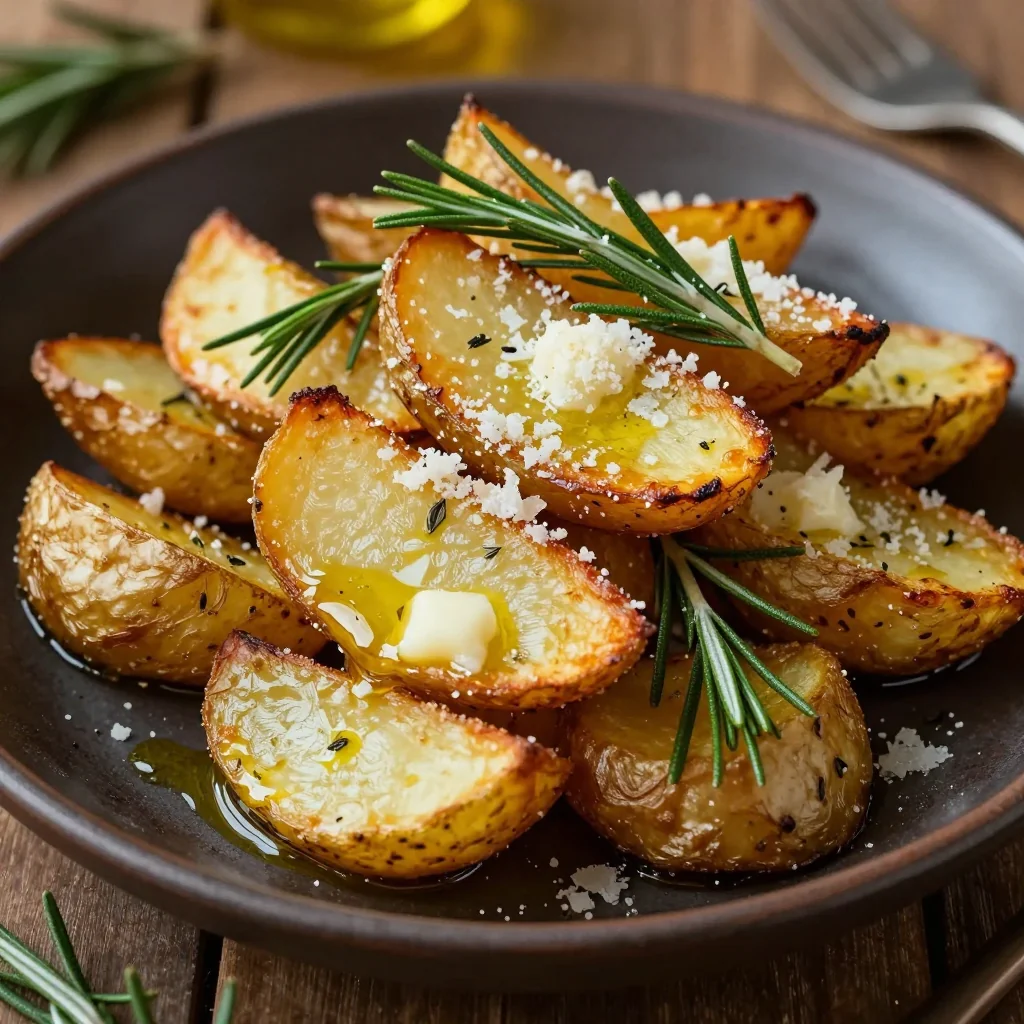
Love this? Pin it for later! 📌
Why This Recipe Works
- One-pan wonder: Toss, roast, serve—no blanching, no colander, no extra dishes to wash when you’d rather be curled up with a book.
- Flavor layering: Garlic goes in twice—once for mellow sweetness during roasting, once for bright punch at the finish—so every bite tastes like the best steak-house potato.
- Texture contrast: A whisper of cornstarch and a pre-heated sheet pan create the shatter-crisp crust we all chase while the insides stay cloud-soft.
- Winter herb strategy: Fresh rosemary survives high heat without turning bitter, infusing the oil with pine-forest perfume that screams “cozy.”
- Cheese that actually sticks: A two-stage parmesan method—half during roasting for umami crust, half right out of the oven for melty frico lace—means no dusty, wasted cheese on the pan.
- Flexible heat source: Works in a 425 °F oven, on a wood-stove burner, or even in a countertop convection toaster when the kitchen is otherwise occupied.
Ingredients You'll Need
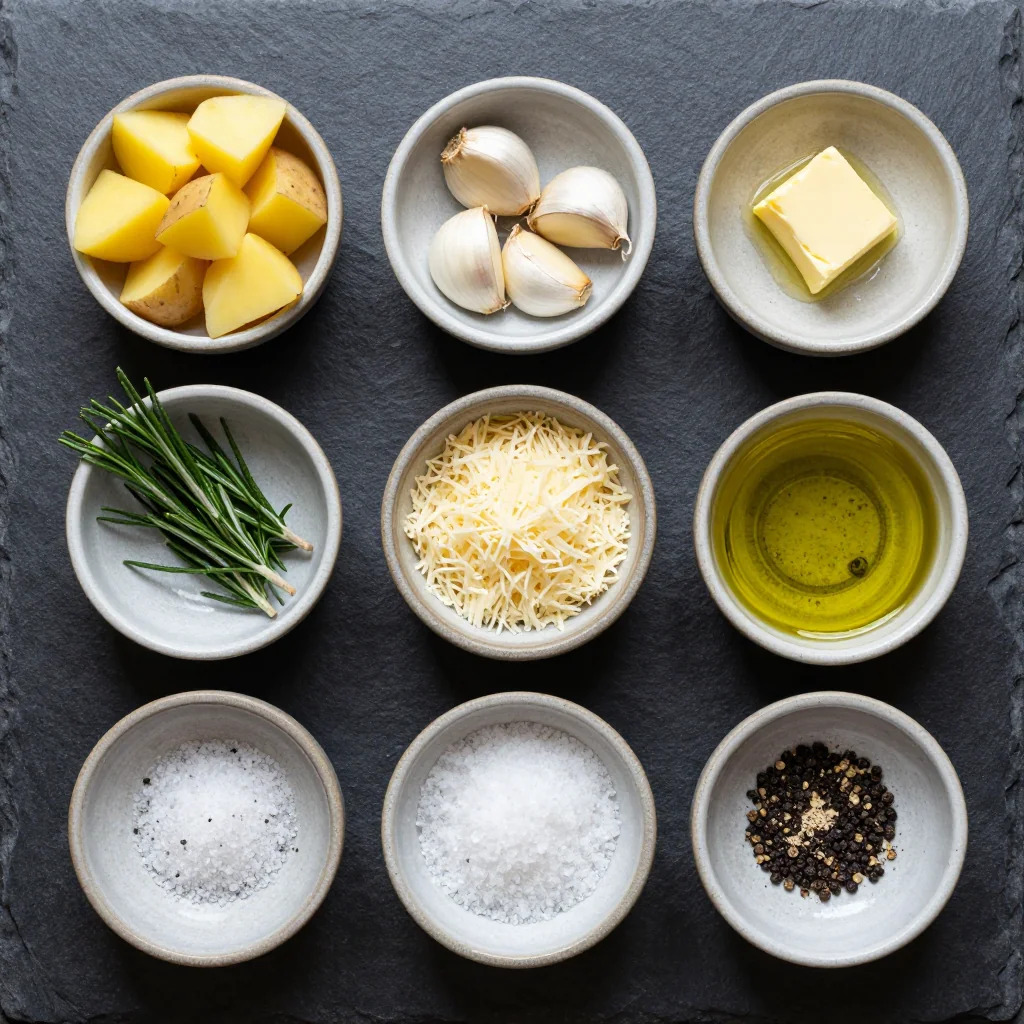
Great potatoes start at the store. In winter, I reach for waxy, thin-skinned varieties that hold their shape after a long roast: baby Yukon Golds, fingerlings, or the marble-sized “creamer” potatoes that appear in mesh bags. Avoid russets here—they’re fabulous fluffy, but they’ll crumble under the aggressive heat we need for crust. Look for firm tubers with no green tinge or sprouting eyes; a little dirt is fine—it protects the skin and washes off in seconds.
Olive oil should be fresh and fruity, something you’d happily dip bread into. In cold months I splurge on a small bottle of early-harvest oil for finishing and use a more economical cold-pressed version for roasting. The difference in flavor is dramatic when the potatoes emerge and get that final glossy drizzle.
Garlic matters. Skip the pre-peeled cloves that have been sitting in citric acid; they taste flat. A firm head with tight papery skin will deliver the sweet, nutty essence we’re after. If green shoots have started inside, split the clove and remove the germ—it adds harshness.
Parmesan is non-negotiable, but the wedge-vs-pre-grated debate ends here. Buy a small brick of authentic Parmigiano-Reggiano and grate it on the fine side of a box grater or microplane. Pre-shredded cellulose-coated cheese refuses to melt properly and leaves a chalky residue. If you’re dairy-free, substitute a modest mountain of nutritional yeast plus a handful of toasted panko for crunch; you’ll still get the savory depth.
Rosemary must be fresh. Dried needles become brittle shards that stick in teeth and taste like pine-sol. In winter, grocery-store herb clamshells suffice, but if you have a pot of rosemary on a sunny sill, clip the tender top three inches—those young stems are fragrant and not yet resinous.
Finally, three stealth ingredients elevate the everyday: a pinch of cornstarch for extra crunch, a whisper of smoked paprika for campfire warmth, and a squeeze of lemon at the end to balance the richness. They’re optional, but once you try them, you won’t skip them again.
How to Make Garlic Parmesan Roasted Potatoes with Fresh Rosemary for Winter Dinners
Heat the sheet pan
Place a rimmed half-sheet pan (13 × 18-inch) on the lowest oven rack and preheat to 425 °F (220 °C). A screaming-hot surface jump-starts caramelization so potatoes don’t fuse into one giant pancake. While the oven works, scrub 2 lb (900 g) small potatoes under cold water; leave marble-sized ones whole, halve golf-ball ones so every piece is roughly 1½ inches. Dry thoroughly in a clean kitchen towel—water is the enemy of crisp.
Seasoning base
In a roomy bowl, combine 3 tablespoons olive oil, 1 heaping teaspoon kosher salt, ½ teaspoon freshly cracked black pepper, ½ teaspoon smoked paprika, and 1 teaspoon cornstarch. Whisk until the starch disappears; it will create a micro-sheen that later morphs into shattery crust. Add potatoes and toss until every cube glimmers. Strip leaves from 2 fresh rosemary sprigs (about 1 tablespoon) and add to the bowl; reserve the stems—they’ll become aromatic smoke bombs on the pan.
First roast
Carefully remove the scorching pan, scatter 1 tablespoon butter on it (it should sizzle and brown within seconds), then spill the potatoes in a single layer. Return to the lowest rack for 20 minutes. Do not flip yet—let them form a golden shell. Meanwhile, finely mince 3 garlic cloves and set aside; keeping it raw until the final stage prevents the acrid bite that over-roasted garlic can acquire.
Flip & cheese shower
Using a thin metal spatula, flip each potato; the underside should be mottled amber. Sprinkle with ½ cup freshly grated parmesan, concentrating on the potatoes rather than the bare pan (cheese on metal burns). Slide back into the oven for 15 more minutes. The cheese will melt, then blister into frico edges that taste like the corner piece of a lasagna.
Garlic & butter finish
Melt 1 tablespoon butter in a small skillet and add the minced garlic. Swirl 45 seconds—just until the raw edge vanishes—and immediately scrape into a heat-proof cup; you want the perfume, not the brown. Drizzle this liquid gold over the potatoes, add the remaining rosemary leaves, and toss gently so every cube carries a whisper of garlic without scorched bits.
Final cheese veil & lemon
Transfer potatoes to a warm serving bowl. Shower with the remaining ¼ cup parmesan and a spritz of fresh lemon juice (about 1 teaspoon). The heat melts the cheese into gossamer threads, and the acid lifts the entire dish from comfort-food heavy to winter-bright. Taste for salt; parmesan is salty, so you may need none. Serve immediately while edges crackle.
Expert Tips
Preheat longer than you think
Even if your oven beeps at 425 °F, wait another 10 minutes. Thermal mass matters: a ripping-hot pan sets the crust before the interior turns mealy.
Dry equals crisp
After washing, tumble potatoes in a salad spinner lined with paper towels—every droplet you remove is 5 extra minutes of crunch time.
Don’t crowd the pan
If doubling for a crowd, use two sheet pans rather than piling higher; steam is the mortal enemy of caramelization.
Hold the second garlic
Adding raw garlic at the end preserves its pungency; if you must prep ahead, keep minced garlic submerged in olive oil to prevent oxidized bitterness.
Make-ahead smart
Par-roast potatoes for 15 minutes in the morning, cool, cover, and refrigerate. At dinner, toss with oil & cheese and finish—total time from fridge to table is 12 minutes.
Reuse the fond
Those caramelized cheese bits stuck to the pan? Deglaze with a splash of white wine, scrape into a jammy sauce, and spoon over roasted chicken for instant pan gravy.
Variations to Try
- 1Truffle & thyme: Swap rosemary for lemon-thyme and finish with a whisper of white-truffle oil—perfect for New Year’s Eve.
- 2Smoky bacon: Toss through ½ cup diced pancetta before the first roast; the fat renders and lacquers the potatoes.
- 3Spicy Calabrian: Stir 1 teaspoon crushed Calabrian chile paste into the oil for gentle, fruity heat that blooms in the oven.
- 4Vegan umami: Sub parmesan with 3 tablespoons nutritional yeast plus 1 tablespoon white miso whisked into the oil.
- 5Sweet-potato swap: Replace half the potatoes with orange sweet potatoes; reduce cornstarch to ½ teaspoon and roast 5 minutes less.
Storage Tips
Leftovers (if such a thing exists) keep 4 days refrigerated in a lidded container lined with paper towel to absorb condensation. Reheat in a 400 °F skillet for 6 minutes; microwaves turn them rubbery. For longer storage, freeze roasted potatoes in a single layer on a tray, then bag; they’ll keep 2 months. Revive from frozen in a 450 °F oven directly on the sheet—no thawing—for 10 minutes with an extra dusting of cheese.
Want to prep ahead for a holiday crowd? Roast as directed, cool completely, then refrigerate on the sheet pan uncovered overnight; the dry air actually improves texture. Next day, reheat at 400 °F for 8 minutes, adding final cheese only in the last 2 minutes so it melts but doesn’t scorch.
Frequently Asked Questions
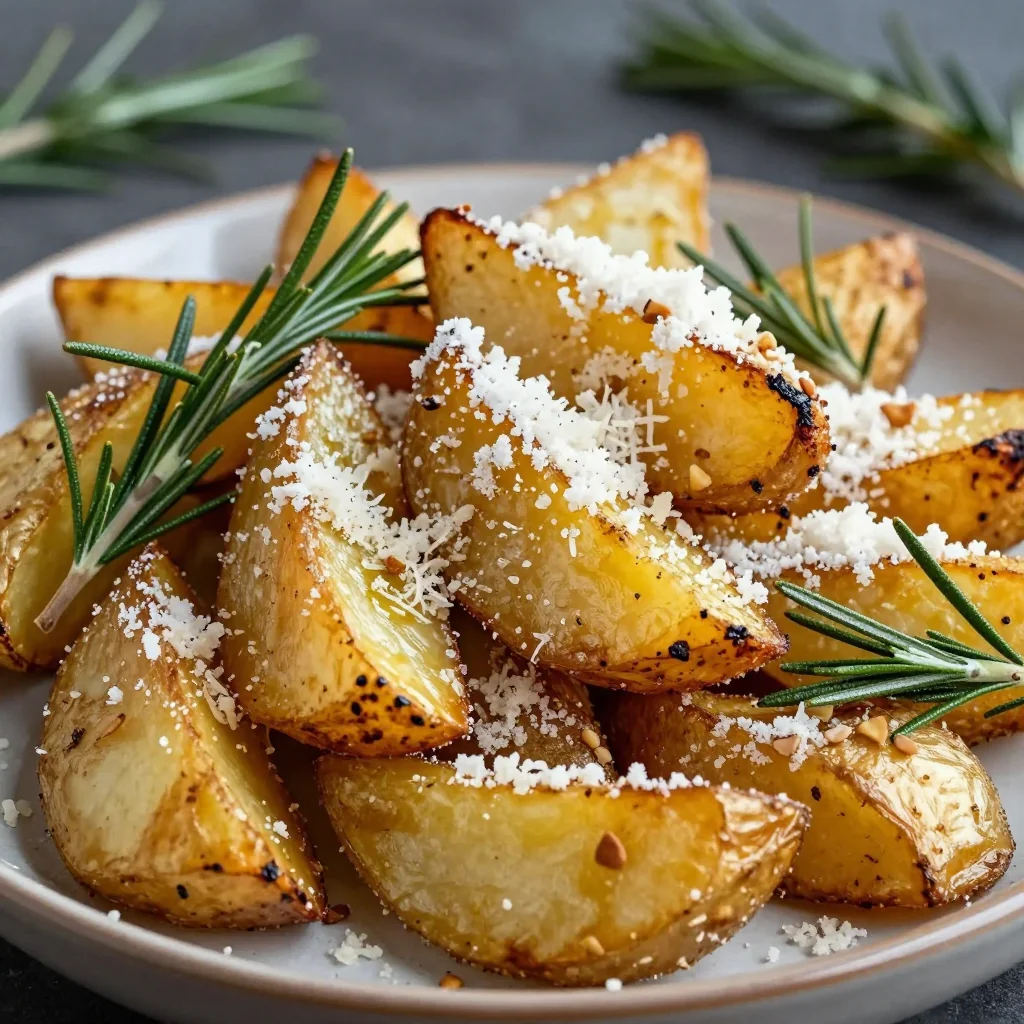
Garlic Parmesan Roasted Potatoes with Fresh Rosemary for Winter Dinners
Ingredients
Instructions
- Preheat: Place a rimmed sheet pan on lowest rack and heat oven to 425 °F (220 °C).
- Season potatoes: In a large bowl whisk 2 tablespoons oil, cornstarch, salt, pepper, and paprika. Add potatoes and 1 tablespoon rosemary leaves; toss to coat.
- First roast: Carefully add 1 tablespoon butter to hot pan; scatter potatoes in single layer. Roast 20 minutes without flipping.
- Flip & cheese: Turn potatoes, sprinkle with ½ cup parmesan, roast 15 minutes more.
- Garlic butter: Melt remaining 1 tablespoon butter in small skillet; add garlic and swirl 45 seconds. Drizzle over potatoes.
- Finish: Toss with remaining parmesan, lemon juice, and reserved rosemary. Serve hot.
Recipe Notes
For extra crunch, chill the oiled potatoes 20 minutes before roasting; cold starch crystallizes and browns faster. If your pan is older and prone to sticking, lay down a sheet of parchment and oil it—cheese will still crisp but release cleanly.