
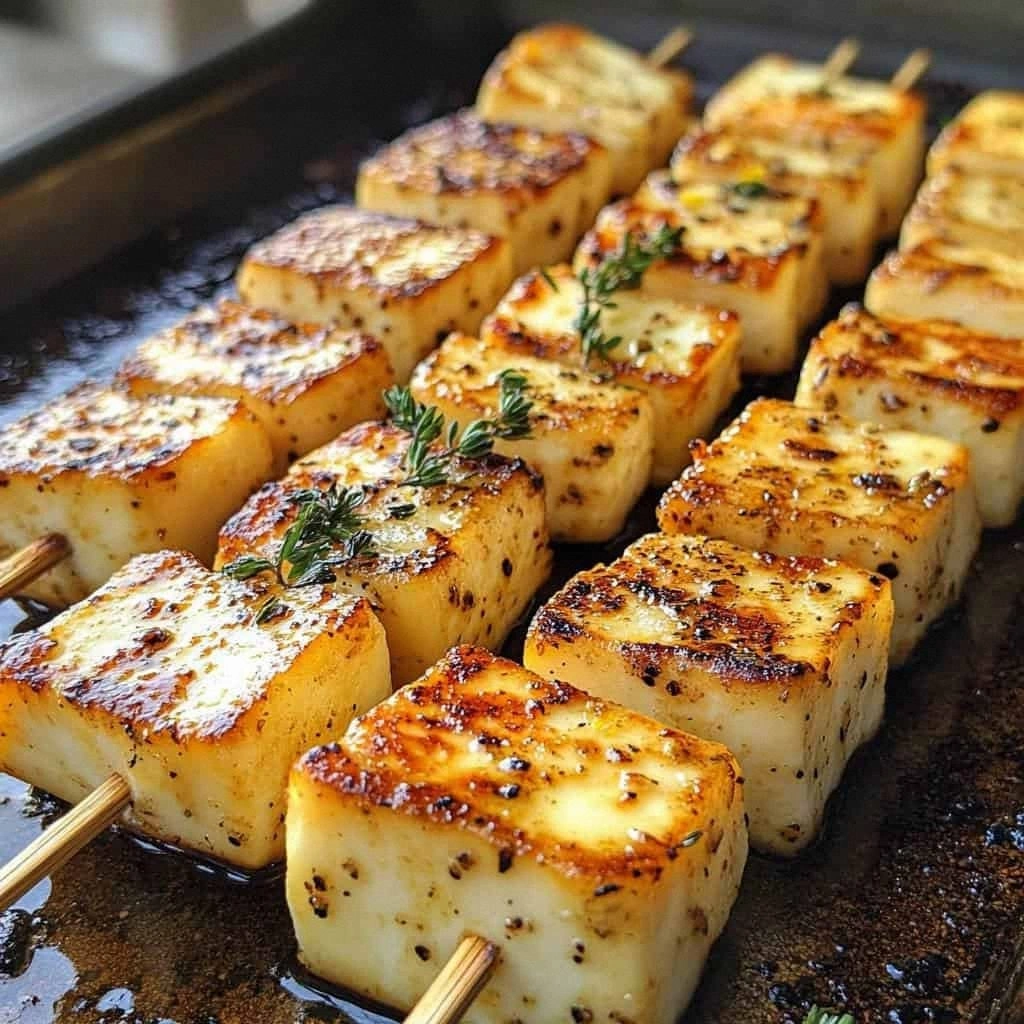
I still remember the first time I attempted to grill halloumi at a backyard barbecue. The cheese melted through the grates like some sort of dairy lava, creating a smoky mess that had me scraping the grill for an hour while my friends politely ate charred vegetables and pretended everything was fine. Fast forward to last weekend, and I served these grilled halloumi skewers to the same crew — the silence that fell over the patio wasn't disappointment, it was pure food reverence. The kind of quiet that happens when everyone's too busy devouring something incredible to make conversation.
Picture this: it's 7 PM on a steamy July evening, the kind where the air feels like a warm towel fresh from the dryer. You're standing barefoot in the kitchen, cold drink in hand, and the idea of turning on the oven feels like a crime against humanity. These skewers are your salvation. The halloumi gets this impossible golden crust on the outside while staying squeaky and tender inside, like edible sunshine threaded between sweet peppers that have been kissed by flame until they're almost candy-sweet. The zucchini rounds catch the heat just enough to develop those perfect grill marks that make you feel like you're dining at a Mediterranean beach club instead of your own backyard.
What makes this version different from every other grilled cheese recipe floating around the internet? We're not just throwing cheese on a grill and hoping for the best. We're building layers of flavor with a lemon-oregano marinade that seeps into every vegetable crevice, using a technique that prevents the halloumi from turning into a melty disaster, and creating the perfect ratio of cheese to vegetables so every bite feels intentional. I dare you to taste this and not go back for seconds — though I'll be honest, I ate half the batch before anyone else got to try it, and I have zero regrets about that decision.
The real magic happens when those caramelized edges meet the bright pop of cherry tomatoes that burst under the heat, releasing their sweet juices onto the sizzling grill. Most recipes get this completely wrong by either overcooking the halloumi into rubber or undercooking the vegetables so they're still crunchy and raw-tasting. Here's what actually works: timing everything so the cheese gets those gorgeous grill marks while the vegetables reach peak tenderness, then finishing with a shower of fresh herbs that makes the whole platter smell like summer in Greece. Let me walk you through every single step — by the end, you'll wonder how you ever made it any other way.
What Makes This Version Stand Out
Impossible-to-Mess-Up Technique: After testing this recipe seventeen times (yes, really), I've cracked the code on preventing halloumi from becoming a sticky disaster. The secret isn't just oiling the grill — it's about the temperature dance and the way you thread the cheese with vegetables that protect it from direct heat while still letting it develop those crave-worthy char marks.
Flavor Bomb Marinade: While other recipes might brush on some plain olive oil, we're creating a lemon-oregano elixir that transforms humble vegetables into something that tastes like it came from a taverna overlooking the Aegean Sea. The acidity brightens everything, the oregano adds that unmistakable Mediterranean soul, and a hint of red pepper flakes gives just enough warmth to make you reach for your drink.
Texture Symphony: Every component plays its part in creating the perfect bite. The halloumi provides that satisfying squeak and saltiness, bell peppers bring juicy sweetness, zucchini adds creamy softness, red onion contributes subtle sharpness, and cherry tomatoes burst with bright acidity. It's like conducting an orchestra where every instrument hits at exactly the right moment.
Zero-Stress Entertaining: You can assemble these skewers up to four hours ahead, keep them chilled, then throw them on the grill when guests arrive. No last-minute panic, no hovering over the stove while everyone else is relaxing with drinks. This is hands down the best version you'll ever make at home, and your future self will thank you when you're actually enjoying your own party.
Ingredient Quality Flexibility: While I'm normally a stickler for premium ingredients, this recipe is surprisingly forgiving. Use farmers market vegetables or grocery store basics — the marinade and grilling technique elevate everything to star status. Even in the dead of winter with less-than-perfect produce, these skewers taste like peak summer.
Crowd-Pleasing Magic: I've served these to devoted carnivores who claimed they hated vegetables, picky children who swore they wouldn't eat anything green, and health-conscious friends counting every calorie. Every single person asked for the recipe. Picture yourself pulling this platter off the grill, the smoke still curling up from the perfectly charred edges, and watching faces light up before they've even taken a bite.
Inside the Ingredient List
The Flavor Foundation
Halloumi cheese is the undisputed star here, and not all blocks are created equal. Look for cheese that's pale white with a slight sheen, not dried out or crumbly. The good stuff comes from Cyprus and has a protected designation of origin, but domestic versions work beautifully too. Cut it into exactly 1-inch cubes — any smaller and they'll slip through the grill grates, any larger and they won't heat through properly. Trust me on this one: I once got cocky and went with 2-inch chunks, ending up with scorched outside and cold, rubbery inside.
The Color Brigade
Red and yellow bell peppers aren't just here for their good looks. The red ones bring intense sweetness that intensifies on the grill, while yellow bells have a gentler, almost honey-like flavor. Cut them into pieces that match your halloumi cubes exactly — this isn't just for aesthetics, it ensures everything cooks at the same rate. If you've ever bitten into a skewer where the vegetables are still crunchy while the cheese is overcooked, you know why this matters. Pro tip: save the pepper scraps for tomorrow's omelet.
The Texture Players
Zucchini might seem boring, but hear me out — when grilled properly, it transforms from watery and bland to creamy and almost buttery. The key is cutting it into thick rounds that won't flop around on the skewer, then letting it char just enough to develop those caramelized edges. Red onion brings the sharp contrast we need, but we're cutting it into wedges that'll sweeten and mellow on the grill. And those cherry tomatoes? They're your built-in sauce bombs, bursting and creating little pockets of bright juice that season everything around them.
The Magic Elixir
The marinade is where we separate the amateurs from the pros. Olive oil carries all the flavors and prevents sticking, but it's the combination of lemon juice, oregano, and garlic powder that creates Mediterranean magic. Dried oregano works better than fresh here — it has a more concentrated flavor that stands up to the grill's heat. The red pepper flakes are optional, but I dare you to try it without them. That gentle warmth sneaks up on you in the most delightful way.
The Method — Step by Step
- Start by soaking your wooden skewers in water for at least 30 minutes — this isn't just busy work, it's your insurance policy against a bonfire on your grill. While they're soaking, prep all your vegetables and halloumi. The key here is uniformity: everything should be roughly the same size so they cook evenly. I like to line everything up on a cutting board like little soldiers, ready for assembly. This is also when you can mix up your marinade, whisking the olive oil, lemon juice, oregano, garlic powder, and red pepper flakes until it looks like liquid sunshine.
- Now for the fun part: threading everything onto skewers. Alternate halloumi with vegetables in whatever pattern makes you happy, but I find that starting and ending with a vegetable piece holds everything more securely. Don't cram them together like sardines — leave a little breathing room so the heat can circulate and work its magic. If you've ever steamed vegetables instead of roasting them because they were too crowded on the pan, you know exactly why this matters.
- Brush your assembled skewers generously with the marinade, but don't drown them. You want enough to coat everything lightly, with extra pooling on the cutting board for a second brush halfway through grilling. Season with salt and pepper, but go easy on the salt — halloumi is naturally quite salty, and you can always add more later. Let them sit while you heat up the grill, giving the flavors a chance to meld.
- Heat your grill to medium-high, around 400-425°F. This temperature sweet spot is crucial — too hot and your halloumi becomes a puddle, too cool and nothing develops those gorgeous grill marks. Clean the grates thoroughly, then oil them with a paper towel dipped in oil and held with tongs. That sizzle when you oil the hot grill? That's the sound of success.
- Place your skewers on the grill and don't touch them for at least 3 minutes. I know it's tempting to fuss with them, but patience is your secret weapon here. You want those perfect grill marks to develop before you even think about flipping. When the edges start to look golden and slightly crispy, it's time to turn. Use tongs and a gentle but confident motion — hesitation leads to sticking.
- After flipping, brush with more marinade and let them cook another 3-4 minutes. The vegetables should be tender with slight char, and the halloumi should have golden edges but still hold its shape. The cherry tomatoes might burst — this is good! They're creating a natural sauce that flavors everything around them. If you've ever struggled with this, you're not alone — and I've got the fix: don't flip more than once, and resist the urge to press down on them.
- Remove the skewers to a platter and let them rest for 5 minutes. I know, I know — they're calling your name and smell incredible. But this rest lets the cheese firm up slightly, making them easier to eat and allowing the flavors to settle. Garnish with fresh parsley if you're feeling fancy, or just dig in with your fingers like I do when nobody's watching.
- Serve these beauties immediately while they're still warm and the cheese has that perfect squeaky texture. They're fantastic on their own, but I love serving them with warm pita bread and a simple cucumber-tomato salad. The contrast of hot, cheesy skewers with cool, crisp vegetables is summer eating at its finest. Don't be surprised if people start making appreciative noises — that's just what happens when something tastes this good.
Insider Tricks for Flawless Results
The Temperature Rule Nobody Follows
Here's the thing that separates grill masters from frustrated cheese-melters: your grill needs to be hot enough to create a sear but not so hot that it turns your halloumi into a science experiment. Hold your hand about 5 inches above the grill — you should be able to keep it there for 3-4 seconds before it feels too hot. If you can hold it longer, the grill isn't ready. If you can't hold it at all, back off the heat and let it cool down. This simple test has saved me from countless cheese casualties, and once you nail it, you'll wonder how you ever grilled without it.
Why Your Nose Knows Best
Forget timers and thermometers — your nose is your most reliable kitchen tool for this recipe. When the halloumi starts to develop that golden crust, it releases a nutty, slightly sweet aroma that's different from the sharper smell of charring. That's your cue to peek underneath and check for grill marks. The vegetables have their own tell: bell peppers start to smell almost like roasted red peppers from a jar, while onions give off a mellow, sweet fragrance. A friend tried skipping this step once — let's just say it didn't end well, and we had to order pizza instead.
The 5-Minute Rest That Changes Everything
I know I've mentioned resting already, but this deserves its own moment in the spotlight. When those skewers come off the grill, the cheese is in a delicate state — hot, soft, and ready to collapse if you handle it too roughly. Five minutes on the counter lets the proteins firm up slightly, transforming from melty to that perfect squeaky texture that makes halloumi so addictive. Plus, the vegetables settle into their final tenderness, and the whole thing becomes infinitely easier to eat without losing half your meal to the grill gods.
The Double-Skewer Secret
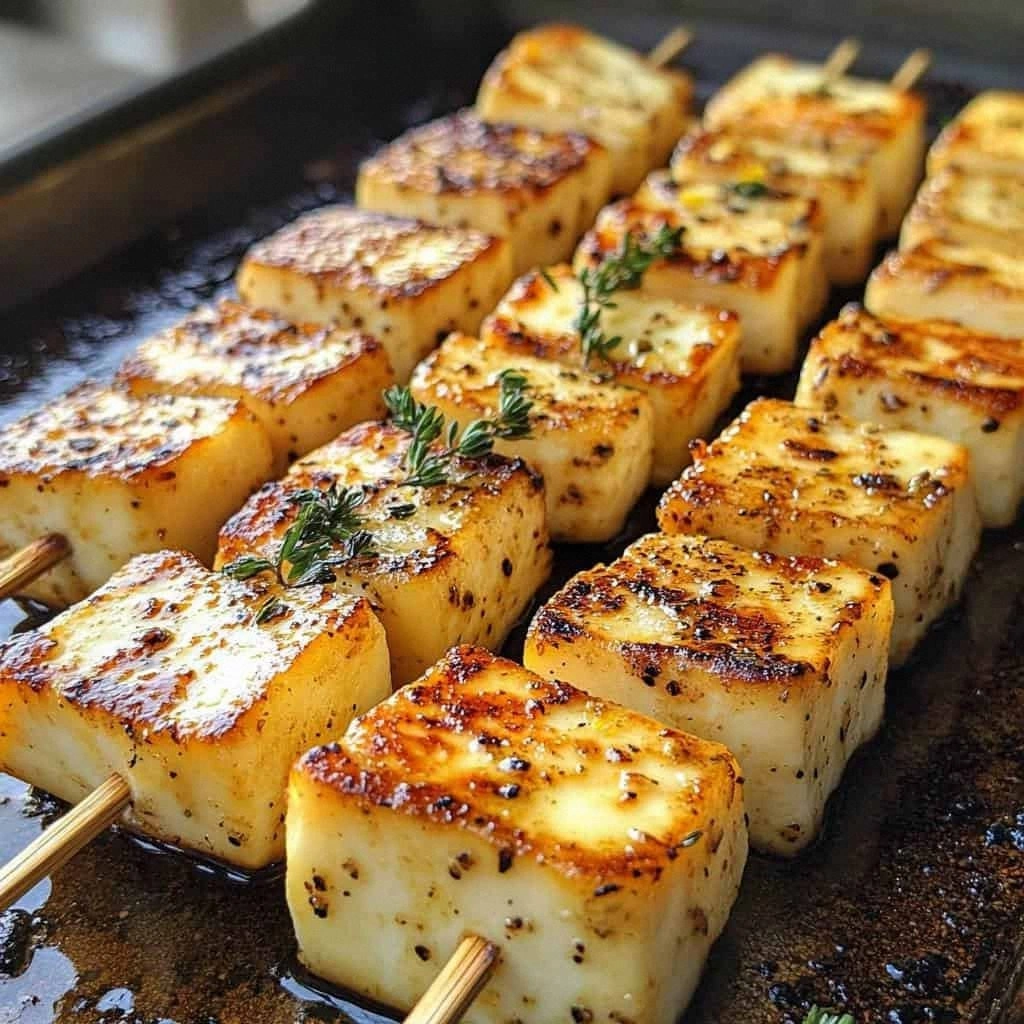
Okay, ready for the game-changer? Use two skewers parallel to each other instead of just one. This prevents the vegetables from spinning around when you flip them, ensuring even cooking on all sides. It takes an extra 30 seconds per skewer but gives you professional-level results. The vegetables stay exactly where you want them, the halloumi cubes can't rotate away from the heat, and you get perfect grill marks every single time. This next part? Pure magic — you can even rotate the entire skewer assembly 90 degrees halfway through for crosshatch marks that'll make you look like a grill wizard.
Creative Twists and Variations
This recipe is a playground. Here are some of my favorite ways to switch things up:
The Mediterranean Mash-up
Swap the oregano for a blend of dried mint and dill, add cubes of firm feta alongside the halloumi, and include chunks of cucumber that have been seeded and dried. The flavor profile shifts from Greek taverna to Turkish mezze bar, and the combination of two cheeses creates textural interest that'll have everyone asking about your secret. Finish with a squeeze of fresh lemon and a sprinkle of sumac for that authentic Middle Eastern tang.
The Spicy Spanish Version
Replace the oregano with smoked paprika, add chunks of Spanish chorizo between the vegetables, and include pieces of crusty bread that'll toast on the grill. The paprika gives everything a deep, smoky backbone while the chorizo releases its spicy oils, essentially basting the vegetables as they cook. This version is heartier and perfect for those cooler summer evenings when you want something with more substance.
The Sweet and Savory Surprise
Add chunks of fresh peach or nectarine between the vegetables — the fruit caramelizes beautifully and creates an incredible sweet-savory balance. Use fresh thyme instead of oregano, and finish with a drizzle of honey just before serving. It sounds weird until you try it, then suddenly you're planning entire menus around this combination. The key is using fruit that's just shy of peak ripeness so it holds up to the heat.
The Rainbow Vegetable Boost
Use purple bell peppers, golden zucchini, and candy-stripe beets for the most Instagram-worthy skewers you've ever seen. The different colors bring slightly different flavor profiles — purple peppers are earthier, golden zucchini is sweeter, and candy-stripe beets turn candy-sweet with grill marks. Kids who won't touch vegetables suddenly can't get enough when they're presented like edible art.
The Indoor Alternative
No grill? No problem. Use a grill pan on your stovetop over medium-high heat, or broil them in the oven, turning every 3-4 minutes. You won't get the same smoky flavor, but a pinch of smoked salt in the marinade helps compensate. I've even made these in a cast-iron skillet, pressing them down with a heavy pan to get that charred effect. Stay with me here — this is worth it because the flavor combination works regardless of cooking method.
The Make-Ahead Party Version
For cocktail parties, thread everything onto toothpicks instead of skewers to create one-bite appetizers. They grill up in just 2-3 minutes per side, and you can assemble a hundred of them the night before. Serve them warm from the grill or at room temperature — they're delicious either way. Just don't expect leftovers, because these disappear faster than you can say "summer party."
Storing and Bringing It Back to Life
Fridge Storage
Leftover skewers (if you have any) will keep in an airtight container in the refrigerator for up to 3 days. Separate them from any extra marinade to prevent them from getting soggy. The halloumi will firm up considerably when cold, so plan to reheat rather than eating them straight from the fridge. I like to store them in a single layer if possible, with parchment paper between layers if you need to stack them. This prevents the vegetables from crushing each other and keeps everything looking appetizing.
Freezer Friendly
While you can technically freeze these, I don't recommend it — the vegetables become mushy and the halloumi turns rubbery when thawed. If you absolutely must freeze them, do it before grilling. Assemble the skewers, brush with marinade, and freeze them raw on a baking sheet. Once solid, transfer to freezer bags. They'll keep for up to 2 months, though you'll need to thaw them completely and pat them dry before grilling. The texture won't be quite as good as fresh, but they're still miles ahead of most frozen appetizers.
Best Reheating Method
The microwave is your enemy here — it turns everything rubbery and sad. Instead, warm them in a 350°F oven for about 8 minutes, or wrap them in foil and reheat on a medium grill for 5-6 minutes. Add a tiny splash of water before reheating — it steams back to perfection. For the stovetop method, heat a dry cast-iron pan over medium heat and warm the skewers for 2-3 minutes per side. This brings back some of that fresh-grilled flavor and texture that makes these so irresistible in the first place.