
Love this? Pin it for later! 📌
This Pantry Clean Out Vegetable Curry has become my signature clean-out-the-fridge recipe, born from necessity but perfected through countless winter nights. It's the kind of recipe that forgives substitution, celebrates imperfection, and somehow always tastes better than the sum of its parts. Whether you're snowed in, trying to reduce food waste, or simply craving something that warms you from the inside out, this curry delivers comfort in every spoonful. The aroma alone—ginger, garlic, and spices mingling in coconut milk—is enough to make your whole house feel like a warm hug.
Why This Recipe Works
- Flexible Foundation: Works with almost any vegetables you have on hand, from wilted spinach to that half-used cauliflower
- Pantry Staples: Uses ingredients you likely already have—canned tomatoes, coconut milk, and basic spices
- One-Pot Wonder: Minimal cleanup means more time to curl up under a blanket
- Meal Prep Champion: Tastes even better the next day, making it perfect for busy weeknights
- Budget-Friendly: Turns humble vegetables into a restaurant-worthy meal for pennies per serving
- Nutrition Powerhouse: Packed with vitamins, fiber, and plant-based protein to boost winter immunity
- Comfort Factor: The creamy coconut base and warming spices provide serious hygge vibes
Ingredients You'll Need
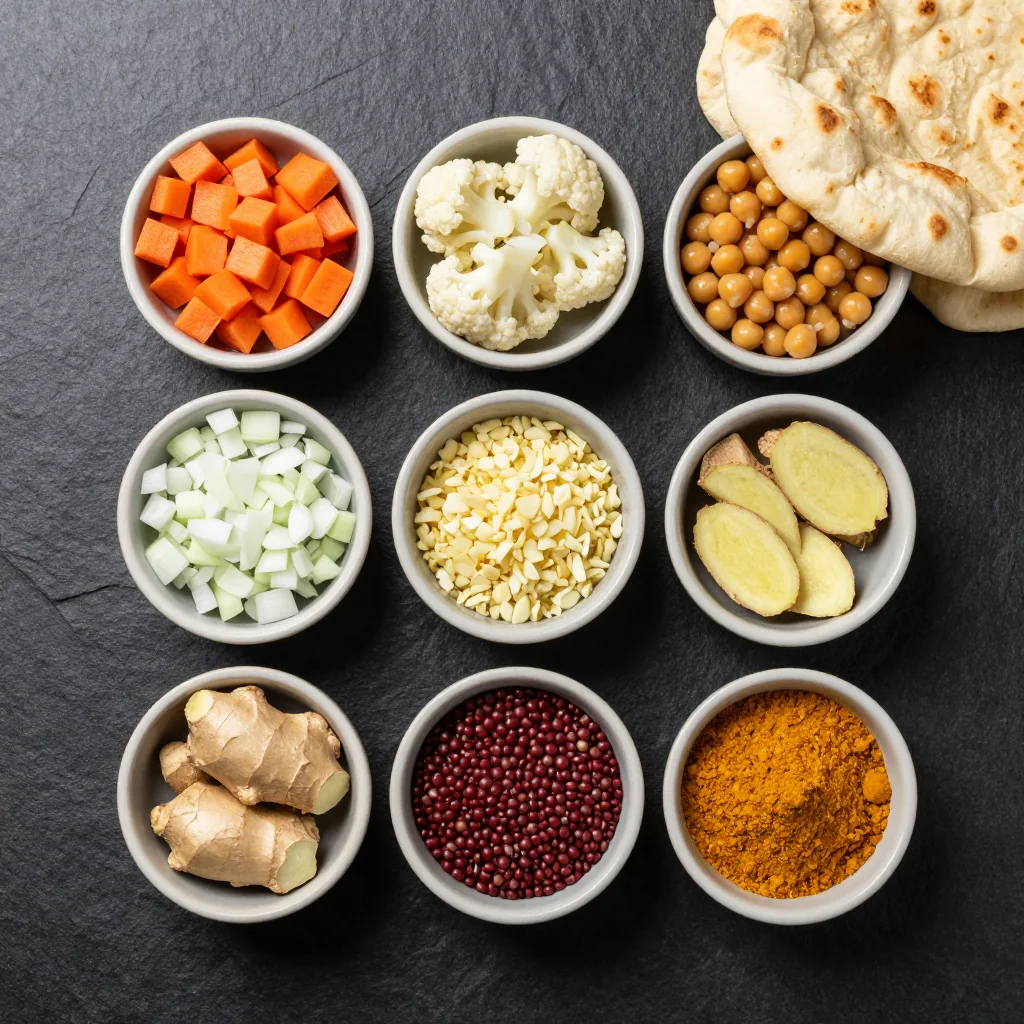
The beauty of this curry lies in its adaptability. While I've listed my favorite combination below, think of this as a template rather than a rigid formula. The key is building layers of flavor with aromatics and spices, then letting whatever vegetables you have shine.
The Aromatic Base
Onion (1 large): Yellow or white both work beautifully. If you only have shallots, use 3-4 medium ones instead. The key is cooking them until they're golden and sweet, which forms the flavor foundation of your curry.
Garlic (4-5 cloves): Fresh is best, but in a pinch, 1½ teaspoons of garlic powder can substitute. Add it with the other dried spices rather than with the onions.
Ginger (2-inch piece): Fresh ginger adds brightness and zing. If you're using ground ginger, reduce to 1 teaspoon and add it with the curry powder. Pro tip: keep ginger in your freezer—it's easier to grate and lasts for months.
The Spice Symphony
Curry Powder (2-3 tablespoons): The star of the show. I prefer Madras-style for its warmth and complexity, but any curry powder works. The amount depends on your spice tolerance and the freshness of your spices—older spices need more.
Turmeric (1 teaspoon): Not just for color, turmeric adds earthy depth and incredible anti-inflammatory properties. Don't skip this golden goddess.
Cumin (1 teaspoon): Adds smokiness and warmth. If you have cumin seeds, toast them first in the oil until fragrant, then proceed with the recipe.
Red Pepper Flakes (¼-½ teaspoon): Optional but recommended for that gentle heat that builds as you eat. Adjust based on your family's spice preference.
The Vegetable Medley
Potatoes (2 medium): Yukon Gold or red potatoes hold their shape best, but russets work if that's what you have. Dice them small (½-inch) so they cook quickly and absorb the sauce.
Carrots (3 large): Cut into ¼-inch coins so they cook at the same rate as the potatoes. If your carrots have seen better days, peel them first—the sweetness concentrates as they cook.
Cauliflower (½ head): Break into bite-sized florets. The nooks and crannies catch the sauce beautifully. Don't discard the stems—they're tender and sweet when cooked.
Spinach (4 cups packed): Fresh or frozen both work. If using frozen, squeeze out excess water before adding. Kale, chard, or even frozen mixed greens are excellent substitutes.
The Liquid Gold
Coconut Milk (1 can): Full-fat is non-negotiable for that luxurious, creamy texture that makes this curry so comforting. Light coconut milk will result in a watery curry that lacks body.
Crushed Tomatoes (1 can): Fire-roasted tomatoes add extra depth, but regular crushed tomatoes work perfectly. In a pinch, you can use 2 cups of tomato sauce or even 4 fresh tomatoes, chopped.
Vegetable Broth (2 cups): Use low-sodium so you can control the salt level. If you only have water, add 1 teaspoon of salt and a bay leaf for flavor.
How to Make Pantry Clean Out Vegetable Curry for Winter Comfort
Prepare Your Mise en Place
Start by washing and chopping all your vegetables. Dice onions, mince garlic, grate ginger, and cut potatoes and carrots into uniform pieces. This French culinary term simply means "everything in its place," and it's crucial for stress-free cooking. When everything is prepped and within arm's reach, you'll avoid the panic of burning aromatics while frantically chopping vegetables. Plus, there's something meditative about the rhythm of chopping—let it be your moment of calm before the storm of flavor begins.
Build Your Flavor Foundation
Heat 2 tablespoons of coconut oil (or any neutral oil) in a large Dutch oven or heavy-bottomed pot over medium heat. When the oil shimmers, add your diced onion with a pinch of salt. Cook for 5-6 minutes, stirring occasionally, until the onions are translucent and starting to turn golden around the edges. This caramelization is where deep, complex flavors begin. Don't rush this step—properly cooked onions provide the sweet, savory backbone that carries the entire dish.
Awaken Your Spices
Clear a space in the center of your pot by pushing the onions to the sides. If the pot looks dry, add another teaspoon of oil. Add minced garlic and grated ginger, cooking for just 30-45 seconds until fragrant—burnt garlic becomes bitter and will ruin your curry. Now add your curry powder, turmeric, cumin, and red pepper flakes. Stir constantly for 1-2 minutes until the spices are toasted and incredibly aromatic. This step, called "blooming," releases the essential oils in dried spices and intensifies their flavor exponentially.
Create Your Curry Base
Pour in your can of crushed tomatoes, using your wooden spoon to scrape up any browned bits from the bottom of the pot—these caramelized bits are flavor gold. Let the tomatoes cook for 2-3 minutes, stirring frequently, until they darken slightly and the oil begins to separate from the tomato-spice mixture. This separation indicates that your base is properly cooked and ready for the liquid ingredients.
Add Your Heartier Vegetables
Stir in your diced potatoes and carrots, ensuring they're well-coated with the spice mixture. Add 1 teaspoon of salt and several grinds of black pepper. Pour in your vegetable broth and bring everything to a gentle simmer. Cover the pot, reduce heat to low, and let it bubble away for 10 minutes. This head start allows the potatoes and carrots to begin softening while absorbing the flavors of the curry base.
Incorporate Cauliflower and Coconut Milk
Add your cauliflower florets to the pot, stirring to combine. Pour in the entire can of coconut milk—don't be tempted to use light coconut milk here. The full-fat version provides the luxurious, creamy texture that makes this curry feel indulgent rather than ascetic. Bring the mixture back to a gentle simmer, cover, and cook for another 10-12 minutes until the vegetables are tender but not mushy. The cauliflower should hold its shape while being easily pierced with a fork.
Finish with Greens and Final Seasoning
Remove the lid and add your spinach, stirring until wilted—this takes just 1-2 minutes for fresh spinach or 3-4 minutes for frozen. Taste your curry and adjust the seasoning. You might need more salt (I usually add another ½ teaspoon), a squeeze of lime for brightness, or a pinch of sugar if your tomatoes are particularly acidic. The curry should be thick enough to coat the back of a spoon but still spoonable. If it's too thick, add a splash more broth or water.
Let It Rest (The Hardest Part)
Turn off the heat and let your curry rest for 5-10 minutes. This brief pause allows the flavors to meld and the sauce to thicken slightly. While you wait, prepare your serving accompaniments—steamed rice, naan bread, or even just a spoon if you're feeling particularly cozy. Garnish with fresh cilantro if you have it, a dollop of yogurt for creaminess, or crispy fried onions for texture. Serve steaming hot and watch as the winter blues melt away with each spoonful.
Expert Tips
Toast Your Spices
Whole spices retain their oils and flavor much longer than ground. If you have whole coriander, cumin, or cardamom pods, toast them in a dry pan until fragrant, then grind them fresh. The difference in flavor is remarkable—your curry will taste like it's from a restaurant rather than your pantry.
Don't Fear the Fat
The coconut milk provides more than creaminess—it carries fat-soluble flavors. If you're tempted to use light coconut milk, consider using ¾ can of full-fat instead. You'll get the richness without all the calories, and your taste buds will thank you.
Control Your Heat
If your curry is too spicy, add a spoonful of sugar or a splash of coconut milk to tame the heat. If it's not spicy enough, add more red pepper flakes or a diced fresh chili when you add the tomatoes. Taste as you go—everyone's spice tolerance is different.
Save Your Stems
Don't discard cauliflower stems or broccoli stalks—they're tender and sweet when cooked. Peel any tough outer layers, then dice them small so they cook at the same rate as your other vegetables. This is how you turn kitchen scraps into gold.
Make-Ahead Magic
This curry tastes even better the next day as the flavors meld. Make a double batch on Sunday, and you'll have lunches for the week. Just add a splash of broth or water when reheating, as the sauce will thicken in the refrigerator.
Garnish Game-Changer
A simple garnish elevates this humble curry. Try crispy fried shallots, toasted coconut flakes, or a squeeze of fresh lime. Even a handful of roasted peanuts adds wonderful texture and turns this into a restaurant-worthy dish.
Variations to Try
Protein-Packed Version
Add a can of chickpeas, white beans, or red lentils during the last 15 minutes of cooking. For extra protein and texture, add cubed firm tofu or paneer cheese in the final 5 minutes. These additions make the curry even more satisfying while keeping it plant-based.
Thai-Inspired Twist
Replace the curry powder with 2 tablespoons of Thai red curry paste. Add lemongrass, kaffir lime leaves, and Thai basil. Swap the potatoes for sweet potatoes and add bamboo shoots. Finish with a splash of fish sauce or soy sauce for umami depth.
Summer Garden Version
In summer, swap the hearty vegetables for zucchini, bell peppers, green beans, and corn. Add cherry tomatoes instead of canned. Finish with fresh herbs like basil and mint. This lighter version celebrates peak summer produce while maintaining the comforting curry essence.
Storage Tips
Refrigerator Storage
Store cooled curry in an airtight container in the refrigerator for up to 5 days. The flavors actually improve after 24 hours as the spices meld together. When reheating, add a splash of broth or water—the sauce will thicken as it sits. Reheat gently over medium-low heat, stirring occasionally, until heated through.
Freezer Instructions
This curry freezes beautifully for up to 3 months. Portion into freezer-safe containers or zip-top bags, removing as much air as possible. Thaw overnight in the refrigerator, then reheat as above. The texture of the potatoes might change slightly, becoming a bit softer, but the flavor remains excellent.
Make-Ahead Tips
Prepare the curry base (through adding tomatoes) up to 3 days ahead. Store in the refrigerator, then add vegetables and finish cooking when ready to serve. You can also prep all your vegetables and store them in separate containers for quick assembly during busy weeknights.
Frequently Asked Questions
Absolutely! For best results, sauté the aromatics and bloom the spices on the stovetop first (steps 2-4), then transfer everything to your slow cooker. Add vegetables and cook on LOW for 6-7 hours or HIGH for 3-4 hours. Add spinach during the last 30 minutes. The curry will be slightly more liquidy than stovetop version, but just as delicious.
You can create your own blend! Mix 2 tablespoons ground coriander, 1 tablespoon ground cumin, 1 teaspoon turmeric, 1 teaspoon paprika, ½ teaspoon cinnamon, ½ teaspoon black pepper, and ¼ teaspoon cayenne. Add 1 teaspoon each of ground ginger and garlic powder if desired. This homemade blend keeps for months in an airtight container.
Coconut milk provides a specific richness and subtle sweetness that's hard to replicate. If you must substitute, use ¾ cup heavy cream mixed with ¼ cup water and ½ teaspoon coconut extract (if available). For a lighter version, use 1 cup whole milk mixed with 2 tablespoons butter, but know that the flavor profile will change significantly. Evaporated milk also works in a pinch.
Cut vegetables into uniform sizes so they cook evenly. Add harder vegetables (potatoes, carrots) first, then medium ones (cauliflower, bell peppers) after 10 minutes, and quick-cooking vegetables (spinach, peas) in the last 2-3 minutes. Test doneness by piercing with a fork—vegetables should be tender but still hold their shape. Remember they'll continue cooking slightly from residual heat.
Yes! This curry is naturally vegan and gluten-free as written. Just ensure your curry powder doesn't contain any hidden wheat ingredients (some blends use flour as an anti-caking agent). Serve with rice or gluten-free naan for a completely gluten-free meal. It's also dairy-free, nut-free, and soy-free, making it perfect for feeding a crowd with various dietary restrictions.
Steamed basmati or jasmine rice is classic, but brown rice adds nutty flavor and extra fiber. Naan bread is perfect for scooping up sauce. For a low-carb option, serve over cauliflower rice or alongside roasted vegetables. A simple cucumber raita or mango chutney provides cooling contrast. Don't forget the garnishes—fresh cilantro, crispy fried onions, or a squeeze of lime elevate the entire experience.

Pantry Clean Out Vegetable Curry for Winter Comfort
Ingredients
Instructions
- Build the base: Heat coconut oil in a large pot over medium heat. Cook onion until golden, about 5-6 minutes.
- Add aromatics: Stir in garlic and ginger, cooking 45 seconds until fragrant. Add all spices, stirring constantly for 1-2 minutes.
- Tomato time: Pour in crushed tomatoes, scraping up browned bits. Cook 2-3 minutes until slightly thickened.
- Add vegetables: Stir in potatoes and carrots, coating with spice mixture. Season with salt and pepper.
- Simmer: Add vegetable broth, bring to simmer, cover and cook 10 minutes.
- Finish strong: Add cauliflower and coconut milk, simmer 10-12 minutes until vegetables are tender.
- Final touch: Stir in spinach until wilted. Adjust seasoning and serve hot with rice or naan.
Recipe Notes
For best results, don't substitute light coconut milk—it lacks the richness needed for this curry. The curry tastes even better the next day! If you prefer a thinner sauce, add more broth. For a thicker curry, simmer uncovered for the last 5 minutes.