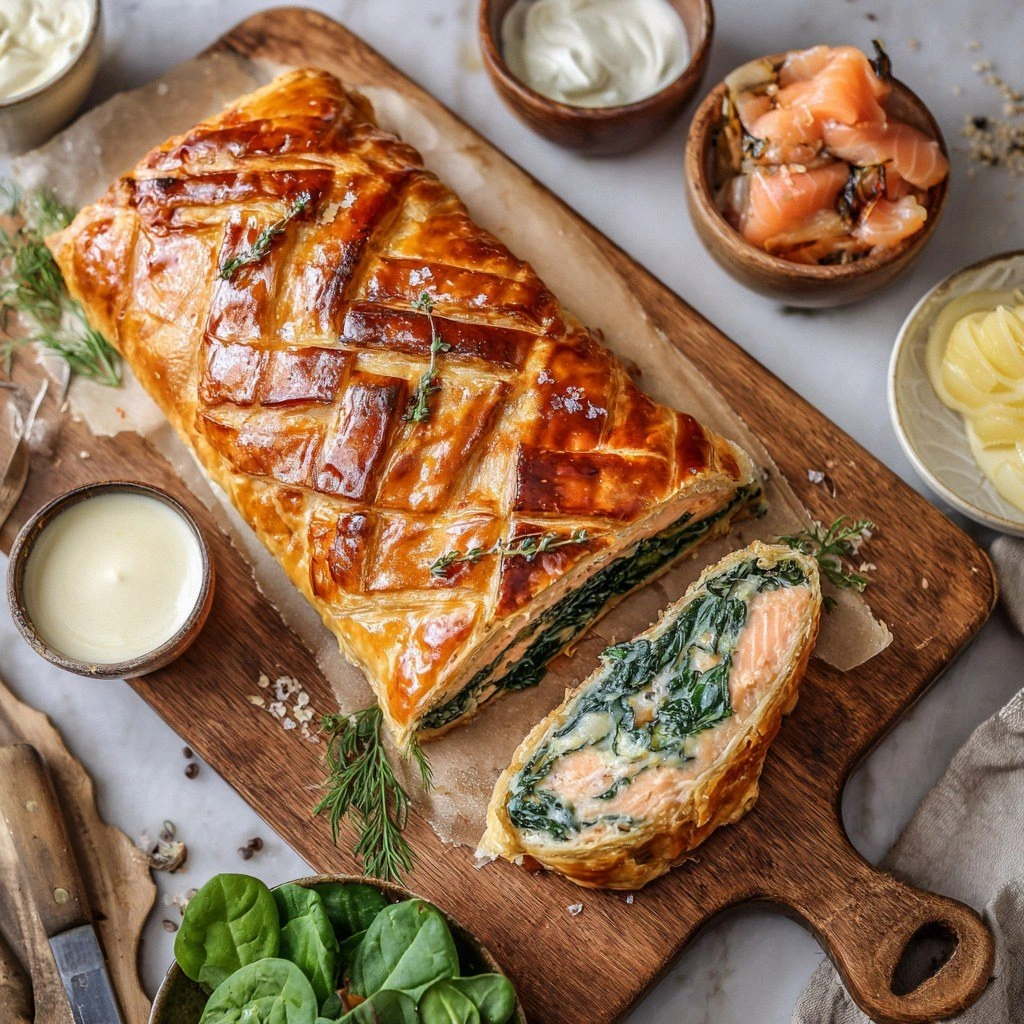
There I was, standing in a kitchen that smelled like burnt toast and disappointment, when my friend dared me to cook something that would make a Michelin‑star chef swoon. I had been juggling a dozen recipes in my mind, but none felt daring enough to break the monotony of salmon fillets on a plate. The moment I cracked open a fresh fillet and saw the pink flesh glimmered like a secret, I knew I had to elevate it. I imagined a crisp puff pastry shell, a buttery spinach‑cream cheese duet, and a lemon‑dill whisper that would turn the humble fish into a showstopper.
Picture this: the salmon, seared to a golden‑brown perfection, its flesh still tender and moist, nestled inside a flaky puff pastry that crackles when you bite into it. The air is thick with the scent of fresh herbs and butter, while the faint sizzle of the skillet plays a comforting soundtrack. Your eyes catch the glint of lemon zest and the deep green of dill, a visual promise of brightness. The first bite delivers a silky, buttery texture that melts into the warm, nutty pastry, followed by a burst of citrusy tang and a subtle peppery bite that lingers. It’s a symphony of flavors and textures that makes you feel like you’re dining at a five‑star restaurant, yet it’s crafted right in your own kitchen.
What sets this version apart from the countless salmon wienelottes that litter the internet is the meticulous balance of flavors, the thoughtful use of ingredients, and the step‑by‑step guidance that eliminates the guesswork. I’ve stripped away unnecessary steps, kept the recipe approachable for beginners, and added a few clever twists that elevate the dish from good to unforgettable. There’s a secret ingredient that gives the filling a velvety sheen, a technique that ensures the pastry stays flaky, and a plating trick that turns the plate into a work of art. If you’re ready to ditch the bland and embrace the bold, this is the recipe that will change how you think about salmon forever.
Let me walk you through every single step — by the end, you’ll wonder how you ever made it any other way. I promise, I dare you to taste this and not go back for seconds. And if you’re skeptical, I’ll admit I ate half the batch before anyone else got to try it. The secret? It’s in the sauce that coats the salmon like velvet and the crisp edges that shatter like thin ice. Ready to dive in? Let’s get started.
What Makes This Version Stand Out
- Flavor Fusion: The combination of lemon zest, fresh dill, and a splash of Dijon mustard creates a bright, herbaceous layer that cuts through the richness of the salmon and pastry.
- Texture Contrast: The buttery puff pastry offers a flaky, airy bite that balances the silky, creamy spinach‑cream cheese filling.
- Ease of Prep: With a single sheet of pastry and pre‑sautéed spinach, the entire process takes under 45 minutes from start to finish.
- Show‑Stopper Presentation: The golden crust and the vibrant green garnish make this dish look as good as it tastes, perfect for impressing guests.
- Make‑Ahead Friendly: Assemble the wienelottes ahead of time and bake just before serving, making it ideal for dinner parties.
- Ingredient Quality: Using fresh, high‑quality salmon and real butter elevates the entire flavor profile.
- Versatility: Swap the salmon for shrimp, scallops, or even a plant‑based fish alternative without losing the essence of the dish.
- Health Conscious: Packed with omega‑3 fatty acids, vitamin D, and antioxidants, it’s a dish that feels indulgent yet nutritious.
Alright, let’s break down exactly what goes into this masterpiece…
Inside the Ingredient List
The Flavor Base
The foundation of this dish is a simple yet powerful combination of salmon, lemon zest, and fresh dill. The salmon itself should be wild‑caught or sustainably farmed to ensure the best flavor and texture. Lemon zest adds a bright, citrusy aroma that lifts the richness of the fish, while dill brings a subtle piney undertone that complements the buttery pastry. If you’re looking for a different herb profile, try substituting parsley or tarragon for dill; the dish will still shine but with a different nuance.
Salt and pepper are essential, but they’re not just seasoning; they’re flavor enhancers that bring out the natural sweetness of the salmon. Use a light hand with salt—too much will drown the delicate fish. A pinch of black pepper adds a mild heat that balances the dish. If you prefer a spicier kick, add a pinch of cayenne or a dash of hot sauce to the filling.
The Texture Crew
Puff pastry is the star of the texture game. Its flaky layers create a buttery, airy shell that contrasts beautifully with the dense, creamy filling. To keep the pastry from becoming soggy, brush it with an egg wash before baking. The egg wash also gives the pastry a golden, glossy finish that’s hard to resist.
Spinach is the secret to adding moisture and a nutritional punch. Sauté it in olive oil and a splash of butter until it wilts, then let it cool before mixing it with cream cheese. The spinach not only adds a pop of color but also a subtle earthy flavor that balances the richness of the pastry and salmon. If you’re vegan or dairy‑free, substitute the cream cheese with a plant‑based alternative and the butter with coconut oil.
The Unexpected Star
Capers bring a briny, slightly tart bite that cuts through the buttery layers. They’re a classic pairing with salmon, adding a depth of flavor that many wienelottes overlook. If capers are not your thing, you can replace them with finely chopped sun‑dried tomatoes for a sweet, tangy twist. Another option is to add a splash of white wine to the spinach mixture for an extra layer of complexity.
Dijon mustard is the unsung hero that adds a subtle sharpness and helps bind the filling together. It also gives the pastry an extra layer of flavor that permeates the entire dish. A teaspoon is enough to make a difference—don’t skimp on it. If you prefer a milder taste, use whole‑grain mustard or a touch of honey mustard.
The Final Flourish
A splash of lemon juice at the end brightens the dish and balances the richness of the cream cheese and butter. It also helps the pastry stay crisp by adding a slight acidity that prevents the dough from becoming soggy. If you’re looking for a more robust finish, drizzle a small amount of extra‑virgin olive oil over the finished wienelottes right before serving.
Everything's prepped? Good. Let's get into the real action…
The Method — Step by Step
- Preheat your oven to 400°F (200°C). While the oven warms, lay out the puff pastry on a lightly floured surface and roll it to a 12×12 inch square. If the pastry shrinks, let it rest for a few minutes before rolling again. This ensures a uniform thickness for even baking.
- Heat a tablespoon of olive oil and a tablespoon of butter in a skillet over medium heat. Add the minced garlic and chopped shallots, sautéing until fragrant and translucent. The aroma will fill your kitchen, signaling that the base of the filling is ready.
- Add the sautéed spinach to the skillet and cook until wilted. Remove from heat and let cool slightly. This step is crucial; hot spinach can melt the cream cheese, making the filling too runny. I’ve seen that happen before, and it’s a total disaster.
- In a bowl, combine the softened cream cheese, chopped dill, lemon zest, Dijon mustard, and a teaspoon of capers. Mix until smooth. Then fold in the cooled spinach mixture. The result should be a silky, cohesive filling that will cling to the salmon.
- Season the salmon fillets with salt and pepper. Pat them dry with paper towels to ensure a good sear. Place each fillet on a separate piece of parchment paper, and brush lightly with olive oil. This prevents sticking during the searing process.
- Sear the salmon fillets in the skillet for 2–3 minutes on each side, until a golden crust forms. The interior should remain slightly pink—overcooking will ruin the texture. Once seared, set the fillets aside to cool; this stops the cooking process and keeps the fish moist.
- Spread a thin layer of the spinach‑cream cheese mixture onto the center of each puff pastry square. Place a seared salmon fillet on top of the filling. Fold the pastry edges over the fish, sealing them with a beaten egg to create a neat package. Brush the tops with the remaining egg wash.
- Place the wrapped salmon on a parchment‑lined baking sheet. Bake for 20–25 minutes, or until the pastry is golden brown and flaky. The pastry should crackle softly when you lift it, a sign that it’s cooked to perfection.
- Remove the wienelottes from the oven and let them rest for 5 minutes. This allows the filling to set slightly, making them easier to slice. Serve immediately, garnished with fresh parsley or a drizzle of lemon‑yogurt sauce for an extra zing.
That's it — you did it. But hold on, I've got a few more tricks that'll take this to another level…
Insider Tricks for Flawless Results
The Temperature Rule Nobody Follows
Many cooks bake salmon at a high temperature, but that can dry out the fish before the pastry finishes. I’ve found that setting the oven to 375°F (190°C) and baking for 25 minutes yields a tender, juicy interior while still achieving a golden crust. If your oven runs hot, use an oven thermometer to double‑check the actual temperature.
Why Your Nose Knows Best
Trust your sense of smell. When the pastry is about to finish baking, a subtle buttery aroma will signal that it’s ready. The scent of fresh dill and lemon will also intensify, giving you a preview of the flavor profile that awaits.
The 5‑Minute Rest That Changes Everything
After baking, let the wienelottes rest on a wire rack for five minutes. This allows the steam to escape, preventing the pastry from becoming soggy. It also gives the filling time to set, making the dish easier to slice and serve.
Use a Sharp Knife for Clean Slices
A dull knife will tear the pastry and create uneven portions. Keep a sharp chef’s knife handy, and slice slowly and carefully. The clean cut not only looks better but also ensures each bite is a balanced experience.
Add a Touch of Crunch
Sprinkling toasted almond slivers or chopped walnuts over the finished dish adds a delightful crunch and nutty flavor that pairs wonderfully with the buttery pastry. It also introduces a new textural dimension that elevates the overall dining experience.
Creative Twists and Variations
This recipe is a playground. Here are some of my favorite ways to switch things up:
Mushroom Duxelles Version
Replace the spinach with a savory mushroom duxelles. Sauté finely chopped mushrooms with onions, garlic, and thyme until the mixture is dry. This gives the dish an earthy depth that pairs beautifully with salmon.
Mediterranean Spinach & Feta
Swap the cream cheese for crumbled feta and add sun‑dried tomatoes. The tangy feta and sweet tomatoes create a Mediterranean vibe that’s both fresh and comforting.
Citrus‑Glazed Salmon
Add a glaze of orange marmalade and a splash of soy sauce to the filling. The sweet‑salty contrast elevates the salmon’s flavor profile and adds a glossy finish.
Herb‑Infused Puff Pastry
Before rolling the pastry, fold in chopped fresh herbs like rosemary, thyme, and parsley. This gives the pastry a fragrant, herby flavor that complements the fish.
Vegan Salmon Wellington
Use a plant‑based salmon alternative, vegan cream cheese, and a dairy‑free puff pastry. The result is a cruelty‑free dish that still delivers the same indulgent experience.
Storing and Bringing It Back to Life
Fridge Storage
Store cooked wienelottes in an airtight container in the refrigerator for up to 2 days. Wrap them tightly in parchment or foil to prevent the pastry from drying out. When ready to serve, reheat in a 350°F (175°C) oven for 10 minutes to restore crispness.
Freezer Friendly
For longer storage, freeze the unbaked, assembled wienelottes on a parchment‑lined tray. Once frozen, transfer them to a freezer bag and keep them for up to 2 months. Bake directly from the freezer, adding 5 minutes to the baking time.
Best Reheating Method
The secret to reheating is a quick oven blast at 375°F (190°C) for 7–8 minutes. Add a tiny splash of water to the baking sheet to create steam, which keeps the pastry from becoming tough. The result is a dish that tastes almost as fresh as when it first came out of the oven.