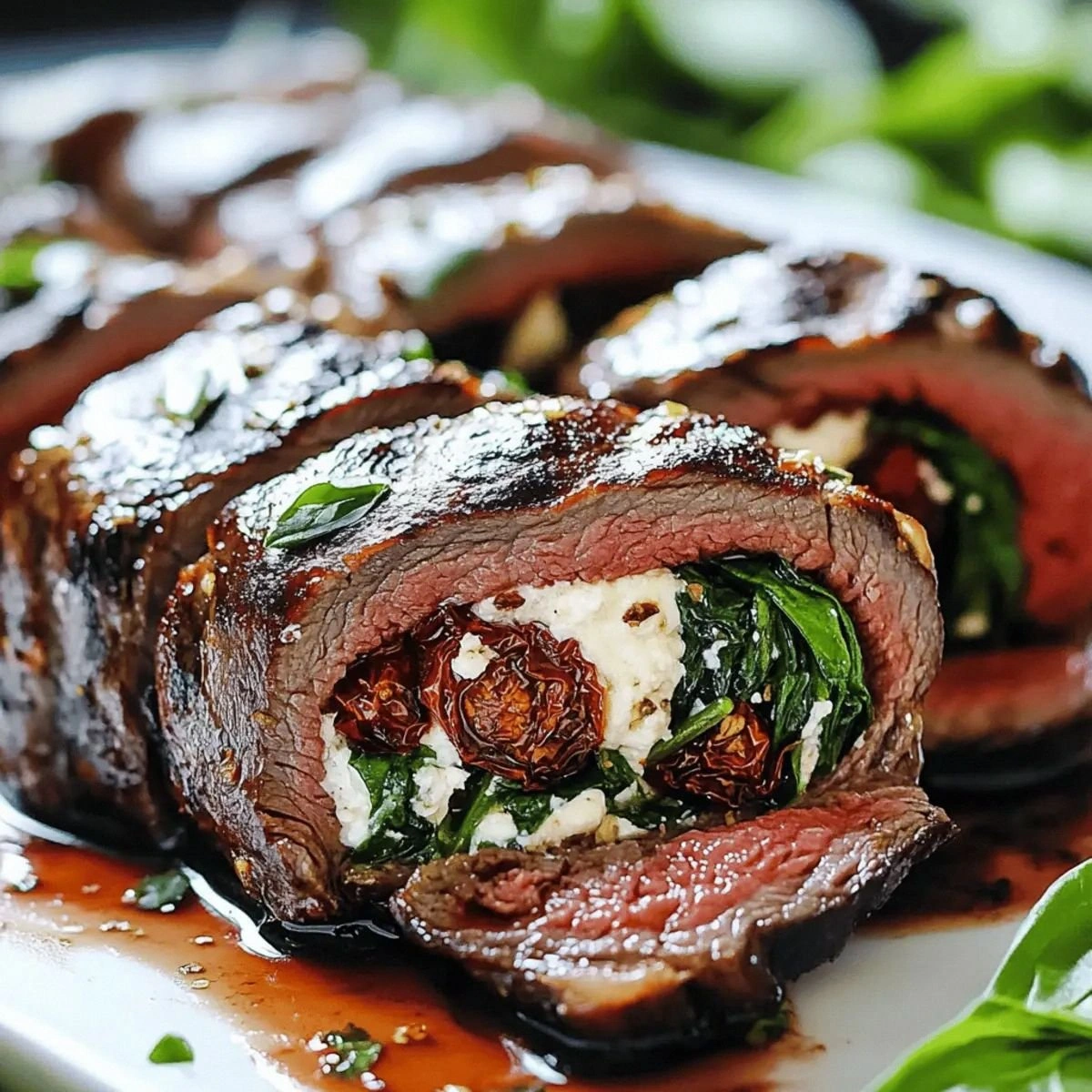
I was standing in my kitchen, the kind of kitchen that smells like yesterday’s garlic and the promise of something amazing, when a sudden craving hit me like a lightning bolt. I’d just tried a boring old grilled flank steak that tasted like a rubber band, and I swore I’d never let another piece of meat suffer that fate again. I dared my roommate to a “who can make the most unforgettable dinner” challenge, and the stakes were high: loser does the dishes for a month. That night, I rummaged through my pantry, grabbed a handful of spinach, a tub of ricotta, and a jar of sun‑dried tomatoes, and the idea for a stuffed flank steak was born. I’ll be honest — I ate half the batch before anyone else got to try it, but the rest of the family still begged for seconds, and that’s when I knew I’d stumbled onto something legendary.
Picture this: a thick, marbled flank steak, butter‑softened and waiting to be opened like a secret envelope. Inside, a creamy, herb‑infused filling that clings to the meat like a lover’s embrace, with spinach that wilts just enough to stay vibrant, ricotta that melts into silk, mozzarella that stretches like a lazy cat, and sun‑dried tomatoes that pop with concentrated sweetness. When the steak hits the pan, you hear a sizzle that sings a note of anticipation, and the kitchen fills with the earthy perfume of garlic and oregano. The moment you slice into it, juices cascade like a miniature waterfall, and the aroma that escapes is so intoxicating it could make a statue weep. This is not just dinner; it’s a theatrical performance where every bite is applause.
Most recipes for stuffed flank steak get this completely wrong. They either overcomplicate the stuffing, leaving you with a soggy mess, or they under‑season, resulting in a bland, forgettable plate. My version, however, is a masterclass in balance: the right amount of fat, the perfect herb blend, and a technique that locks in moisture while giving you those coveted caramelized edges. I’m daring you to taste this and not go back for seconds — that’s how confident I am about the flavor fireworks you’ll experience. The secret weapon? A quick brine that tenderizes the meat and a finishing sear that creates a crust that shatters like thin ice under a warm foot.
Let me walk you through every single step — by the end, you’ll wonder how you ever made it any other way. Okay, ready for the game‑changer? This next part? Pure magic. Stay with me here — this is worth it.
What Makes This Version Stand Out
- Flavor Explosion: The combination of ricotta’s mild creaminess with the tang of sun‑dried tomatoes creates a taste profile that dances on the palate, while the oregano adds a Mediterranean whisper that lingers long after the last bite.
- Texture Harmony: You get a tender, buttery steak exterior, a silky, slightly gooey interior, and a subtle crunch from the spinach that’s been lightly sautéed — a triple‑layered mouthfeel that keeps you engaged.
- Simplicity Meets Sophistication: Despite the gourmet vibe, the ingredient list is short, the steps are straightforward, and the technique is approachable for anyone who’s ever boiled pasta.
- Unique Presentation: When you roll the steak and tie it with kitchen twine, it looks like a rustic, edible sculpture that begs to be shown off on the dinner table.
- Crowd‑Pleaser Factor: Even the pickiest eaters love the melty cheese and the familiar flavor of garlic; it’s a dish that turns skeptics into fans in one bite.
- Ingredient Quality: Using a well‑marbled flank steak ensures juiciness, while fresh spinach and high‑quality cheeses elevate the overall richness.
- Cooking Method Mastery: The quick sear followed by a gentle oven finish locks in moisture and creates those coveted caramelized edges without drying the meat.
- Make‑Ahead Potential: You can prep the stuffing and even pre‑roll the steak a day ahead, making last‑minute dinner a breeze.
Inside the Ingredient List
The Flavor Base
Garlic and dried oregano are the dynamic duo that set the stage for every great Italian‑inspired dish. The three cloves of garlic, minced fine, release a pungent aroma that instantly awakens the senses, while the teaspoon of oregano adds an earthy, slightly piney note that balances the richness of the cheeses. If you skip the oregano, you’ll lose that subtle Mediterranean whisper; if you omit garlic, the dish feels flat, like a movie without a soundtrack. For a twist, try swapping oregano for fresh thyme or a pinch of smoked paprika for a smoky undertone.
The Texture Crew
Spinach, ricotta, and mozzarella form the textural trifecta. Fresh spinach, when briefly wilted, retains a faint crunch that contrasts beautifully with the melt‑in‑your‑mouth ricotta. The half‑cup of ricotta brings a light, airy creaminess that doesn’t overwhelm the steak’s natural flavor. Mozzarella, also half a cup, adds that stretchy, gooey pull that makes each bite feel indulgent. If you’re dairy‑intolerant, substitute the ricotta with a plant‑based cream cheese and use vegan mozzarella — the texture will stay on point.
The Unexpected Star
Sun‑dried tomatoes are the surprise element that turns this from “good” to “wow.” Their concentrated sweetness and slight acidity cut through the richness of the cheeses, preventing the stuffing from feeling heavy. A quarter‑cup might sound modest, but those little ruby gems pack a punch; if you’re a fan of bold flavors, increase to a third cup. The only downside is they can be salty, so adjust the added salt accordingly.
The Final Flourish
Olive oil and kitchen twine are the unsung heroes. One tablespoon of olive oil ensures the steak doesn’t stick to the pan and adds a subtle fruitiness to the sear. Kitchen twine, while simple, is essential for keeping the steak tightly rolled; without it, the stuffing would spill out, turning your masterpiece into a mess. When buying flank steak, look for a piece that’s about 1½ to 2 pounds, with a deep red color and a good amount of marbling — this guarantees flavor and tenderness.
Everything's prepped? Good. Let's get into the real action…
The Method — Step by Step
First, give the flank steak a quick brine. Dissolve 1 tablespoon of salt and ½ teaspoon of black pepper in 2 cups of cold water, then submerge the steak for 20 minutes. This simple soak breaks down muscle fibers, making the meat tender and juicy. After brining, pat the steak dry with paper towels; you’ll hear an immediate sizzle when it hits the pan, a sign that the surface is ready for a perfect sear.
While the steak brines, create the stuffing. Heat 1 tablespoon of olive oil in a skillet over medium heat, then add the minced garlic. Cook for 30 seconds until fragrant — that sizzle when it hits the pan? Absolute perfection. Add the spinach and sauté until just wilted, about 2 minutes. Remove from heat, let cool slightly, then stir in ricotta, mozzarella, and sun‑dried tomatoes. Sprinkle in the dried oregano, and season with the remaining teaspoon of salt and half‑teaspoon of black pepper. The mixture should be creamy but still hold its shape; if it feels too loose, add a tablespoon of grated Parmesan.
Now, the rolling. Place the brined steak on a clean cutting board. Using a sharp knife, slice a thin pocket along the length of the meat, being careful not to cut all the way through. Open the steak like a book, then spread the stuffing evenly across the surface, leaving a half‑inch border on each side to prevent overflow. Starting at the narrow end, roll the steak tightly, as if you’re forming a roulade. This is the moment of truth — the roll must be snug but not so tight that the meat tears.
Tie it up. Take a length of kitchen twine and make a knot at one end of the roll. Wrap the twine around the steak every 2 inches, pulling snugly each time, then finish with a secure double knot. This keeps the stuffing locked inside while the steak cooks. If you’re nervous about the twine, use a toothpick to hold the roll together for the first 5 minutes of searing, then replace with twine for the oven finish.
Heat a heavy skillet (cast iron works wonders) over medium‑high heat. Add a drizzle of olive oil, then place the tied steak seam side down. Let it sear for 3‑4 minutes without moving it; you’ll see the edges start to pull away and a deep golden crust forming. Flip and sear the other side for another 3 minutes. The steak should be a rich mahogany color, and you’ll hear that satisfying crackle that tells you the Maillard reaction is in full swing.
Transfer the skillet to a preheated oven at 375°F (190°C). Roast for 12‑15 minutes, or until the internal temperature reaches 135°F (57°C) for medium‑rare. This gentle finish ensures the center stays pink and juicy while the stuffing fully melds with the meat. If you don’t have an oven‑safe skillet, move the steak to a baking dish and cover loosely with foil.
Rest is non‑negotiable. Remove the steak from the oven and place it on a cutting board; let it rest for 10 minutes, still tied. This resting period allows the juices to redistribute, turning every slice into a moist, flavorful masterpiece. While it rests, the twine will loosen slightly, making it easier to cut without tearing the roll.
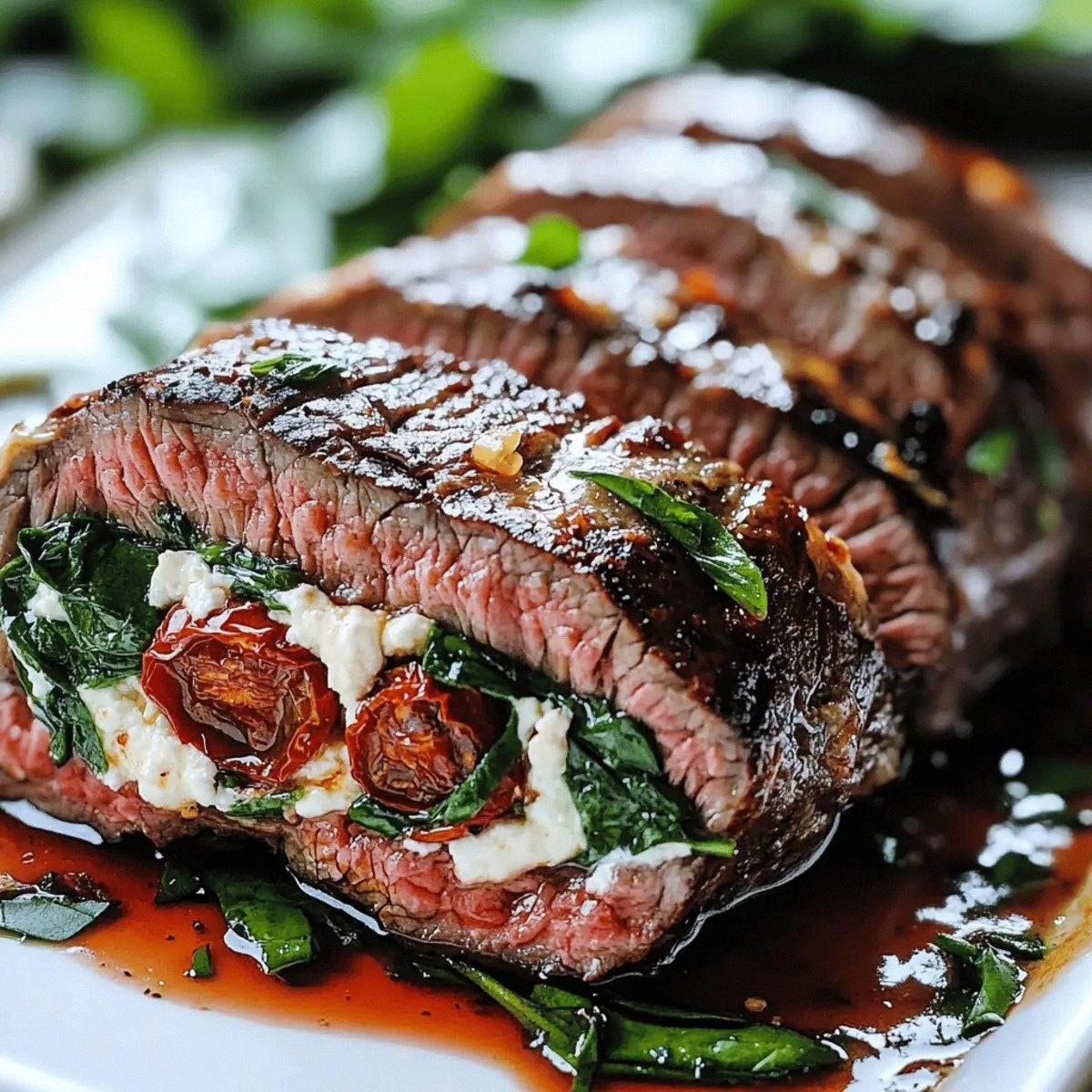
Finally, slice. Using a sharp carving knife, cut the steak cross‑wise into ½‑inch thick medallions. Each slice should reveal a perfect spiral of cheese‑laden spinach, with the steak’s crust providing a satisfying bite. Serve immediately, perhaps with a side of roasted potatoes or a crisp arugula salad dressed with lemon and olive oil. That first bite? It’s a symphony of textures and flavors that will have everyone reaching for seconds.
That's it — you did it. But hold on, I've got a few more tricks that'll take this to another level…
Insider Tricks for Flawless Results
The Temperature Rule Nobody Follows
Most home cooks rely on a timer alone, but the real secret is monitoring the internal temperature with an instant‑read thermometer. Aim for 135°F for medium‑rare; if you prefer medium, let it climb to 145°F. This precision prevents overcooking, which is the number one reason stuffed steaks turn dry. I once served a steak that was 160°F and the crowd politely pretended to enjoy it — trust me, you don’t want that memory.
Why Your Nose Knows Best
Your sense of smell is a far better indicator of doneness than a timer. When the steak is searing, you’ll notice a nutty, toasted aroma that deepens as the crust forms. As it moves into the oven, a subtle buttery scent emerges, signaling that the interior is heating evenly. If you ever hear a faint “hiss” from the oven, that’s the steam escaping — a good sign that the meat is staying moist.
The 5‑Minute Rest That Changes Everything
Resting isn’t just a polite suggestion; it’s a scientific necessity. During those 5‑10 minutes, the muscle fibers relax and reabsorb the juices that were expelled during cooking. Skipping this step is like pouring a glass of wine and then dumping it before it has a chance to breathe — you lose the full flavor potential. I once cut into a steak immediately, and the juices pooled on the plate, leaving the meat dry and the sauce watery.
Twine Tactics for Perfect Rolls
When tying, use a figure‑eight knot to start; it distributes tension evenly and prevents the twine from slipping. Make sure each knot is snug but not strangling the meat — you want the steak to breathe. If you’re cooking for a crowd, pre‑tie all rolls and store them in the fridge; the twine will hold up beautifully for up to 24 hours.
Seasoning Layers, Not Just One
Season both the steak and the stuffing separately. A light sprinkle of salt on the meat before searing enhances the crust, while seasoning the filling ensures every bite is uniformly flavorful. If you only season the stuffing, the outer meat can taste bland, and if you only season the meat, the interior may feel flat. This layered approach creates a balanced flavor profile from edge to core.
The Quick Sear, Slow Finish Philosophy
A hot, brief sear locks in juices and creates that coveted crust, but the oven finish gently cooks the interior without over‑drying. Think of it as a two‑step dance: the pan is the energetic opening, and the oven is the smooth, graceful glide that brings the performance to a climax. If you try to do it all on the stovetop, you risk uneven cooking and a burnt exterior.
Creative Twists and Variations
This recipe is a playground. Here are some of my favorite ways to switch things up:
Mediterranean Magic
Swap the ricotta for feta cheese and add a handful of Kalamata olives to the stuffing. The salty tang of feta pairs beautifully with the sun‑dried tomatoes, creating a dish that feels like a seaside tavern in a single bite.
Spicy Southwest
Add a teaspoon of chipotle powder to the seasoning, mix in corn kernels, and replace mozzarella with pepper jack. The smoky heat and sweet corn give the steak a bold, southwestern flair that pairs well with avocado salsa.
Herbaceous Green
Introduce fresh basil and parsley into the stuffing, and swap the spinach for arugula. The peppery bite of arugula and aromatic herbs brighten the dish, making it perfect for spring gatherings.
Cheese Lover’s Dream
Combine goat cheese with the ricotta and increase the mozzarella to a full cup. The tangy goat adds depth, while the extra mozzarella ensures every slice stretches like a dream.
Mushroom Medley
Sauté a mix of shiitake, cremini, and oyster mushrooms with the garlic, then fold them into the stuffing. The earthy mushrooms add umami richness that makes the steak feel even more luxurious.
Storing and Bringing It Back to Life
Fridge Storage
Place any leftovers in an airtight container and store in the refrigerator for up to 3 days. The steak will retain its moisture, and the stuffing may even become more flavorful as the flavors meld.
Freezer Friendly
Wrap the cooled, tied steak tightly in plastic wrap, then place it in a freezer‑safe bag. It will keep for up to 2 months. When you’re ready to enjoy it again, thaw overnight in the fridge, then reheat using the method below.
Best Reheating Method
Preheat the oven to 300°F (150°C). Add a tiny splash of water or broth to the bottom of a baking dish, place the steak inside, cover loosely with foil, and heat for 15‑20 minutes until warmed through. The added moisture creates steam that revives the tenderness without drying out the meat.