Love this? Pin it for later! 📌
Why This Recipe Works
- One-pan wonder: Toss, roast, serve—minimal dishes, maximum flavor.
- Naturally sweet: Roasting concentrates the carrots’ and parsnips’ sugars so you don’t need much added sweetener.
- Bright acid balance: A last-minute lemon drizzle keeps the dish from feeling heavy.
- Meal-prep hero: They reheat like a dream and even taste great cold.
- Plant-powered nutrition: High in fiber, beta-carotene, potassium, and vitamin C.
- All-season flexibility: Swap herbs and citrus to match whatever’s fresh at the market.
Ingredients You'll Need
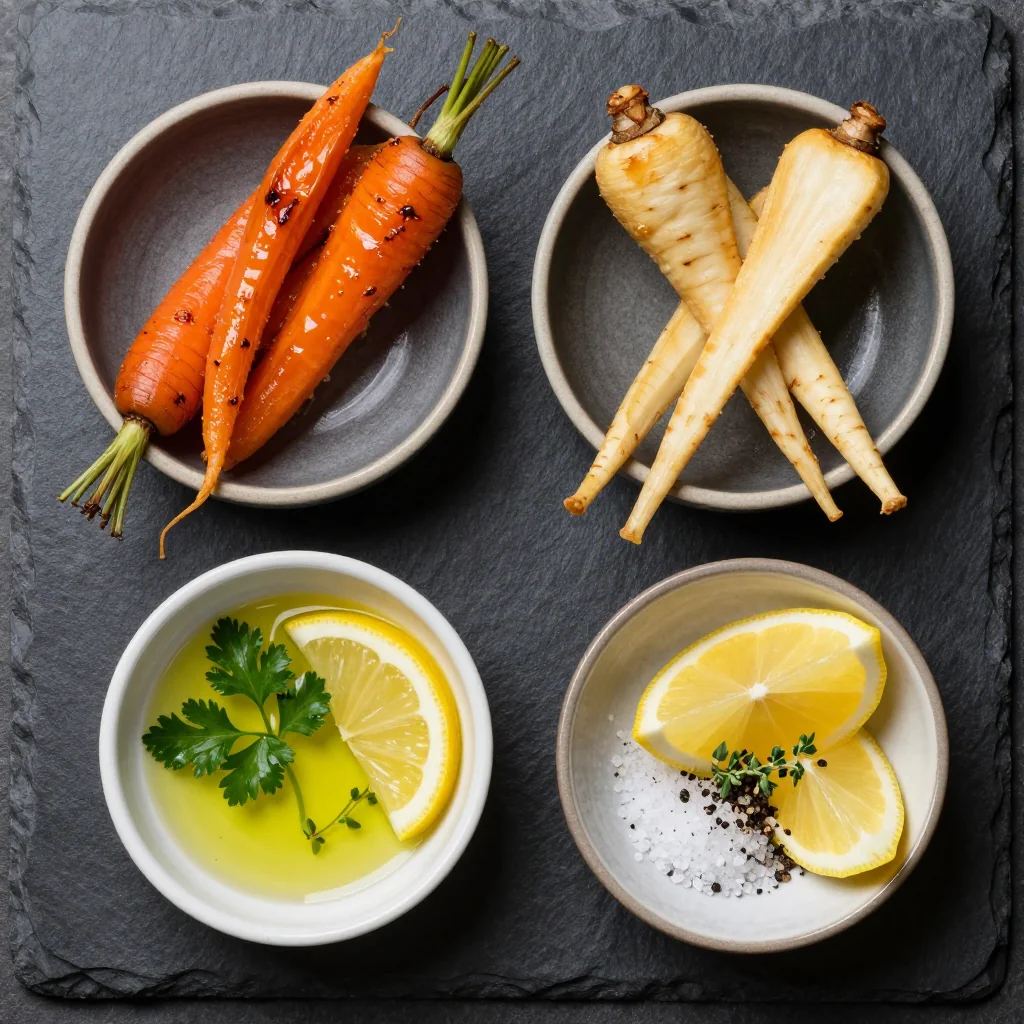
Great produce needs very little adornment, but each component here plays a specific role. Choose organic if possible—roots grow in the soil where pesticides concentrate, and you’ll be eating the skin.
Carrots – Look for bunches with tops still attached; the greens should be perky and bright. Multicolored heirlooms add visual drama, but standard orange work perfectly. Aim for medium-size; baby carrots will overcook before they caramelize, and giant woody ones need peeling.
Parsnips – Pick firm, pale roots with no soft spots. The tip should be creamy white, never gray. Smaller parsnips are sweeter; larger ones have a woody core you’ll want to cut out.
Extra-virgin olive oil – A fruity, peppery oil stands up to high heat and complements the citrus. If you’re oil-free, substitute aquafaba or a light spray of vegetable broth, but expect less browning.
Lemon – Both zest and juice. Organic lets you use the zest worry-free. If lemons are out of season, substitute Meyer lemon or even blood orange for a pink hue.
Raw honey – Just enough to help the edges blister. Maple syrup keeps it vegan; date syrup adds deeper flavor.
Fresh thyme – Woodsy and slightly floral, it bridges sweet and savory. Rosemary works for a pine-like punch; oregano gives Mediterranean vibes.
Sea salt & cracked pepper – Don’t be shy; under-seasoned roots taste flat. I use flaky salt for finishing and fine sea salt for roasting.
How to Make Warm Lemon Roasted Carrots and Parsnips for Healthy Clean Eating Meals
Preheat and prep
Heat oven to 425 °F (220 °C). Line a rimmed 13×18-inch sheet pan with unbleached parchment for easy cleanup. If your pan is smaller, divide vegetables between two so they have room to caramelize instead of steam.
Wash and trim
Scrub carrots and parsnips under cool water; no need to peel unless the skins are thick or blemished. Slice on the bias into ½-inch coins so the cut surface browns beautifully. Halve any especially thick parsnips lengthwise and remove the core if it feels woody.
Season generously
Toss vegetables in a large bowl with 2 Tbsp olive oil, 1 tsp fine sea salt, ½ tsp freshly cracked black pepper, and 1 tsp fresh thyme leaves. Use your hands to coat every surface; oil promotes browning and prevents drying.
Arrange in a single layer
Spread veggies across the prepared pan, ensuring pieces don’t touch. Crowding = steamed veggies. If you’re doubling for a crowd, use two pans on separate racks and rotate halfway through.
Roast undisturbed
Slide the pan into the middle of the oven and roast for 20 minutes. The bottoms should be deep golden and the edges starting to curl—this is the Maillard reaction working its magic.
Add the glaze
While vegetables roast, whisk together the zest of 1 lemon, 2 Tbsp fresh lemon juice, and 1 tsp honey. Drizzle mixture over vegetables, toss quickly with a spatula, and return to oven for 8–10 minutes more, until the liquid evaporates and leaves a shiny coating.
Finish and serve
Taste and adjust salt. Transfer to a warm platter, shower with extra thyme leaves, and serve immediately. Or let cool completely and store for meal-prep.
Expert Tips
High heat = caramelization
Resist the urge to lower the temperature; 425 °F gives those crispy edges without burning before the centers soften.
Cut evenly
Uniform pieces cook at the same rate. If your parsnip tops are skinny, leave them whole and add larger pieces first.
Dry = crisp
Pat vegetables dry after washing; excess water creates steam and inhibits browning.
Don’t flip too early
Let them develop a crust before stirring; premature flipping causes sticking and tearing.
Finish with fresh acid
A quick squeeze of lemon just before serving brightens the natural sweetness and balances honey.
Use parchment, not foil
Parchment prevents sticking without the aluminum reaction that can dull flavors and discolor lemon.
Variations to Try
- Moroccan spice: Add ½ tsp ground cumin, ½ tsp coriander, and a pinch of cinnamon. Finish with chopped dates and toasted almonds.
- Asian twist: Replace thyme with 1 tsp sesame oil and 1 tsp grated ginger; glaze with 1 Tbsp tamari plus 1 tsp maple syrup. Sprinkle sesame seeds and scallions.
- Spicy kick: Whisk ¼ tsp cayenne or chipotle powder into the lemon glaze. Cool down with avocado-lime drizzle.
- Root medley: Swap in beets, rutabaga, or sweet potato cubes; keep total weight the same and divide by color on separate pans to prevent bleeding.
- Honey-free vegan: Use maple syrup or melted date paste. The stickiness still promotes gorgeous caramel edges.
Storage Tips
Refrigerator: Cool completely, then store in an airtight glass container up to 5 days. Reheat in a 400 °F oven for 6–8 minutes or in a dry skillet over medium heat to restore crisp edges. Microwaving works in a pinch but softens the exterior.
Freezer: Spread cooled vegetables on a parchment-lined tray, freeze until solid, then transfer to a silicone bag. Keeps 3 months. Roast from frozen at 425 °F for 12 minutes, shaking once.
Make-ahead: Chop and season up to 24 hrs ahead; keep covered in the fridge. Bring to room temp 20 minutes before roasting or add 3 extra minutes to the cook time.
Frequently Asked Questions
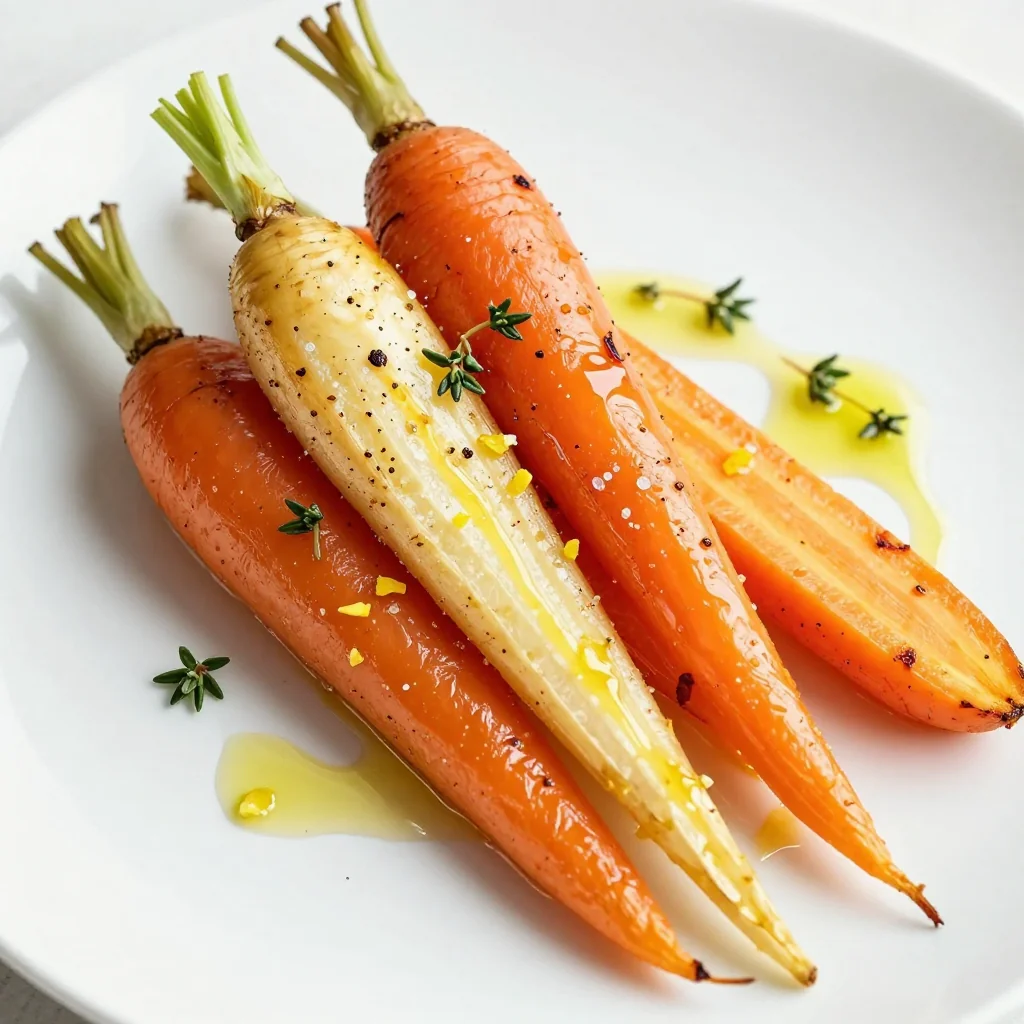
warm lemon roasted carrots and parsnips for healthy clean eating meals
Ingredients
Instructions
- Preheat oven: Heat to 425 °F. Line a rimmed sheet pan with parchment.
- Season vegetables: In a large bowl toss carrots and parsnips with olive oil, salt, pepper, and thyme until evenly coated.
- Arrange: Spread in a single layer on prepared pan; avoid crowding.
- Roast: Bake 20 minutes. While roasting, whisk lemon zest, lemon juice, and honey.
- Glaze: Drizzle lemon mixture over vegetables, toss, and roast 8–10 minutes more until edges caramelize.
- Serve: Taste, adjust salt, and serve hot or room temperature.
Recipe Notes
For crispy edges, do not overcrowd the pan. If doubling, use two pans on separate racks and swap positions halfway through roasting.