Love this? Pin it for later! 📌
There’s a moment—right after the countdown, when the confetti is still drifting and someone’s already hunting for the champagne—that I quietly slip to the stove and ladle out the first cup of mulled wine. The room hushes just enough for the clink of cinnamon sticks against porcelain and the low simmer of citrus and clove to cut through “Auld Lang Syne.” I started this ritual ten years ago when a snowstorm trapped half the party at our house until dawn; the wine rack was generous, the fridge was bare, and necessity mothered the most memorable drink of my life. We still talk about that night every December 31st, and now friends text me in November: “You’re making the mulled wine again, right?”
This version is deliberately richer, deeper, and more fragrant than the airport-lounge versions most of us have suffered through. It uses a sturdy dry red that can stand up to forty minutes of gentle heat, a trio of sweeteners for layered complexity, and a whisper of black-tea tannin to keep the finish clean. I add a splash of late-harvest Riesling at the end for brightness, but you can keep it 100 % red if you prefer. Make it in a Dutch oven, a slow cooker, or even a rice cooker on the “keep warm” setting—just promise me you won’t let it boil. Boiling drives off the perfume and cooks the alcohol into harshness. Think of it as a fragrant bath for your wine, not a baptism by fire.
Why This Recipe Works
- Triple-layered sweetness: Maple syrup, demerara sugar, and orange marmalade give depth, not cloying sweetness.
- Controlled alcohol: A two-stage heat method preserves the wine’s body while mellowing the ethanol bite.
- Tea tannin trick: One bag of English Breakfast adds structure so the finish isn’t flabby.
- Make-ahead friendly: Steep the spice syrup up to five days early; reheat with wine on party night.
- Zero waste garnishes: Dehydrate leftover orange wheels in a 200 °F oven for next-day cocktail rims.
- Versatile batch size: Halve or double seamlessly; the spice ratio scales linearly.
Ingredients You'll Need
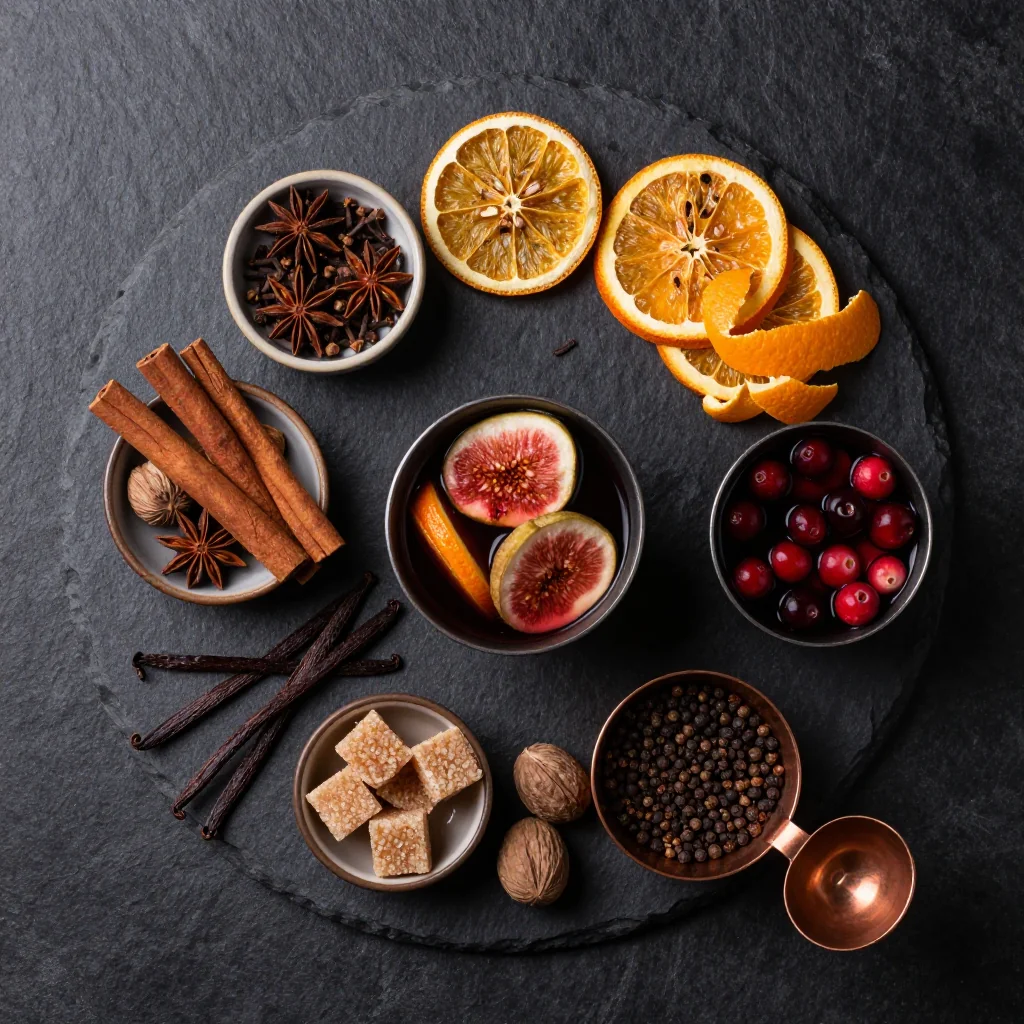
Start with a wine you’d happily drink on its own—fruity, medium-bodied, and under $15. California Zinfandel, Spanish Garnacha, or Chilean Cabernet are ideal; they have enough berry character to survive the spice onslaught. Skip the “cooking wine” shelf entirely; if it comes with a screw-cap and a label that says “hearty,” run.
Whole spices only. Pre-ground nutmeg tastes like dusty pencils after ten minutes of heat. I crack cinnamon sticks by placing them under a cast-iron skillet and pressing until they audibly sigh; the frayed edges release more oils. Cardamom pods get a gentle smack with the flat of a knife—just enough to expose the seeds, not send them flying across the kitchen.
Sweeteners: Dark maple syrup lends woodsy notes that whisper of pancakes and winter mornings. Demerara sugar brings molasses undertones, while a teaspoon of bitter-orange marmalade marries the citrus zest to the wine’s natural pectin, giving the finished drink a silky mouthfeel. If you’re out of maple, use honey, but cut the volume by one-third—it’s sweeter on the palate.
Citrus: One large navel orange, half for simmering and half for garnish, plus a lemon for snap. Scrub the peels thoroughly; waxed supermarket skins leach bitter paraffin into your brew. Organic is worth the extra dollar here.
Optional but transformative: Two tablespoons of Lapsang Souchong tea or one bag of smoked Earl Grey. The whisper of campfire smoke makes guests ask, “Why does this taste like cozy memories?”
How to Make Warm Spiced Mulled Wine for New Year's Eve Parties
Build the spice bundle
Lay a 6-inch square of cheesecloth on the counter. Add 4 cinnamon sticks (roughly broken), 12 cardamom pods, 8 whole cloves, 2 star anise, 1 teaspoon black peppercorns, and 3 strips of lemon peel. Gather the corners, tie with kitchen twine, and leave a 4-inch tail so you can fish it out later. Toast the bundle in a dry Dutch oven over medium heat for 90 seconds, tossing once; the spices should smell like you walked into a holiday store, not a smokehouse.
Bloom the sweeteners
Reduce heat to low. Add ⅓ cup maple syrup, ¼ cup demerara sugar, and 1 tablespoon orange marmalade. Stir until the mixture looks like glossy wet sand and smells like caramelizing waffles—about 2 minutes. This brief Maillard kiss deepens the final flavor.
Deglaze with brandy
Off the heat, pour in ½ cup brandy or Armagnac. Return to low heat and simmer for 3 minutes, scraping up any sticky bits. The alcohol lifts the caramelized sugars, creating a built-in flavor base so the wine doesn’t taste “watered down” later.
Add the wine, but slowly
Pour in one 750 ml bottle of red wine, but cradle the bottle low so it doesn’t glug and aerate. You want to preserve the delicate esters. Add 1 cup water (or black tea for more tannin) and the juice of half the orange. Keep the heat at the lowest possible shimmer; if you see bubbles, slide the pot halfway off the burner.
Steep, don’t cook
Cover and let the mixture cruise at 160 °F (use an instant-read thermometer) for 20 minutes. Any hotter and you’ll vaporize the floral top notes; cooler and the spices won’t fully donate their oils. If you’re using a slow cooker, set it to “keep warm” and prop the lid ajar with a wooden spoon.
Brighten with Riesling
Just before serving, remove the spice bundle and stir in ½ cup late-harvest Riesling or another off-dry white. This “lift” adds acidity and a touch of residual sugar, balancing the tannins like a squeeze of lime on tacos.
Garnish with intention
Float thin orange wheels, a few curls of lemon zest, and a scattering of fresh cranberries for color. If you have rosemary, quickly run the sprigs over a gas flame; the brief char releases piney oils that mingle with the clove.
Serve in pre-warmed mugs
Rinse thick ceramic or tempered glass mugs with boiling water first; cold vessels shock the aromatics and drop the serving temp below the flavor threshold. Ladle slowly to avoid disturbing the sediment.
Expert Tips
Temp control hack
Place a metal spoon in the pot; if it’s too hot to hold after 5 seconds, lower the heat. The spoon absorbs excess energy and prevents scalding.
Non-alcoholic version
Swap wine for pomegranate juice and 1 cup strong black tea. Add 2 tbsp balsamic glaze for vinous depth. Sweeten to taste with maple.
Ice sphere surprise
Freeze diluted mulled wine into large spheres and drop one into each glass. As it melts, the drink evolves rather than dilutes.
Scaling math
For every additional bottle of wine, add only ¾ of the previous sweetener quantity. Palate fatigue is real; sweetness accumulates faster than spice.
Smoky twist
Rinse each glass with 1 tsp mezcal before ladling. The peat-like note marries beautifully with clove and anise.
Budget saver
Buy spices in the international aisle; they’re 70 % cheaper than bottled spices and twice as fresh because of faster turnover.
Variations to Try
-
White Wine Winter: Use a crisp Pinot Grigio, cut sweeteners by 25 %, and add bruised lemongrass stalks. Garnish with paper-thin apple slices.
-
Spiked Cider Hybrid: Replace half the wine with fresh apple cider and add 1 tsp grated fresh ginger. Finish with Calvados instead of brandy.
-
Chocolate Whisper: Whisk 1 tbsp unsweetened cocoa into the sweetener step. The bitterness amplifies the wine’s fruit and fools tasters into thinking you used a reserve bottle.
-
Savory Herb: Add two sprigs of fresh thyme and one small bay leaf to the spice bundle. Remove after 10 minutes; herbs turn grassy if over-steeped.
Storage Tips
Cool the mulled wine to room temperature within two hours of serving, then funnel into glass swing-top bottles. Refrigerate up to five days; the flavors evolve into a spiced cherry cordial that’s excellent over vanilla ice cream. Reheat gently to 150 °F—never microwave, which hot-spots the alcohol and leaves you with flat, metallic notes.
For longer storage, freeze in 1-cup silicone molds. Thaw overnight in the fridge, then warm on the stove. The spices will have continued to donate flavor, so brighten with a squeeze of fresh orange before serving.
Frequently Asked Questions
Warm Spiced Mulled Wine for New Year's Eve Parties
Ingredients
Instructions
- Toast spices: In a dry Dutch oven, toast the spice bundle over medium heat for 90 seconds until fragrant.
- Caramelize sweeteners: Reduce heat to low; stir in maple syrup, demerara sugar, and marmalade until glossy, 2 minutes.
- Deglaze: Off heat, add brandy. Return to low and simmer 3 minutes, scraping up bits.
- Add wine & tea: Pour in red wine, 1 cup water (or brewed black tea), and orange juice. Keep at 160 °F for 20 minutes.
- Finish: Remove spice bundle and tea bag. Stir in Riesling. Serve warm in pre-warmed mugs, garnished with orange slices and cranberries.
Recipe Notes
Never boil the wine; keep below 170 °F for best flavor. Make the spice syrup up to 5 days ahead and refrigerate.