Love this? Pin it for later! 📌
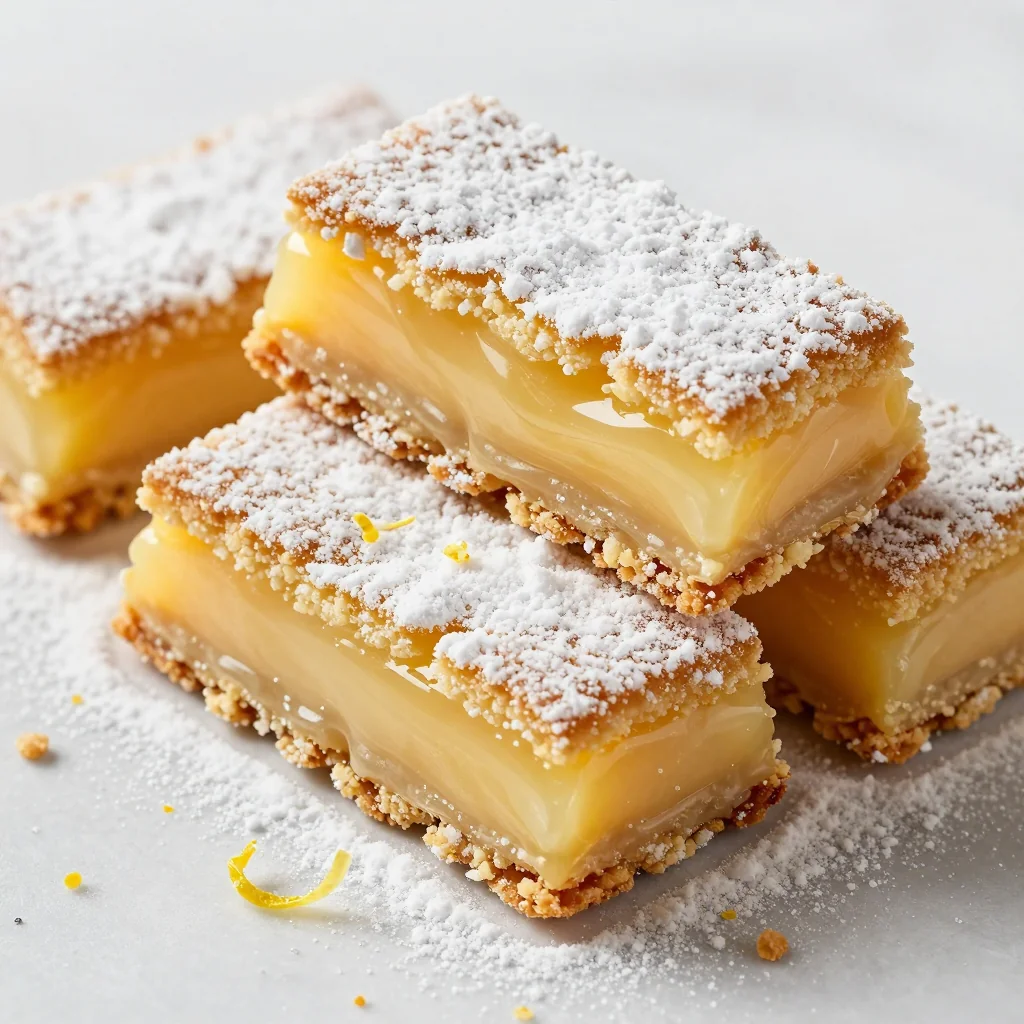
These bars became my secret weapon for book-club nights, last-minute neighborhood drop-ins, and even as a breakfast treat on those mornings when the thermometer refuses to budge above zero. The bright acidity of lemon feels downright rebellious against January’s chill, and knowing I can slice off just what I need from the frozen slab makes them feel almost guilt-free. If you’ve ever craved a taste of summer while wearing wool socks, this recipe is your ticket.
Why This Recipe Works
- Freezer-Stable Shortbread: We swap a portion of the flour for almond meal, creating a base that stays crisp even after thawing.
- Double-Thickened Filling: A combo of cornstarch and flour prevents the lemon layer from weeping or turning rubbery in the freezer.
- Micro-Planed Zest: Finely zesting the lemon directly into the sugar releases aromatic oils that survive months in the freezer.
- Portion-Controlled Slicing: Score the bars before freezing so you can break off exactly what you need without thawing the whole pan.
- Natural Anti-Freeze: A touch of honey in the custard lowers the freezing point, keeping the texture lush.
- Bright January Therapy: One bar delivers 40% of your daily vitamin C—doctor-recommended for beating winter scurvy (okay, maybe not, but it feels medicinal).
Ingredients You'll Need
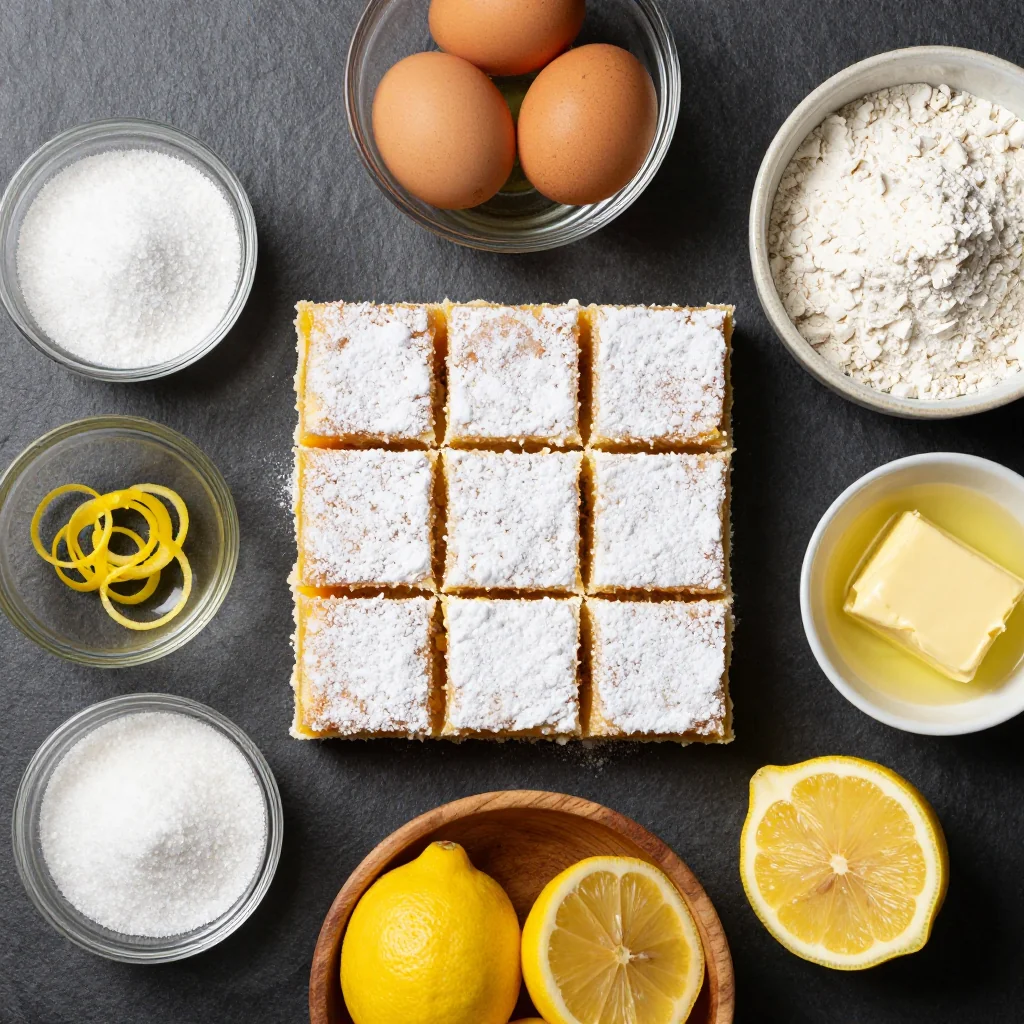
Every ingredient here pulls double duty: flavor and freezer stability. Start with unsalted butter that’s still cool but pliable—too cold and the dough cracks; too warm and the base shrinks. I prefer European-style butter for the higher fat content, which translates to a more tender shortbread once frozen and thawed.
For the almond meal, blanched is best; the skins on natural almond meal can turn bitter in cold storage. If you’re nut-free, replace it with an equal weight of white rice flour—no other changes needed. The confectioners’ sugar in the crust contains cornstarch, which helps absorb any rogue moisture that might sneak in during freezer life.
Lemons should feel heavy for their size; thin skins indicate more juice. I buy organic because we’re using the zest, and January is peak season for Meyer lemons in many grocery stores. If you can find them, their floral sweetness pairs beautifully with the honey we’ll add. Regular Eureka lemons work—just bump the sugar by two tablespoons.
Eggs need to be at room temp so the custard bakes evenly. In a pinch, submerge cold eggs in hot tap water for five minutes. Cornstarch must be fresh (less than a year old) or it loses thickening power; same goes for baking powder in the crust. Honey not only flavors but acts as a natural antifreeze, so don’t swap in maple syrup—it crystallizes.
How to Make Freezer-Friendly Lemon Bars for a Bright January Treat
Prep the Pan & Oven
Move your oven rack to the lower-middle position and preheat to 350°F (175°C). Line a 9×13-inch metal baking pan with parchment, leaving two-inch wings on the long sides so you can lift the bars out later. Metal conducts heat quickly, setting the crust before the filling can seep underneath and make things soggy. If you only have glass, drop the temp to 325°F and add five minutes to the bake time.
Make the Freezer-Stable Shortbread
In a stand mixer fitted with the paddle, beat 1 cup (226 g) cool butter, ½ cup (60 g) confectioners’ sugar, and 2 tablespoons granulated sugar on medium for 2 minutes until pale and fluffy—do not over-cream or the crust will slump. Add 1 teaspoon vanilla, ¼ teaspoon kosher salt, 1 ¾ cups (220 g) all-purpose flour, and ¾ cup (75 g) almond meal. Mix on low just until the dough starts to clump. It will look like damp sand. Tip it into the pan and press into an even layer using the flat bottom of a measuring cup. Prick all over with a fork to prevent bubbling. Slide into the oven for 18–20 minutes until the edges turn faint golden. While it bakes, start the filling so it’s ready the moment the crust comes out.
Zest & Juice the Lemons
Place 1 ½ cups (300 g) granulated sugar in a large bowl. Micro-plane the zest of 3 large lemons (about 1 packed tablespoon) directly onto the sugar, then rub the mixture between your fingers for 30 seconds. The abrasive sugar captures the citrus oils, amplifying flavor even post-freezer. Halve and juice those same lemons—you need ¾ cup (180 ml) juice. Strain out seeds but keep the pulp; it adds personality. If you’re shy, top up with bottled lemon juice, but fresh zest is non-negotiable.
Whisk the Custard Base
To the lemon sugar, whisk in 4 large room-temp eggs until the mixture is thick and homogenous. Sprinkle 3 tablespoons cornstarch and 2 tablespoons all-purpose flour over the top, then whisk vigorously for 30 seconds to prevent lumps. Stir in the lemon juice, 2 tablespoons honey, and ½ teaspoon kosher salt. The batter will look thin—this is correct. Finally, whisk in 2 tablespoons melted butter for extra richness and freeze stability.
Assemble & Bake
Reduce oven to 325°F (160°C). Pour the lemon custard onto the hot crust immediately; the radiant heat jump-starts the setting process and prevents a soggy bottom. Bake 22–25 minutes until the filling jiggles like gelatin when you nudge the pan. Over-baking is the enemy: the proteins seize and the bars weep once thawed. Cool completely on a rack, then refrigerate at least 2 hours to firm up for clean slices.
Score & Freeze
Lift the slab out using the parchment wings. Using a long, sharp knife dipped in hot water and wiped dry, score the bars into 24 squares, but do not cut all the way through. Dust the top with 2 tablespoons confectioners’ sugar. Slide the whole sheet onto a rimmed baking tray and freeze uncovered for 2 hours until rock solid. Once frozen, break apart along the score lines, wrap each bar in parchment, then store in a zip bag with as much air removed as possible. They’ll keep up to 3 months without loss of flavor or texture.
Serve from Frozen
No need to thaw. Remove a bar, peel away the parchment, and let it sit at room temp for 10 minutes while you brew coffee. The filling softens to a creamy, almost ice-cream-like texture, while the crust stays snappy. For a dinner-party flourish, garnish with a curl of candied lemon peel or a drizzle of white chocolate that sets instantly against the cold bar.
Double-Batch Strategy
Because the effort is front-loaded, I always double the recipe and bake in two pans side-by-side, rotating halfway through. Once frozen, I split the loot: half stays at my house, half gets gifted. Stack the wrapped bars in a festive tin with a note: “Break glass in case of winter emergency.” Friends will nominate you for sainthood.
Expert Tips
No-Slip Crust Guarantee
After pressing the dough, dock it, then freeze 10 minutes before baking. The quick chill sets the butter so the base won’t slide down the sides.
Zero-Weep Filling
Add 1 teaspoon lemon oil or extract along with the juice; the concentrated flavor masks any muted citrus that can occur after freezing.
Clean Cuts Every Time
Heat your knife under hot tap water, wipe dry, slice once, then repeat. A plastic bench scraper works in a pinch and won’t scratch pans.
Sugar Snow Shield
Dust bars with confectioners’ sugar only after freezing; the moisture in the fridge or defrost cycle will melt it into a glaze.
Citrus Swap-Out
Try blood orange or ruby grapefruit juice in place of half the lemon for blush-pink bars that still pack vitamin C.
Kid-Proof Packing
Slip a frozen bar into a reusable silicone pouch; by lunchtime it’s thawed but still chilly—no soggy cafeteria disasters.
Variations to Try
- Lavender Lemon: Steep 1 teaspoon culinary lavender in the melted butter for 10 minutes, then strain before adding to the custard.
- Coconut Cream: Replace almond meal with toasted unsweetened coconut and swap the honey for coconut nectar.
- Ginger Snap Base: Sub ½ cup crushed gingersnap cookies for an equal amount of flour for subtle heat that complements the citrus.
- Meringue Top: After thawing, pipe stiff-peaked Swiss meringue on each bar and torch for lemon-meringue nostalgia.
- Poppy Seed: Stir 1 tablespoon poppy seeds into the custard for visual flair and nutty crunch.
- Gluten-Free: Use 1 cup gluten-free measure-for-measure flour plus ¼ cup oat flour in place of all-purpose; chill dough 20 minutes before pressing.
Storage Tips
Freezer: Wrapped bars keep 3 months at 0°F. For longer storage, vacuum-seal; they’ll last 6 months without freezer burn.
Refrigerator: Once thawed, store up to 5 days in an airtight container with parchment between layers. The crust will soften but flavor remains bright.
Room Temp: Safe for 8 hours in winter-dry houses; beyond that, condensation forms and sugar dissolves.
Transport: Pack frozen bars in a cooler bag with an ice pack; they’ll arrive firm even after a two-hour car ride.
Frequently Asked Questions
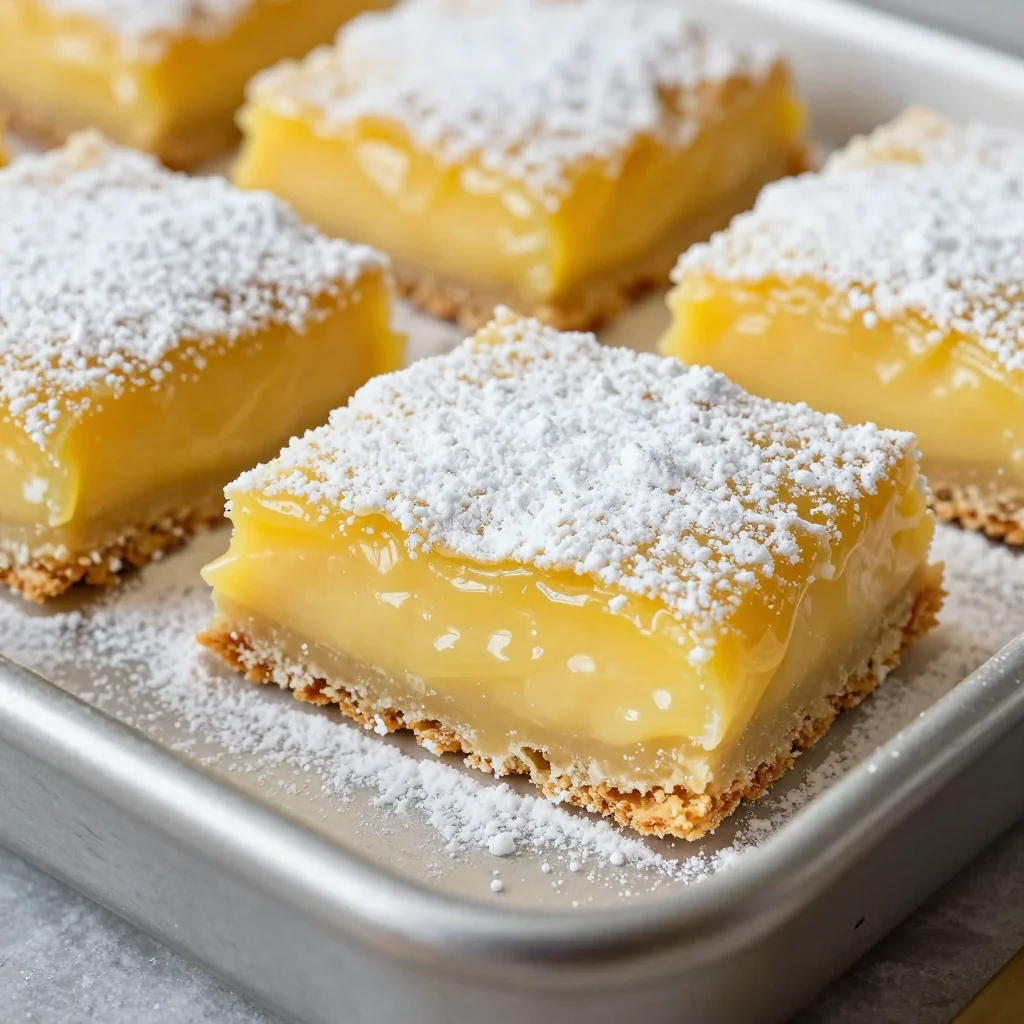
Freezer-Friendly Lemon Bars for a Bright January Treat
Ingredients
Instructions
- Preheat & Line: Set oven to 350°F. Line a 9×13-inch metal pan with parchment, leaving wings.
- Make Crust: Beat butter, sugars, vanilla, and salt until fluffy. Mix in flour and almond meal until clumpy. Press into pan; prick with fork. Bake 18–20 min.
- Zest Sugar: Rub zest into granulated sugar until fragrant.
- Whisk Filling: Whisk eggs into lemon sugar. Add cornstarch, flour, juice, honey, salt, and melted butter until smooth.
- Bake Filling: Lower oven to 325°F. Pour custard onto hot crust. Bake 22–25 min until just set. Cool, then chill 2 hr.
- Freeze: Score into 24 squares, freeze uncovered 2 hr. Wrap individually and store up to 3 months.
- Serve: Enjoy straight from frozen or let stand 10 min for a softer bite. Dust with fresh confectioners’ sugar.
Recipe Notes
For neat slices, heat knife under hot water and wipe dry between cuts. Bars taste brightest within 3 months but remain safe longer if vacuum-sealed.